About SYMYO
I didn't build SYMYO because Metro Detroit needed another chiropractic clinic.
I built it because I kept seeing the same story play out.
People would come in hurting. We would get them feeling better. They would stop because the pain was gone. Then a few months later, they were back asking: “Why did this come back?”
That question bothered me early in my career because I had lived that cycle myself.
Where It Started
Where This Started
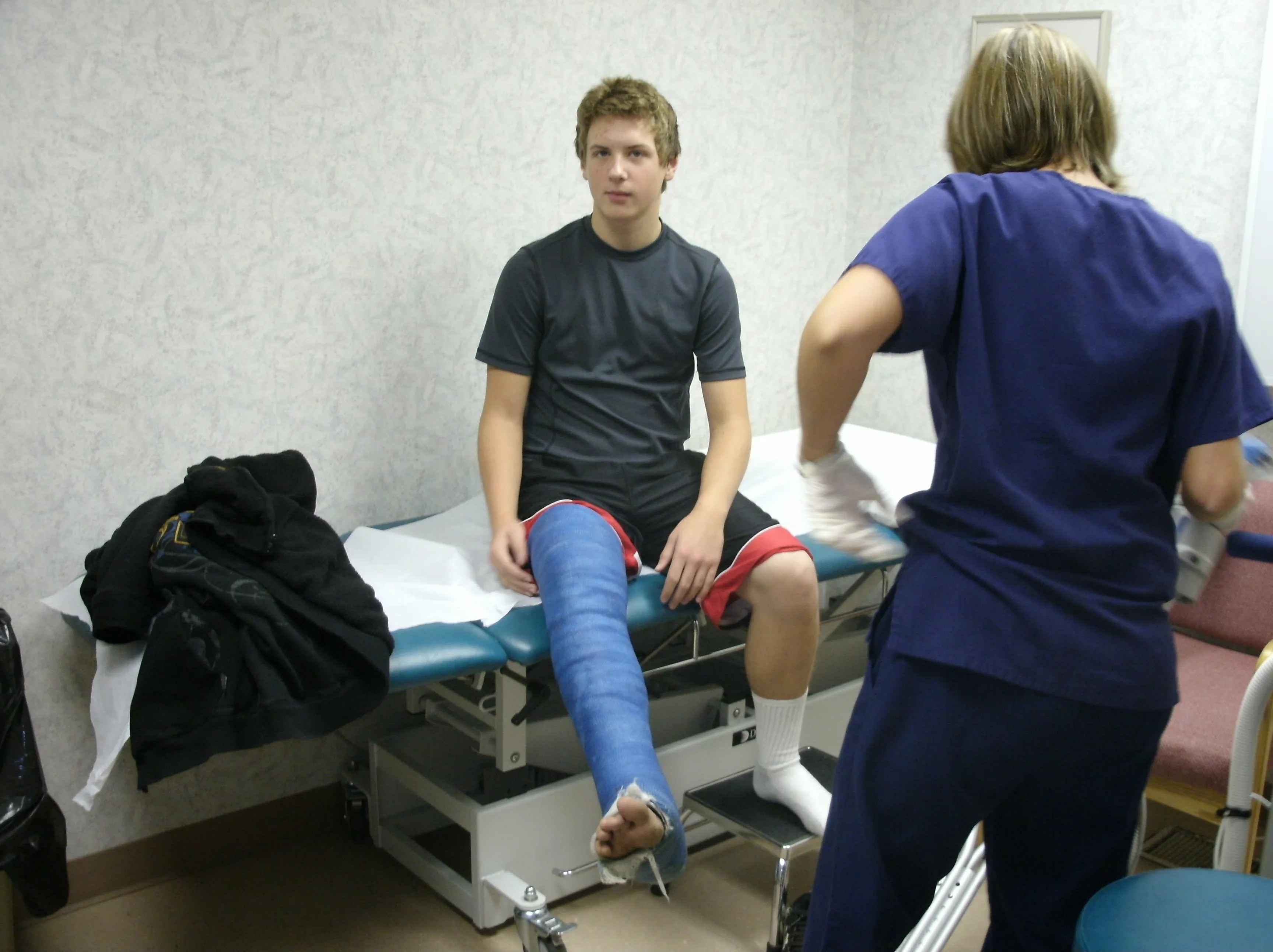
In high school, I fractured my femur playing football.
Six weeks in a cast.
No physical therapy afterward.
My leg never fully regained its strength, and my sports career ended there.
At the time, I assumed that was just how injuries worked.
You get hurt.
You adapt.
You move on.
A few years later, during my first year of chiropractic school, I developed significant lower back pain.
I was lifting four to five days a week, but I avoided squats and deadlifts because my back couldn't tolerate them.
Ironically, I was learning how to treat pain while struggling with my own.
I was getting adjusted constantly. It helped.
But it didn't fix it.
That's when I started digging deeper into movement.
Once I learned how to properly assess how my body was moving, I realized something that changed everything.
The pain wasn't coming from where the real problem was.
My back wasn't the issue.
My hips were stiff.
My core wasn't doing its job.
My body had been compensating for years.
Once I trained those weaknesses directly, my pain improved quickly.
Within a month, I was back to full training.
That moment completely changed how I looked at injury.
Pain is often the symptom.
Capacity is the real issue.
What I Saw in Practice
When I started practicing, I noticed the exact same pattern with patients.
We would reduce pain quickly.
They felt better.
So they stopped.
But we hadn't fully restored how their body moved.
Weeks or months later, the same issue would return.
And they weren't wrong to stop.
They felt better.
But feeling better isn't the same as functioning better.
That realization is what eventually led to the creation of Movement Age.
A way to measure how well the body is actually functioning.
Why Movement Age Exists
Why Movement Age Exists
Pain can disappear before your body is actually stronger.
When that happens, it's easy to believe the problem is solved.
You go back to normal life. Back to lifting. Back to running. Back to long work days.
But if the underlying movement problems are still there, the cycle repeats.
Movement Age exists to bring clarity to that process. It provides a simple way to measure how your body is actually functioning, not just how it feels today.
Because once you can see what still needs work, you stop guessing and start training with a plan.
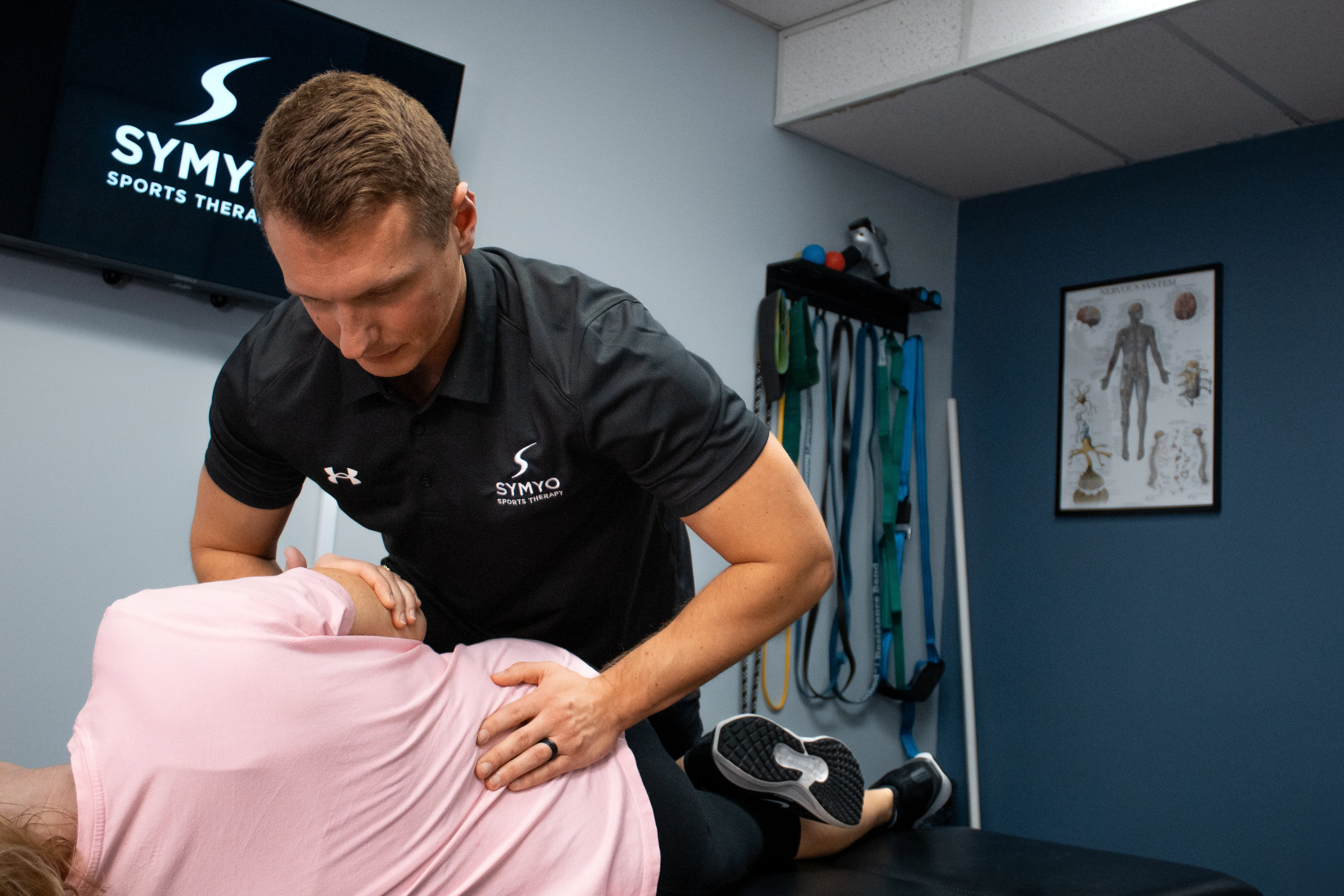
The SYMYO Method
The SYMYO Method
Once we establish your baseline, we follow a simple progression.
Reduce pain and irritation. Restore how your body moves. Reinforce those improvements with strength.
That order matters.
If you reduce pain but skip restoring movement, the cycle returns.
If you reduce pain but never build strength, the cycle returns.
SYMYO exists to break that cycle.
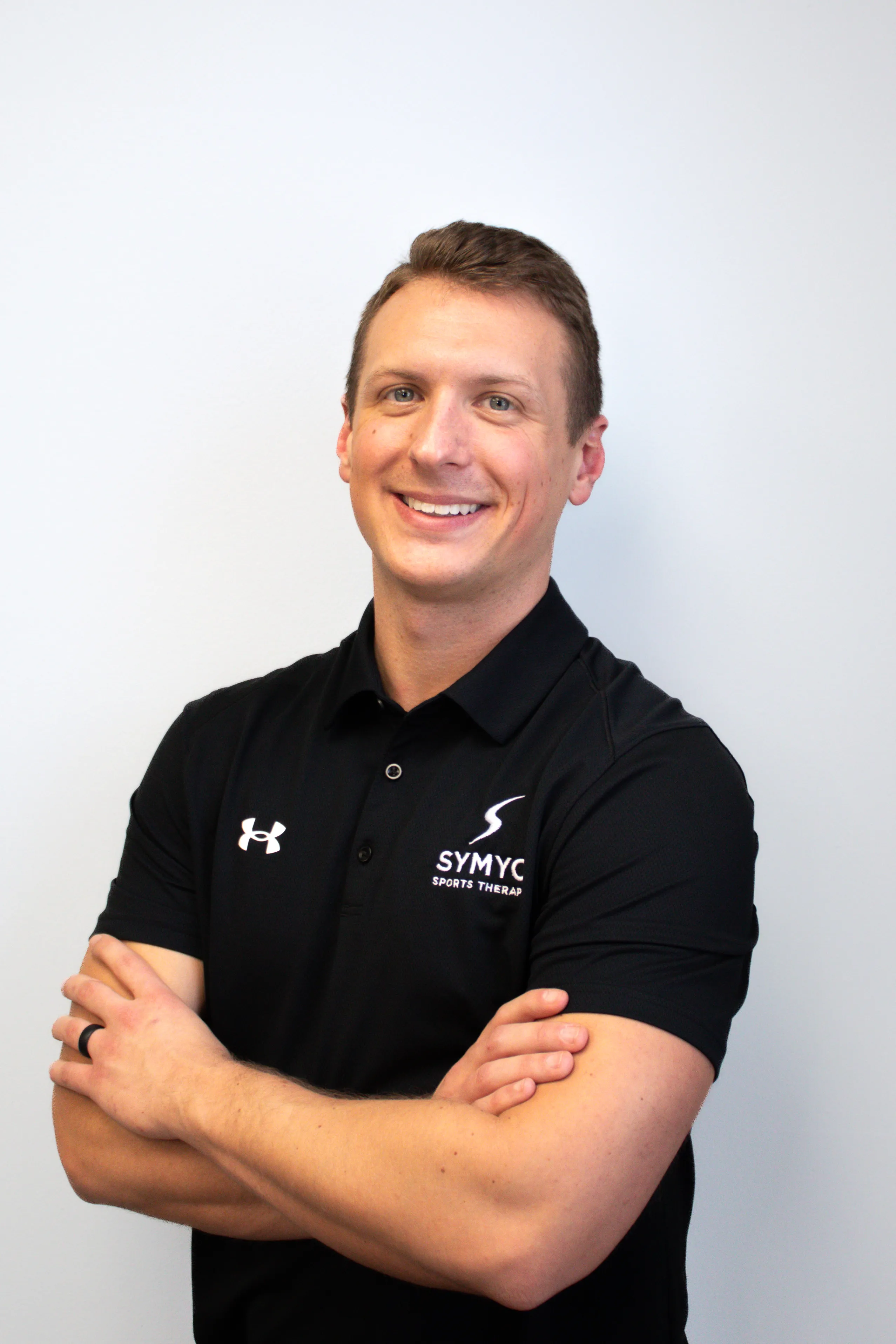
About Dr. Mitch Israel
About Dr. Mitch Israel
I earned my Doctor of Chiropractic degree from Logan University, where I graduated as valedictorian and received the Founder's Scholarship.
But early in my career, I realized something important. Academic success doesn't automatically make you a great clinician.
So I kept studying.
Over the years, I've completed more than 1,500 hours of post-graduate training focused on rehabilitation, biomechanics, movement assessment, and performance-based care.
That includes advanced work in:
- Mechanical Diagnosis and Therapy
- Functional Range Conditioning
- Functional Range Release
- Selective Functional Movement Assessment
- Functional rehabilitation and performance training
Not because I enjoy collecting certifications. But because I wanted better answers for my patients.
I wanted to understand not just where it hurts, but why the body is compensating in the first place.
And honestly, the biggest lesson I've learned hasn't come from a seminar. It's come from listening.
When you listen carefully enough, you realize people don't just want pain relief. They want confidence in their body again.
That mindset shapes everything we do at SYMYO.
Experience
Experience in the Real World
Over the years, I've worked with hundreds of active adults dealing with recurring injuries, stubborn pain, and bodies that simply don't move the way they used to.
The patterns are often the same.
A shoulder that keeps flaring up during workouts. A lower back that tightens after long days at work. A knee that becomes unreliable during training or sports.
The common thread isn't bad luck. It's that the body's capacity hasn't kept up with the demands placed on it.
That's exactly what the SYMYO Method is designed to address.
By measuring how the body moves, restoring mobility where it's limited, and reinforcing it with strength, we help people rebuild confidence in their body and return to the activities that matter to them.
Who This Is For
Who This Is For
This approach isn't for everyone.
If you're looking for a quick adjustment and nothing more, there are plenty of places that can help with that.
SYMYO is built for people who want their body to hold up years and decades from now.
People who want to:
- Lift
- Run
- Train
- Play golf
- Play pickleball
- Chase their kids
- Chase their grandkids
And keep doing the things they love without assuming age is the reason they can't.
Next Step
What To Do Next
Apply for a Movement Age Intensive.
We'll review your application and determine if SYMYO is the right fit for you.
If it is, we'll begin measuring how your body moves and build a plan to improve it.