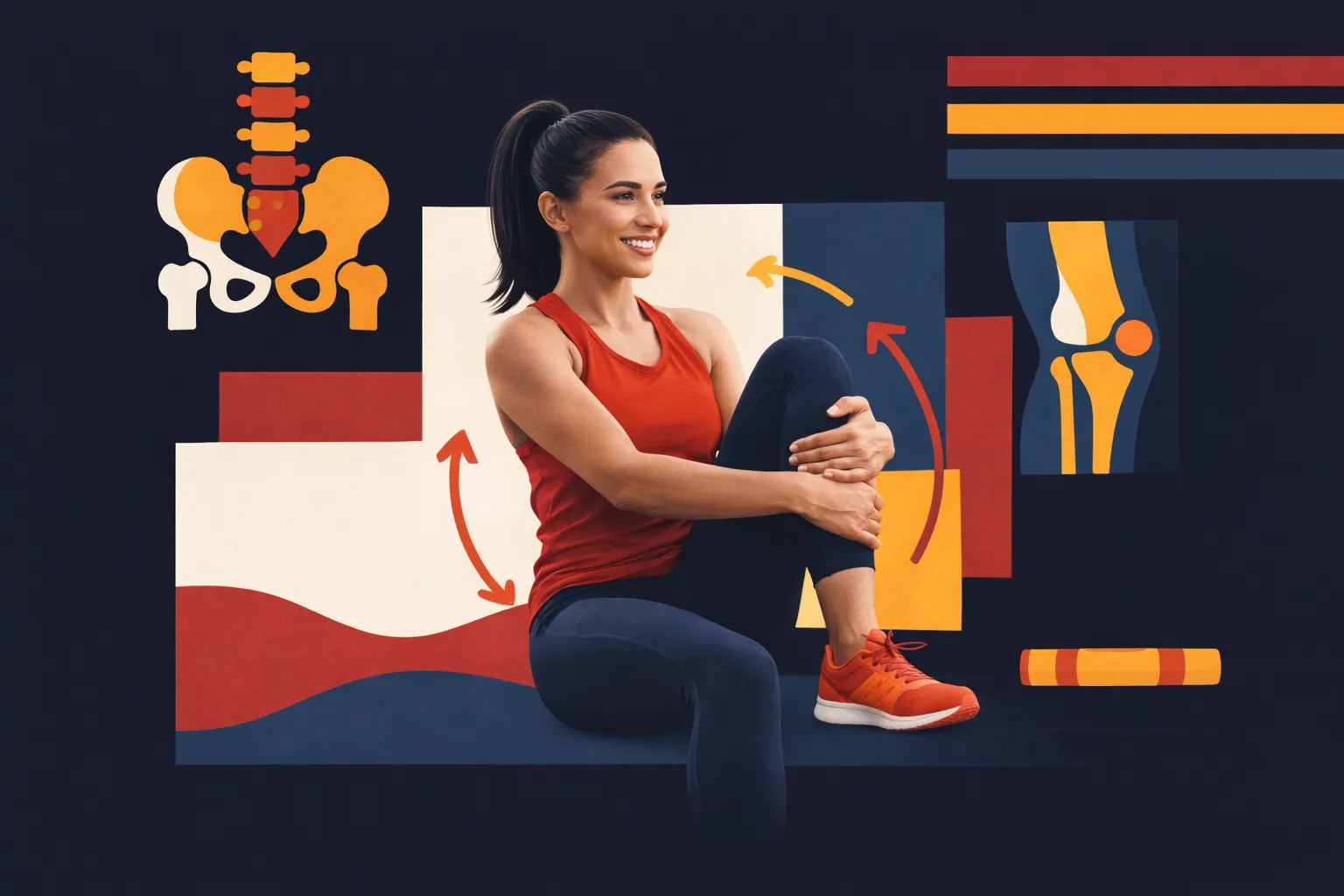
If you've ever sat through a high school biology class, you probably remember the line: “Mitochondria is the powerhouse of the cell.” Well, when it comes to how your body moves, I like to say: your hips are the powerhouse of your body.
Strong, mobile hips don't just help you squat more weight in the gym. They affect the way you walk, run, sit, and even stand. If your hips aren't moving well, everything else — your knees, lower back, and even your shoulders — pays the price. That's why so many people searching for hip mobility near me in Plymouth, Canton, Northville, Livonia, or Metro Detroit end up realizing that tight, weak hips are the missing link to pain-free movement and long-term performance.
Why Hip Mobility Matters More Than You Think
Hip mobility is more than just being flexible. It's about creating strength, control, and stability through a full range of motion. Think of your hips as the control center of your entire body:
- They anchor your trunk during lifting and rotation
- They generate power for walking, running, and jumping
- They protect your spine and knees from absorbing forces they weren't designed to handle
When the hips are restricted, your body compensates. That compensation shows up as lower back pain, knee aches, poor posture, and reduced performance — issues I see every single day in my clinic here in Plymouth, Michigan.
The Real Cost of Tight Hips
Most people don't connect their back pain or knee pain to their hips. They treat the symptom — icing their knee, stretching their hamstrings, getting adjustments — without ever addressing the root cause.
Here's what restricted hip mobility actually leads to:
Lower Back Pain
When your hips can't move through their full range, your lumbar spine picks up the slack. Over time, this overloads the joints and discs in your lower back, leading to chronic stiffness and pain.
Knee Problems
Your knee is a hinge joint caught between the hip and the foot. When the hip doesn't rotate or extend properly, the knee torques to compensate. That's how meniscus issues, IT band syndrome, and patellofemoral pain develop.
Poor Athletic Performance
Whether you're a runner, a golfer, or someone who lifts weights, power comes from the hips. Restricted hips mean reduced force output, slower movement, and a higher risk of injury.
Accelerated Movement Aging
In my practice, I assess something called Movement Age — a measure of how old your body actually moves compared to your chronological age. Restricted hip mobility is one of the fastest ways to age your movement patterns prematurely.
The Benefits of Targeted Hip Mobility Training
When you commit to a structured hip mobility program, the results go far beyond just feeling looser. Here's what my patients in the Plymouth and Metro Detroit area consistently experience:
Injury Prevention
Proper hip mobility ensures that force is absorbed and transferred efficiently through your kinetic chain — protecting your knees and spine from overload during exercise and daily life.
Better Performance
From competitive athletes to weekend warriors, mobile hips translate directly into stronger lifts, faster runs, better agility, and smoother movement in everything you do.
Pain Reduction
Restoring hip mobility addresses the root cause of many chronic pain patterns rather than just managing symptoms. Patients who improve their hip function often see their back and knee pain resolve without ever directly treating those areas.
Long-Term Independence
Research consistently shows that hip mobility is one of the strongest predictors of functional independence as we age. The work you do now directly determines how well you move at 60, 70, and beyond.
Why Working With a Clinician Beats DIY Stretching
There is no shortage of hip mobility routines on YouTube. The problem is that without a proper assessment, you don't know what's actually restricting your movement — and random stretching rarely fixes the real issue.
Is your restriction coming from the hip capsule? The hip flexors? Weak glutes that are failing to stabilize the joint? Poor neuromuscular control? Each of these requires a different approach, and doing the wrong thing can actually reinforce the problem.
When you work with a sports chiropractor and rehab specialist like myself, you get:
- A thorough movement assessment that identifies your specific restrictions and compensations
- A targeted, progressive plan built around your body — not a generic routine
- Real-time feedback and adjustments so you're training correctly from day one
- A combination of hands-on treatment and active rehab that produces lasting results
The difference between a patient who tries YouTube hip stretches for six months with no progress and a patient who sees lasting change in 4–6 weeks usually comes down to one thing: working with someone who can accurately diagnose what's actually going on.
Who Needs Hip Mobility Work?
In short — almost everyone. But you especially need to prioritize your hips if you:
- Sit at a desk for most of the day and notice tightness in your hips, groin, or lower back
- Have been dealing with chronic low back pain that doesn't fully resolve
- Feel like your squat, deadlift, or athletic performance has plateaued
- Are recovering from a hip, knee, or back injury and want to rebuild the right way
- Are over 40 and starting to notice stiffness, reduced range of motion, or slower recovery
- Want to stay active, strong, and independent for decades to come
Hip Mobility Near Me: Plymouth, Canton, Northville, Livonia & Metro Detroit
If you've been searching for hip mobility near me and you're located in Plymouth, Canton, Northville, Livonia, or anywhere in the Metro Detroit area — you're in the right place.
At SYMYO, I combine clinical chiropractic and sports therapy expertise with performance-driven rehab to help you unlock your movement, eliminate pain, and get back to the activities you love. You don't need to bounce between a chiropractor, a physical therapist, and a personal trainer. I bridge that gap — giving you one cohesive plan that takes you from pain to performance.