Movement Age
How Old Does Your Body Really Move?
You know your actual age. But do you know how old your body moves?
Most people don't think about it until pain, stiffness, or slower recovery starts getting their attention.
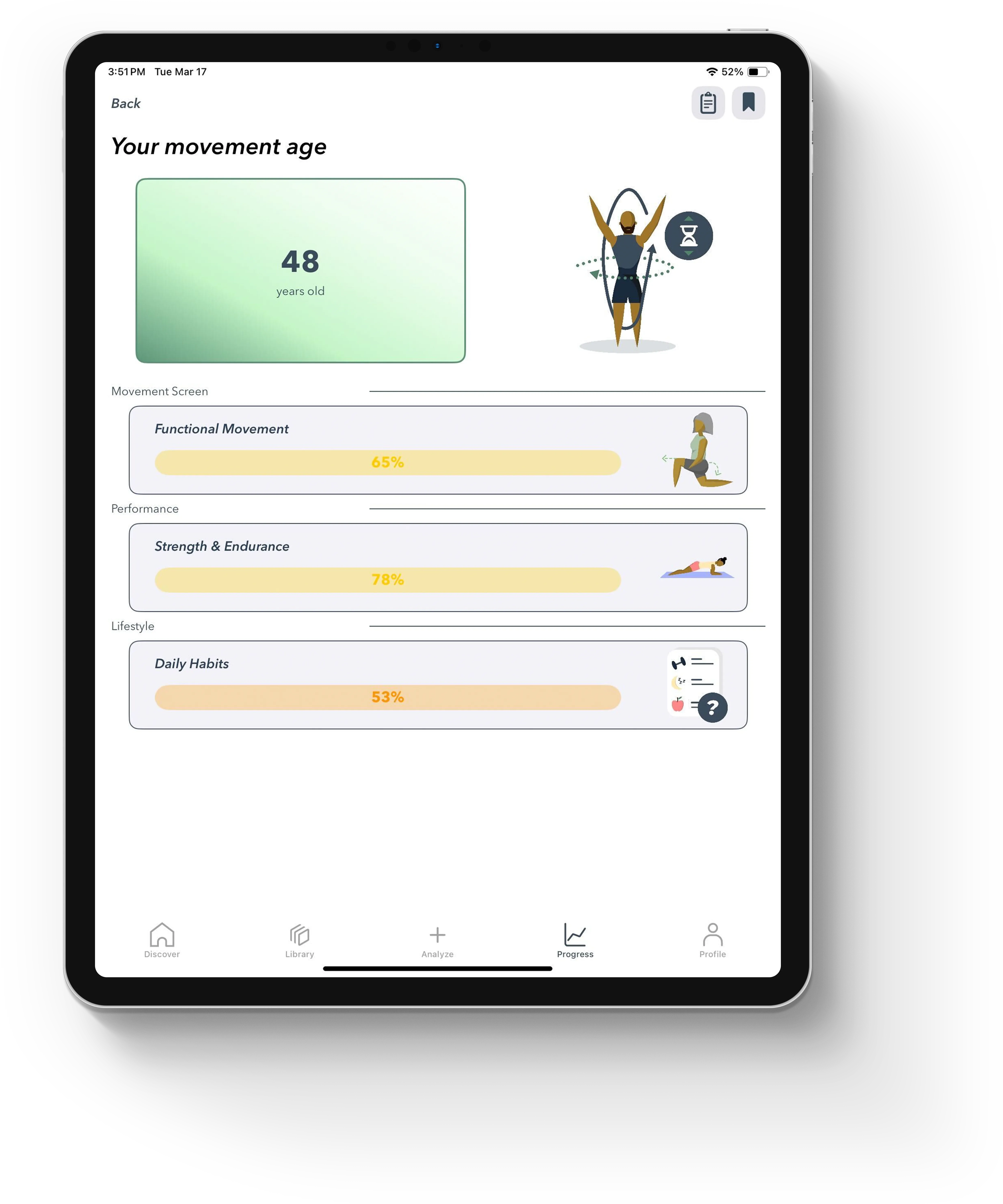
Your Movement Age is a score that shows how your body moves compared to your actual age.
Many people are surprised by what their score reveals.
Some discover their Movement Age is 5 to 15 years older than their real age.
The good news: this number can improve.
Why It Matters
Why This Matters
You can feel fine and still be moving in ways that slowly wear you down.
You can stay active and still have small weaknesses building underneath the surface.
By the time pain shows up, the problem usually didn't start that day. It built up over time.
Movement Age gives you clarity before that happens. It shows you where you stand and what needs work.
What We Measure
What Movement Age Measures
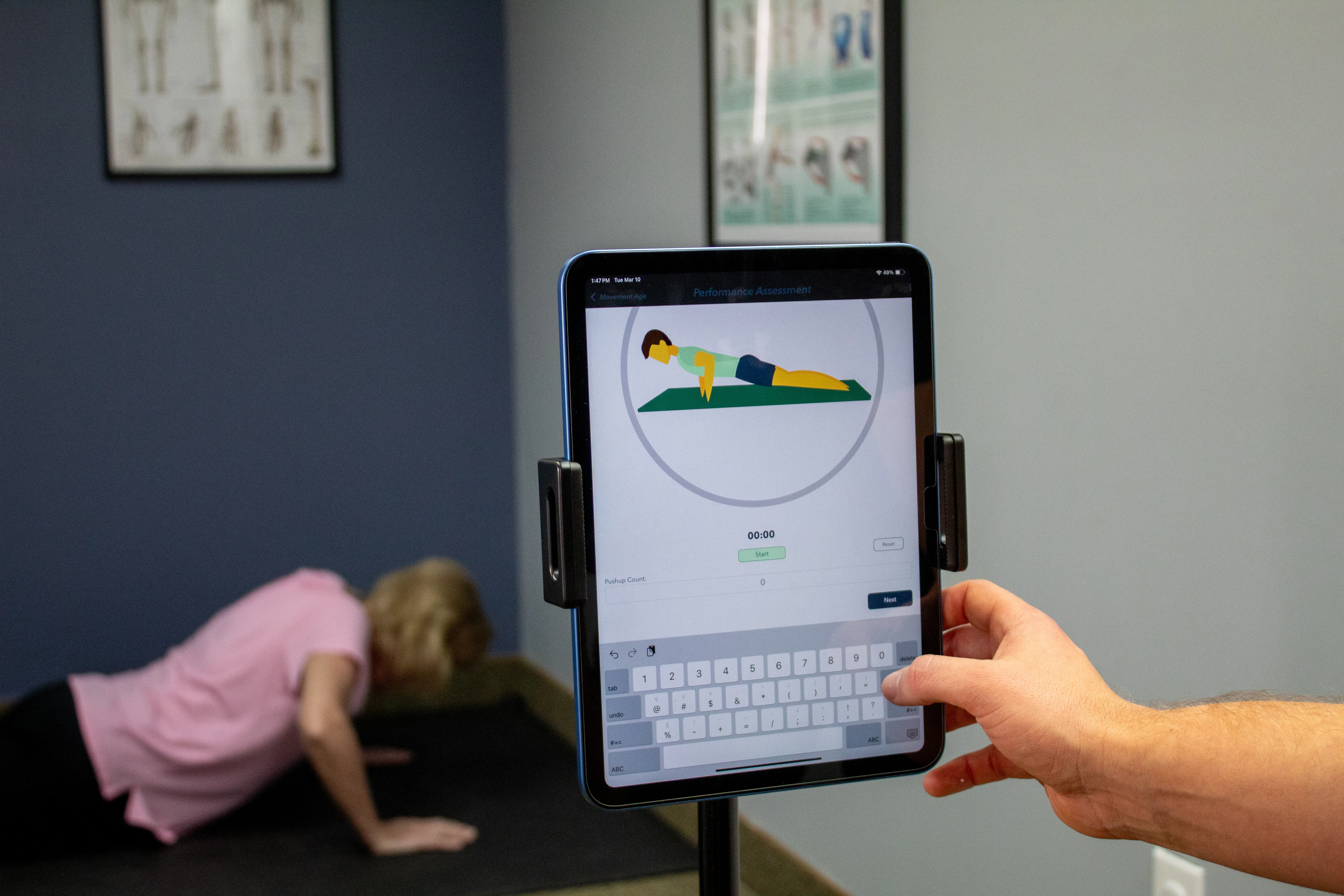
Movement Age is calculated using a short series of movement and strength tests that evaluate how your body functions as a system.
We look at how well key areas of your body work together:
Nothing complicated. Just simple movements that reveal how well your body is working together. The result is one clear number that reflects how your body is performing today.
What Happens If You Don't Measure It
Most people blame their age.
They assume stiffness, tightness, or slower recovery is just part of getting older.
They stretch when something feels tight.
They rest when something hurts.
They slow down when movements feel harder.
But they never really know where they stand.
Over time, small compensations add up.
Movements feel more difficult.
Recovery takes longer.
That's when people start saying things like:
“I guess I'm just getting older.”
But in many cases, it isn't age.
It's how the body has adapted over time.
Movement Age changes that.
It gives you a clear starting point.
And something specific to improve.
Why We Measure First
Why We Measure Movement Age First
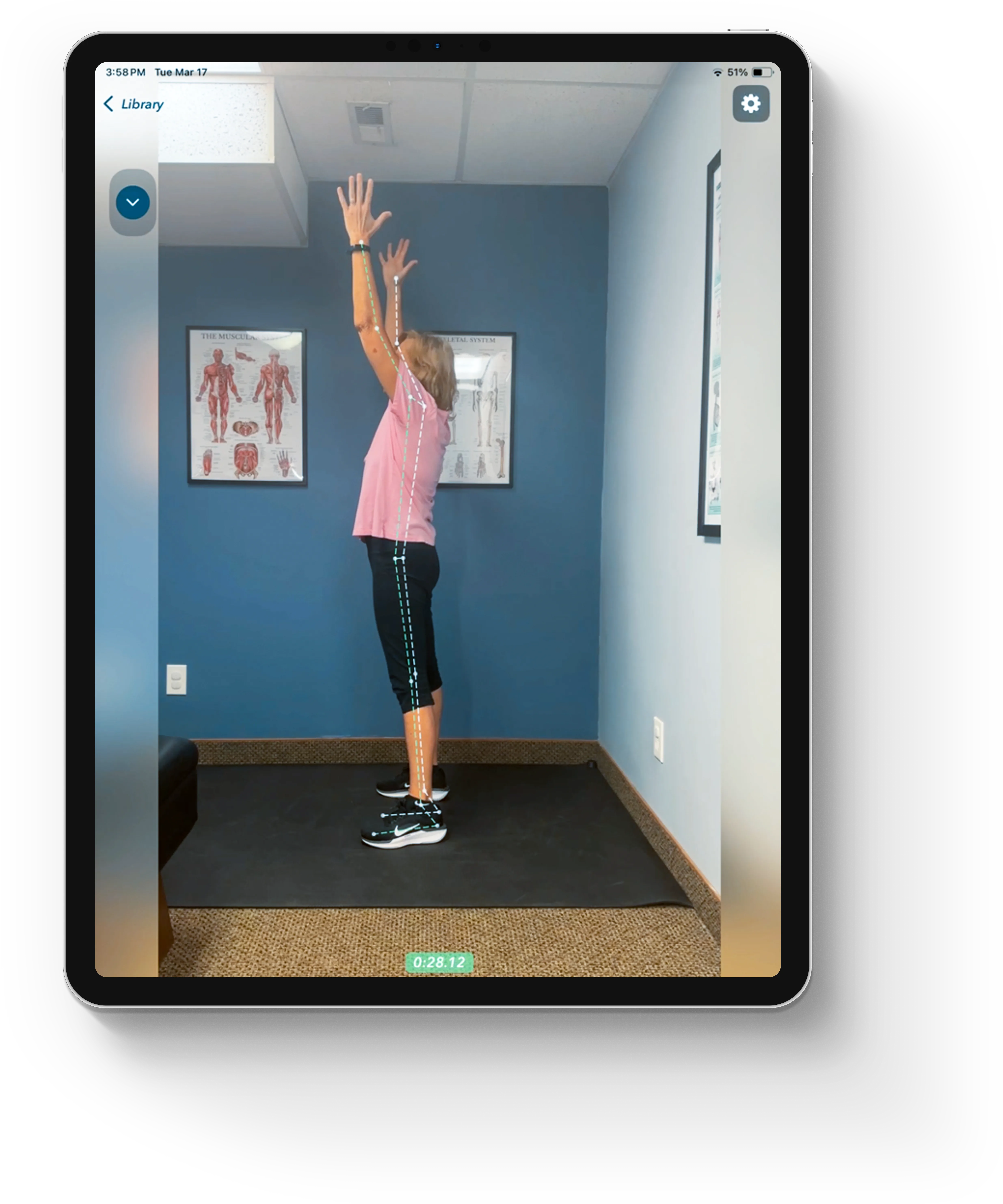
At SYMYO, Movement Age is a key part of our evaluation process.
Everybody is different. Every body is different.
People move differently, live different lives, and have different physical goals. That's why we measure first.
We look at:
- Where mobility may be limited
- Where strength may be lacking
- Where your body may be compensating
This gives us a visual baseline of how your body is functioning right now. Instead of guessing, we can measure what is moving well, what is limited, and where your plan should begin.
How It Improves
How Movement Age Improves
Your Movement Age can change.
When your body moves better and gets stronger, your Movement Age improves.
At SYMYO, we improve Movement Age using a simple three-step process called The SYMYO Method.
Reduce pain and tension → improves how you feel.
Restore movement → improves how your body moves.
Reinforce with strength → builds resilience so your body holds up under real life and activity.
We also reassess along the way so progress is something you can actually see, not just something you hope is happening.
As movement quality improves and strength builds, your baseline can shift in a measurable way.
Together, these steps help lower your Movement Age and keep it moving in the right direction.
Who Performs It
Who Performs Movement Age Assessments?
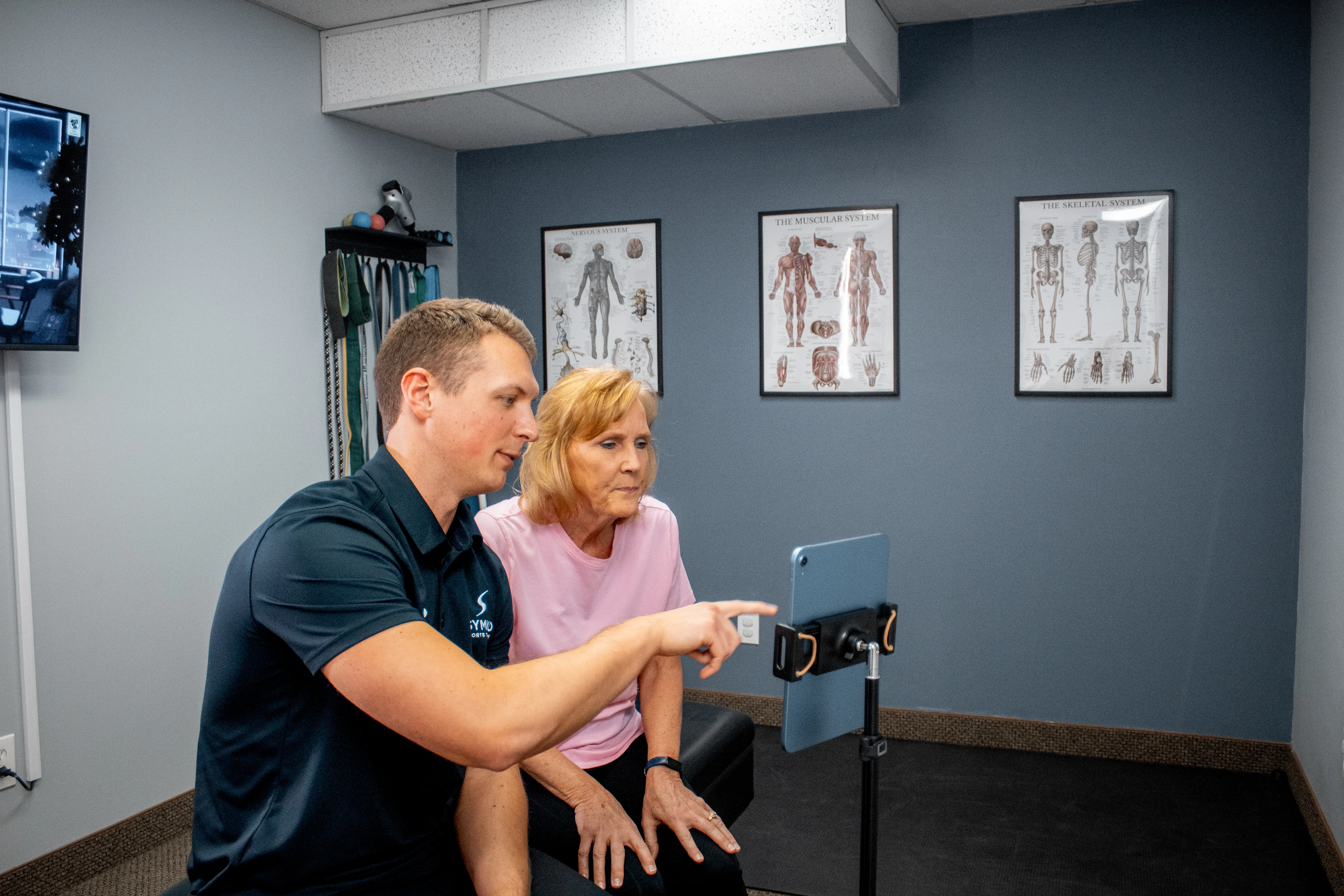
Movement Age assessments are performed in person at SYMYO Sports Therapy in Farmington Hills.
Dr. Mitch Israel is a sports rehabilitation specialist who co-developed the Movement Age assessment to give people a clearer way to measure how their body actually moves and performs.
After years of working with active adults stuck in recurring pain cycles and blaming everything on getting older, the goal was simple.
Create a way to measure how the body is actually functioning, track improvement over time, and guide a structured plan to move better and get stronger.
At SYMYO, Movement Age is not just a concept. It's a core part of how we evaluate, track, and improve how your body performs over time.
Start Here
Curious What Your Movement Age Is?
The first step is the Movement Age Intensive, our comprehensive evaluation.
During this process we will:
- Measure your Movement Age
- Show you exactly how your body is moving today
- Identify where stress and compensation may be building up
- Measure key body metrics such as muscle mass and body fat percentage
- Outline a clear plan to help you move better and get stronger
You'll leave knowing where your body stands and what the next step looks like.