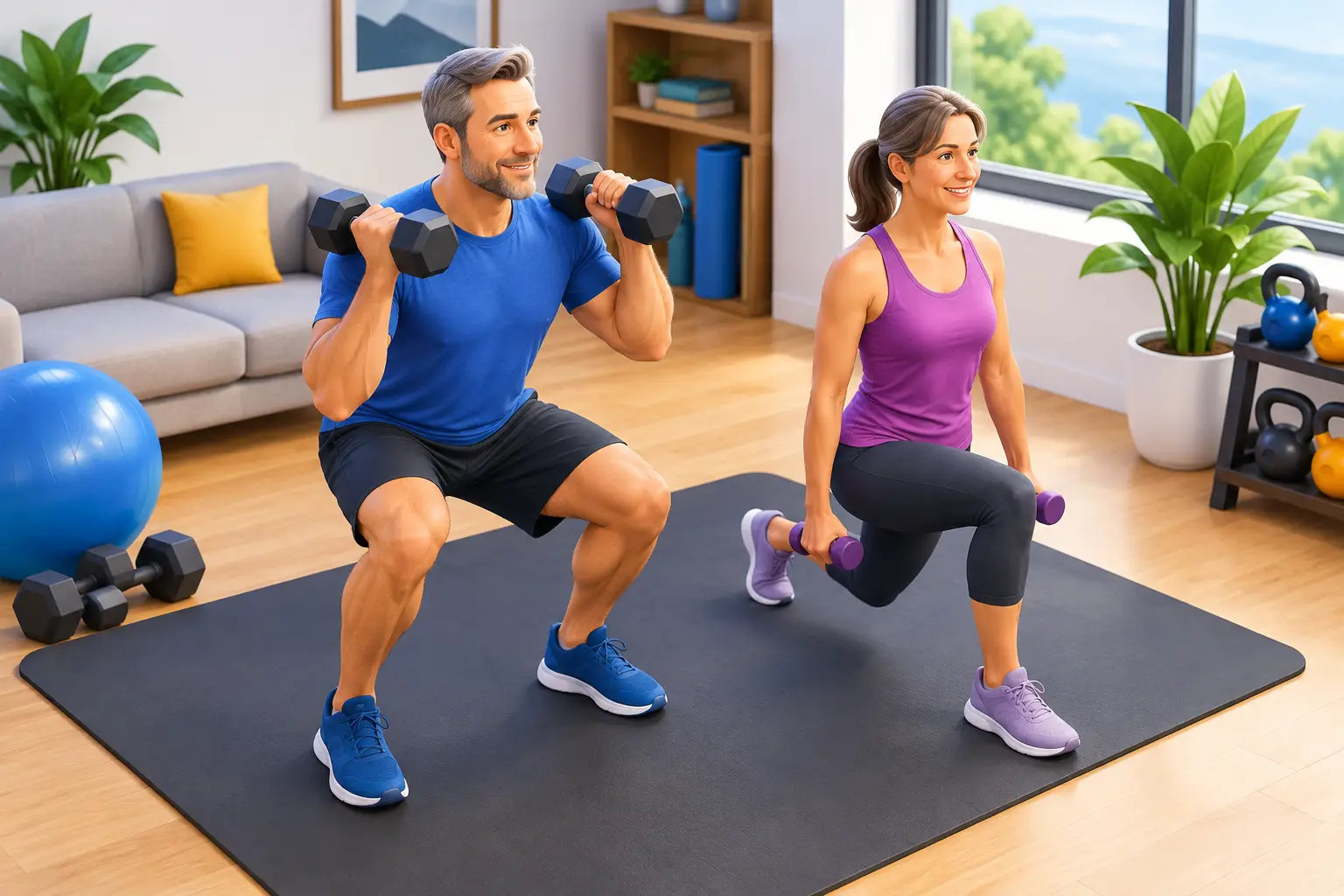
Strength training helps active adults build capacity, move with confidence, and return to the gym with a plan that fits their body and goals over time.
The problem is rarely that someone does not know strength training is good for them. Most active adults already know they should lift, exercise, or get back to the gym. The harder question is what to do when a familiar knee ache returns after squats, a stiff back makes deadlifts feel uncertain, or a shoulder starts complaining every time you press overhead.
For adults who want to keep golfing, running, lifting, playing sports, traveling, and keeping up with life, strength is not just about adding weight to a bar. It is about building the physical capacity to do the things that matter with more confidence and less guesswork.
Why Strength Training Matters After 40
Strength naturally changes with age if it is not challenged. That does not mean becoming less capable is inevitable. It means your body benefits from a regular reason to maintain and build muscle, bone-loading tolerance, balance, coordination, and control.
A well-designed program can make everyday demands easier. Carrying luggage, working in the yard, getting down to the floor, climbing stairs, and moving through a long day all require strength. Recreational activities do too. A round of golf asks for rotational control and endurance. Running asks the hips, calves, and trunk to repeatedly absorb and produce force. Pickleball asks for quick changes of direction. None of these demands are separate from strength training.
The goal is not to train like a competitive powerlifter unless that is your goal. It is to build enough strength, mobility, and stability for the life and activities you want to continue doing.
Strength Training Is More Than a List of Exercises
A generic program can be useful for someone with no meaningful limitations and a clear training history. But for many adults, the issue is not motivation. They have tried the program. They have restarted the gym routine. Then the same tightness, pain, or old injury shows up again.
That does not automatically mean an exercise is bad or that you need to stop training. It may mean the starting point, exercise selection, range of motion, load, or weekly volume does not match what your body can currently tolerate. It may also mean there are movement limitations or strength gaps worth addressing first.
For example, someone may be able to squat but lose control through one hip as the load increases. Another person may have enough shoulder motion to press overhead, but not enough upper-back control or gradual exposure to pressing volume. A runner may have strong legs but limited single-leg stability or calf capacity. These factors do not definitively explain pain, but they can be useful findings when building a more informed plan.
This is why a whole-body assessment matters. Instead of choosing exercises based only on where it hurts, it helps to look at how you move, where you compensate, what you can control, and which physical qualities may need attention first.
What a Smart Strength Training Plan Includes
Effective training is usually simpler than people expect, but it should not be random. A good plan has a clear starting point, progressive overload, and enough flexibility to account for your symptoms, schedule, recovery, and goals.
Start With What You Can Do Well
The right first exercise is not always the most advanced one. If a barbell back squat currently aggravates your knee or back, a supported split squat, goblet squat to a box, leg press, or step-up may provide a better entry point. That is not settling for less. It is choosing a movement that lets you train productively while building toward the next step.
The same principle applies to upper-body training. If pressing from the floor or bench is uncomfortable, a different grip, angle, range, or dumbbell variation may be more appropriate. The best exercise is the one that serves the goal and can be performed with good control at a tolerable dose.
Train the Major Movement Patterns
Most adults benefit from practicing variations of squatting, hinging, pushing, pulling, carrying, and single-leg work. These patterns create a practical base for daily life and recreational activity.
A hinge pattern, for instance, teaches the hips and trunk to work together when lifting an object from the ground. Pulling movements build upper-back and shoulder strength. Carries challenge grip, posture, and trunk control while remaining straightforward to progress. Single-leg work can expose differences in balance and control that bilateral exercises may not show as clearly.
Not every workout needs every pattern. What matters is that the plan covers the bases over time and gives more attention to the areas that need it.
Progress at a Pace Your Body Can Absorb
Progressive overload means gradually asking more of your body. That could be more weight, more repetitions, another set, improved range of motion, better control, or a more challenging variation. Adding load is only one option.
This is where many people get stuck. They feel good for a week, increase everything at once, and then assume training was the problem when symptoms flare. A more useful approach is to change one or two variables at a time and observe the response. If your knee tolerates three sets of eight step-ups well, the next step might be a small increase in load or repetitions, not a complete overhaul of the workout.
Some post-exercise soreness is normal, especially when starting or returning to training. Sharp pain, increasing symptoms during a session, or symptoms that linger and limit normal activity are useful signals to adjust the plan. Pushing through every warning sign is not toughness. It is poor feedback management.
Mobility and Strength Work Better Together
Mobility is the ability to actively control movement through a useful range, not simply how far you can stretch. Strength training often improves mobility when exercises are performed through a controlled range of motion. A split squat can build leg strength while challenging hip motion. A controlled row can reinforce shoulder-blade movement. A deadlift variation can improve confidence and strength in a hip hinge.
Sometimes mobility work deserves more direct attention. If ankle motion limits a squat, or thoracic stiffness makes an overhead position difficult, targeted mobility drills may help create a better training option. But mobility without strength is often incomplete. Gaining a range of motion is one thing; having the strength and control to use it is another.
This is why the best programs do not separate rehabilitation, mobility, and strength into unrelated categories. They use each one for a purpose, then connect them to the activity you want to return to.
When Pain Has Interrupted Your Training
Pain can make exercise decisions feel overly complicated. Some people avoid all training because they do not want to make things worse. Others repeatedly test the same painful movement, hoping it will suddenly feel different. Neither approach gives you much useful information.
A better process is to assess the whole picture: your current symptoms, movement patterns, training history, strength, balance, mobility, and the demands of your sport or daily life. From there, you can identify what is tolerable now and build forward.
At SYMYO, a Movement & Performance Assessment combines AI-assisted movement analysis with physical testing to measure posture, mobility, balance, strength, core stability, body composition, and movement patterns. The goal is not to assign a label based on one screen. It is to provide clear measurements, identify what needs to improve first, and create a personalized plan.
For some people, that plan begins with hands-on care and focused rehabilitation to help them move more comfortably. For others, it starts with modifying a few training variables and progressively building capacity. The right answer depends on the person, not the exercise trend.
Strength Training for Long-Term Physical Capacity
The most valuable program is the one you can continue. That requires enough challenge to create change, but not so much complexity that it becomes impossible to follow. Two consistent full-body sessions per week may be far more effective than an ambitious five-day plan that disappears after three weeks.
Consistency also does not mean never adjusting. Travel, work deadlines, a busy sports season, and occasional flare-ups happen. A durable approach has room for these realities. You may reduce volume for a week, use a different exercise variation, or focus on maintaining rather than progressing. Those are normal training decisions, not failures.
Strength training gives you a practical way to invest in your future capacity. Start with an honest picture of where your body is today, train what you can control, and build from there. The goal is not to prove what you can push through this week. It is to keep earning the ability to stay active for years to come.