Movement
How does your body handle bending, squatting, reaching, rotating, and other movements relevant to you?
Movement & Performance Assessment
If pain, stiffness, or a nagging issue keeps getting in the way of being active, your assessment helps uncover what may be contributing—and what you can do about it.
Maybe your back keeps tightening up.
Your shoulder doesn’t move like it used to.
You feel weaker or stiffer than you should.
Or every time you try to exercise more, something starts bothering you.
Instead of guessing, we measure.
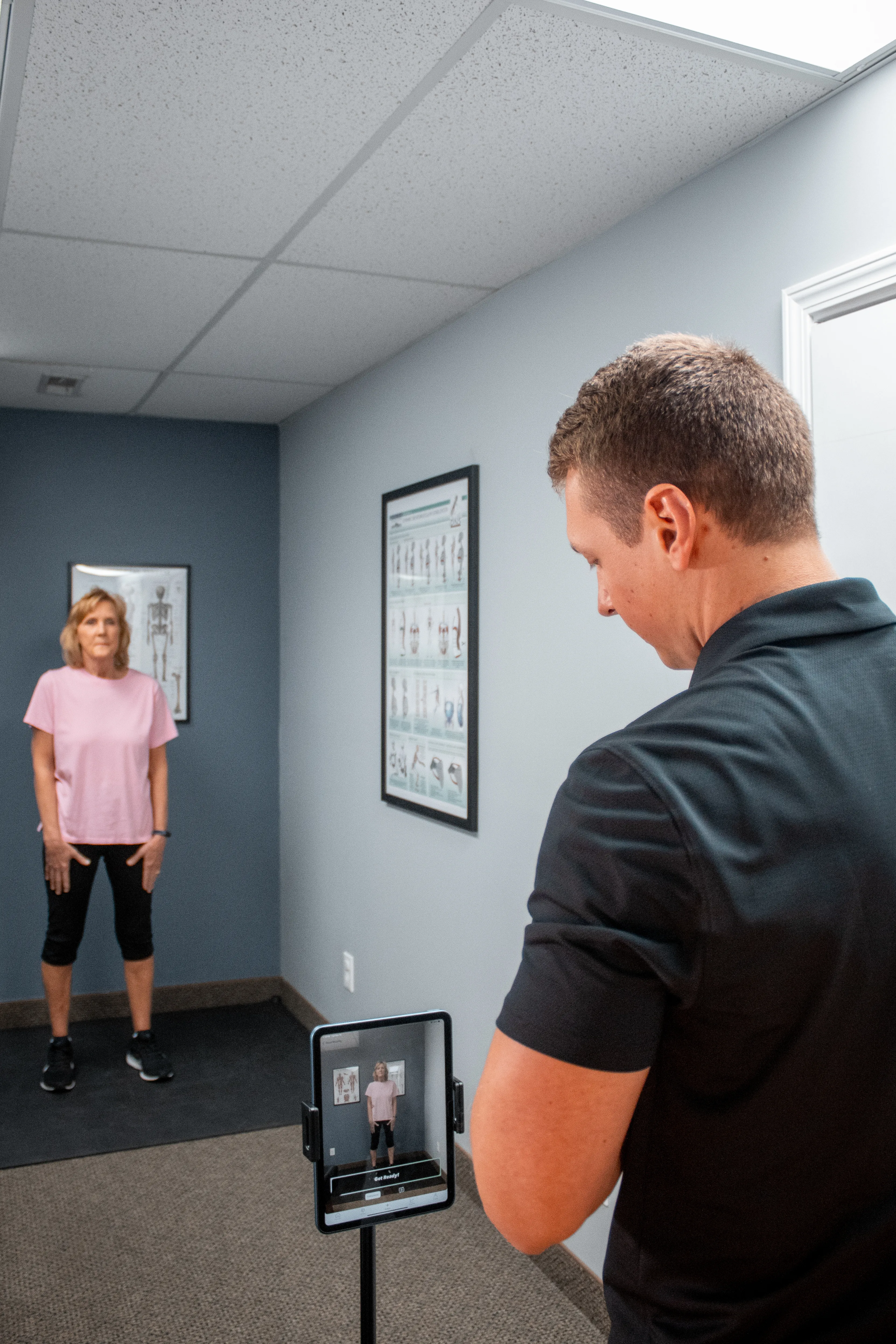
We take a closer look at how your body moves and functions, explain what we find, and help you understand what actually deserves your attention.
Answer a few questions so Dr. Mitch can understand what has been bothering you and follow up with the best next step.
If your hips feel tight, you stretch them.
If your back hurts, you focus on your back.
If you feel weak, you start strengthening.
If something hurts when you exercise, you stop doing it.
Sometimes that works.
But sometimes you spend weeks or months working on something without knowing whether it is what your body needs.
That’s why we assess first.
The assessment gives us a measurable starting point before deciding what you should work on.
We measure blood pressure, cholesterol, body composition, and heart rate because how you feel doesn’t always tell you the whole story.
Your mobility, strength, balance, and movement are important parts of your physical health too—especially if you want to keep lifting, golfing, playing pickleball, traveling, getting off the floor, or staying active as you get older.
The assessment helps you understand where you are today so you can make better decisions about what to work on next.
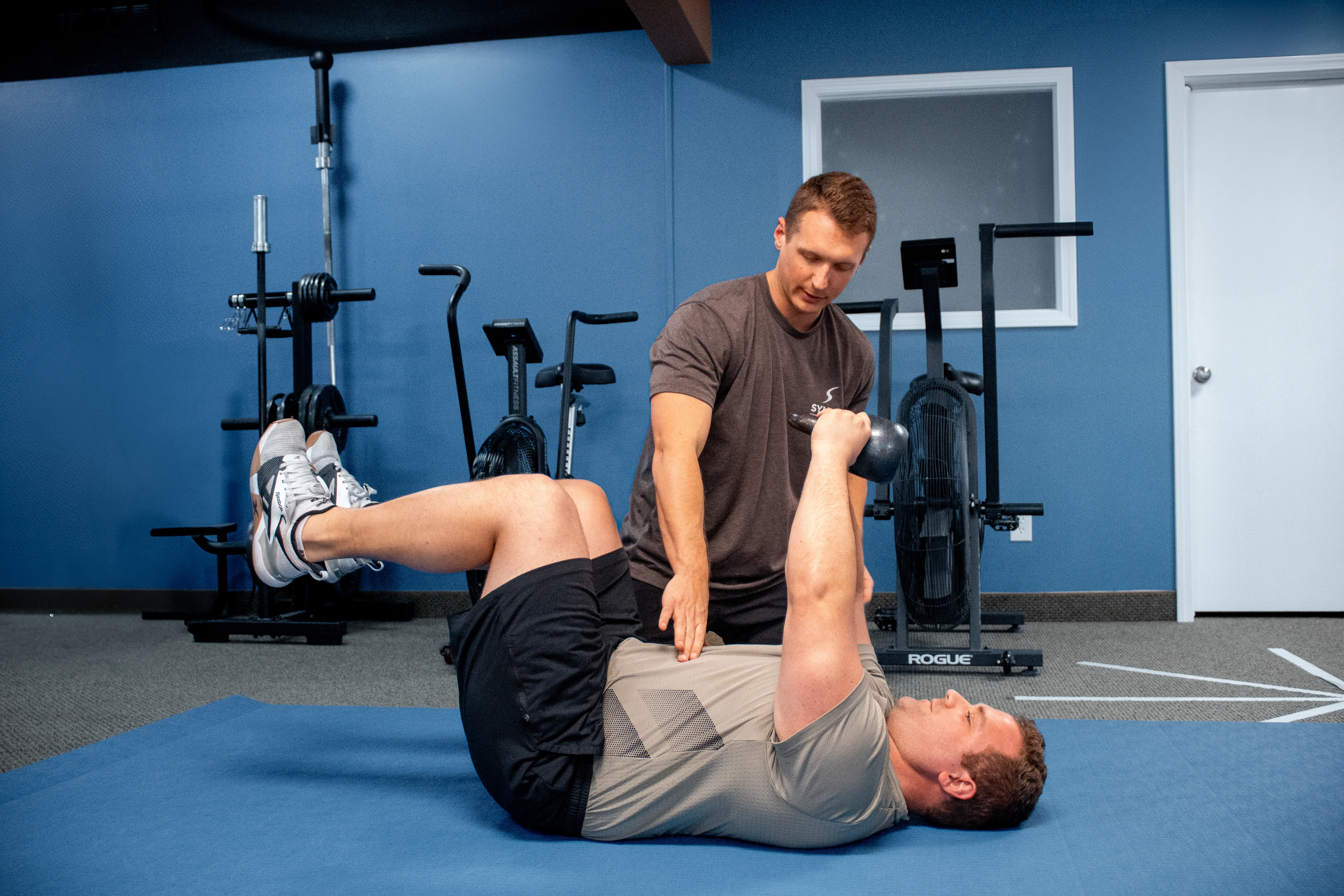
Why We Measure First
Where you feel something doesn’t always tell us what your body needs.
Two people may both have back pain when they squat.
One may have limited hip mobility.
The other may have plenty of mobility but lack the strength or control to comfortably handle the movement.
Same complaint.
Different bodies.
Different needs.
The assessment helps us test our assumptions before deciding what deserves your attention.
A Personalized Assessment
We don’t run everyone through the same checklist.
We choose the testing that fits what is going on, then focus on the findings that may matter for you.
How does your body handle bending, squatting, reaching, rotating, and other movements relevant to you?
Do your hips, shoulders, spine, ankles, or other relevant areas have the movement you need?
Do you have enough strength to comfortably handle what you are asking your body to do?
How well can you maintain control in different positions and on one leg?
Are there noticeable differences between sides—and do those differences actually matter?
What does your starting position look like, and is there anything worth paying attention to?
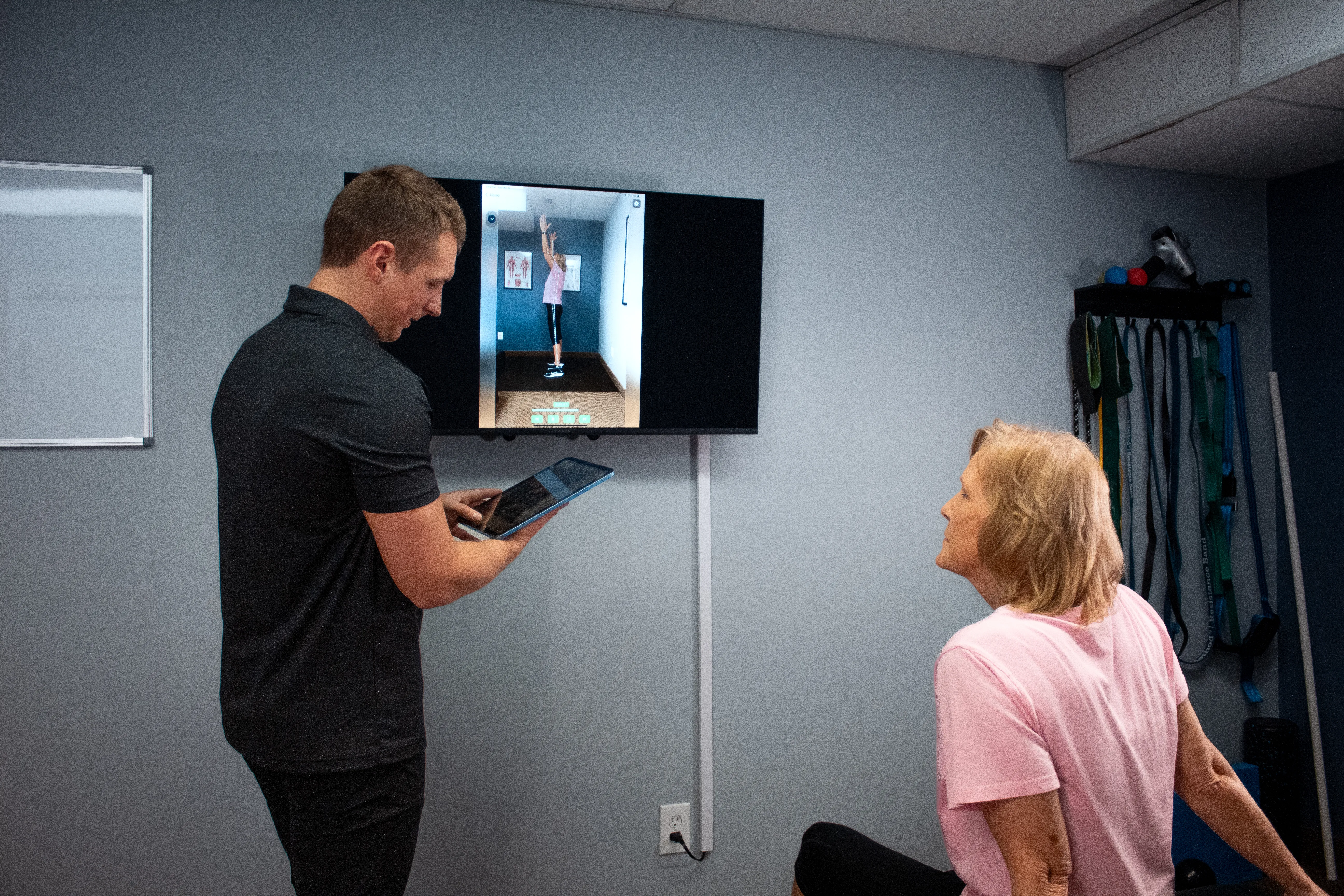
We may use AI-assisted movement analysis to objectively measure certain movements.
It is one tool within the assessment.
Dr. Mitch combines those measurements with your history and other relevant testing to decide what the information means.
If we test enough things, we will find something that isn’t perfect.
One hip may rotate farther.
One shoulder may be stronger.
Your balance may be better on one leg.
That can be normal.
Your body does not need to be perfectly symmetrical to be healthy.
The goal is not to create a giant list of problems.
We’re asking: Does this actually matter?
Is it related to what is bothering you?
Would improving it help you do something you value?
Sometimes knowing what you don’t need to work on is just as useful as knowing what you do.
Movement Age™
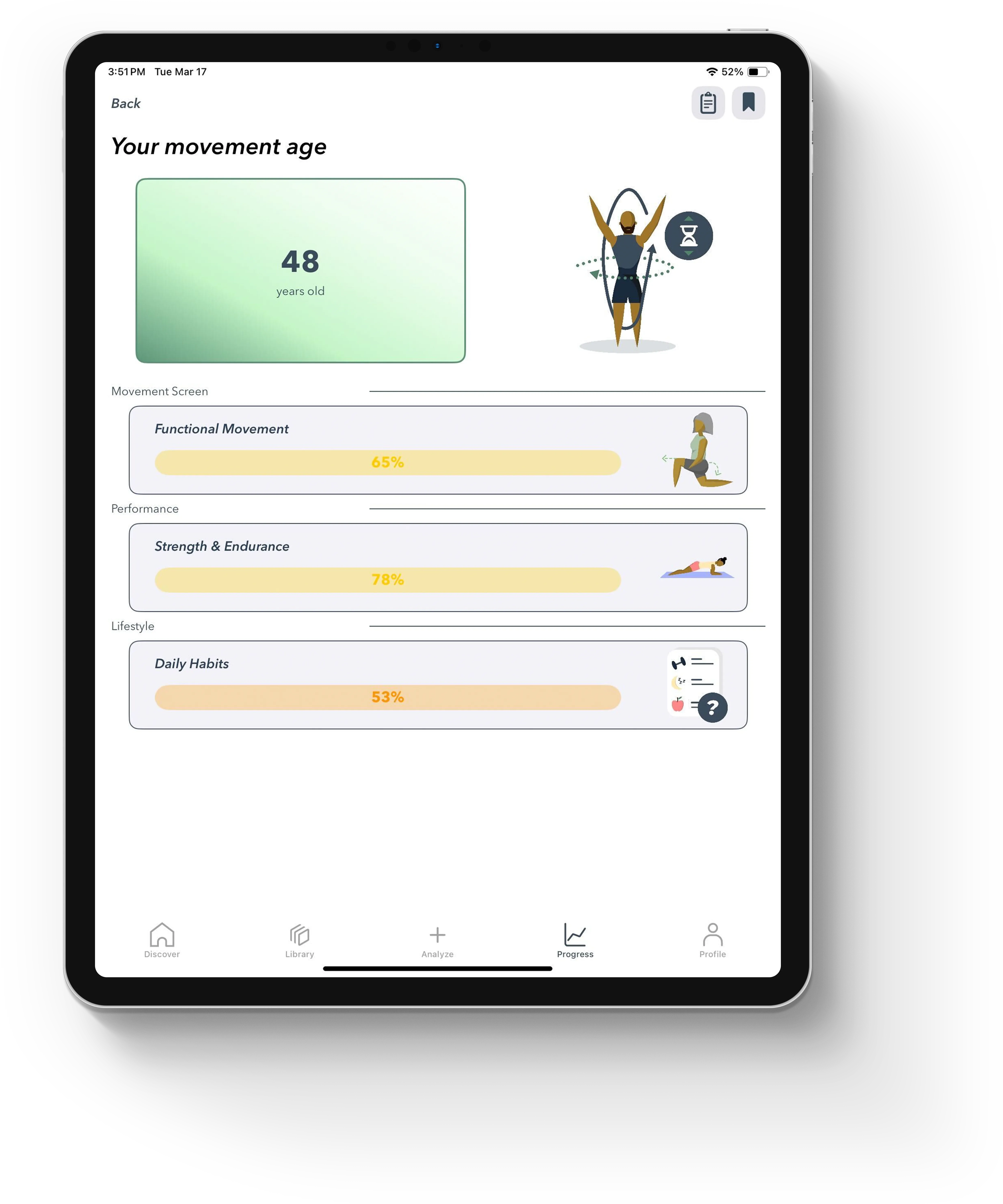
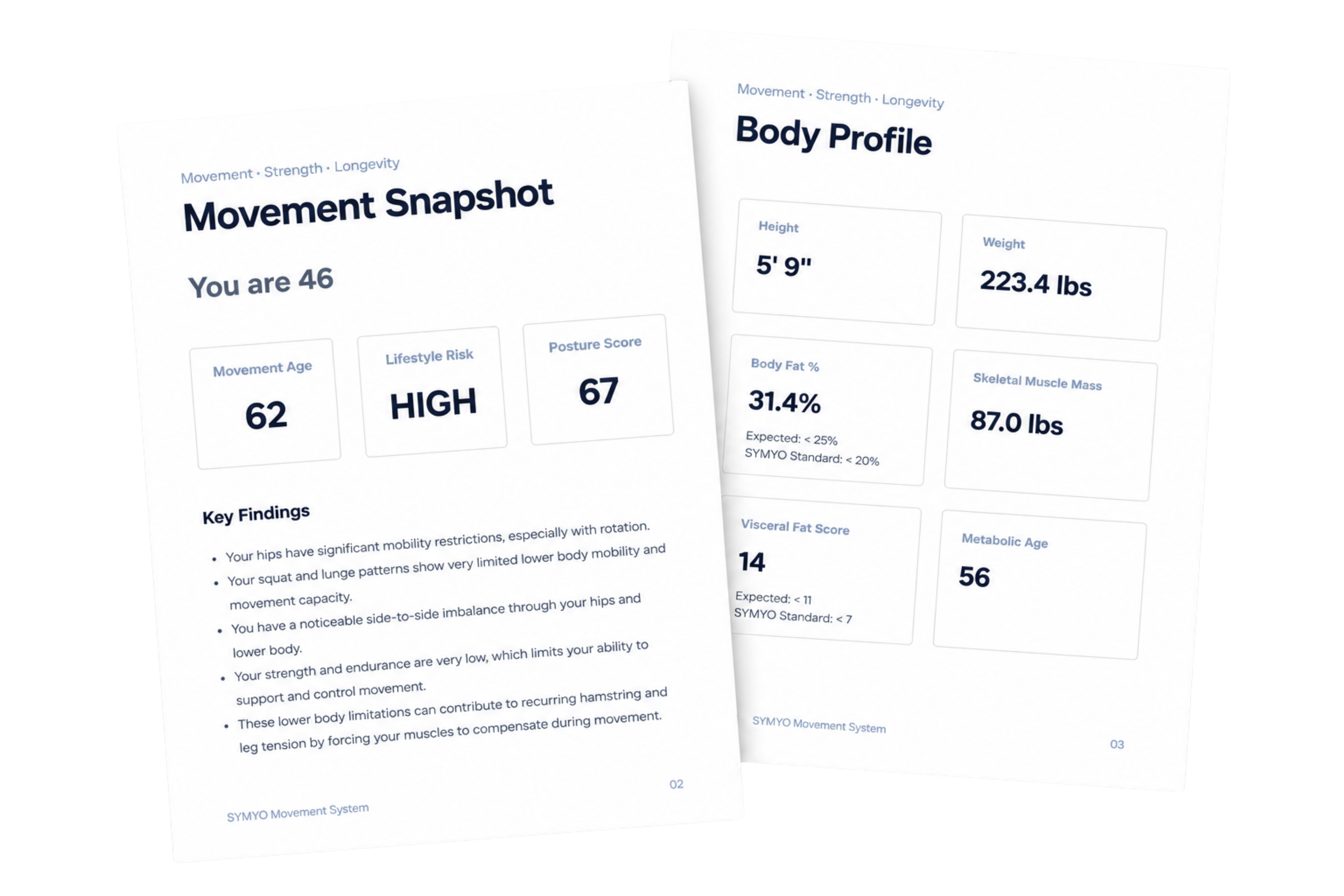
Movement Age gives you a simple way to look at aspects of your physical function compared with your actual age.
Maybe you’re 55 and moving incredibly well.
Great.
Maybe a few areas are not performing as well as you expect.
Now we know where there is room to improve.
Movement Age is not about telling you your body is “old.”
It gives you a baseline you can work from and measure again later.
The Process
01
We start with what is bothering you, how long it has been happening, what you have tried, and what you are having trouble doing.
That conversation tells us what to investigate.
02
Next, we perform the movement and physical testing that is relevant to you.
Instead of saying you look tight or seem weak, we can test it.
03
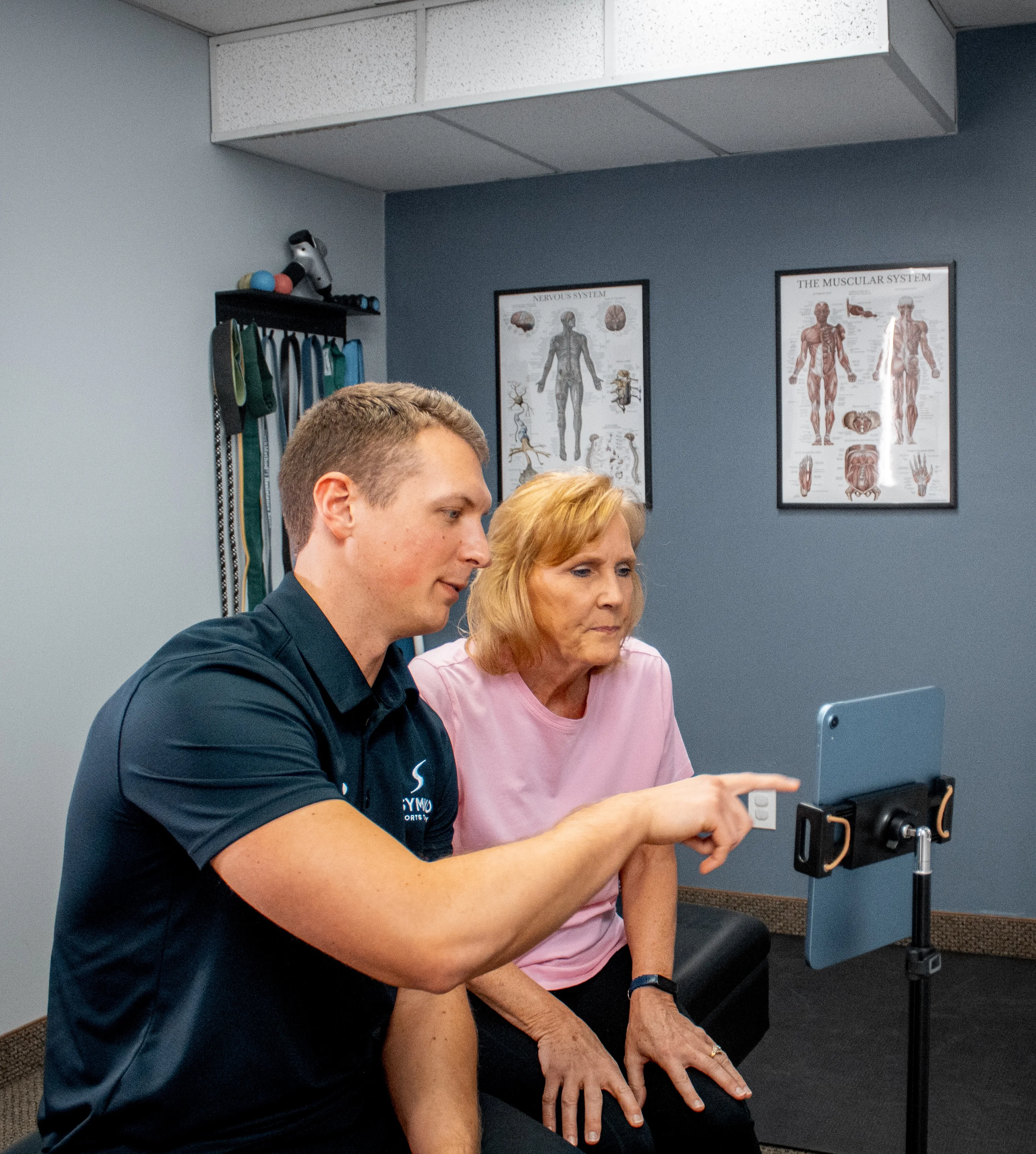
We organize your findings into your Physical Health Report, then meet separately to show you what is working well, where there is room to improve, and what deserves attention.
04
We explain what we recommend next.
That may include mobility, strength, balance, treatment, changes to your training, or a combination based on what we found.
Your Findings Review
It’s understanding what the testing means.
Pages of numbers are not helpful if you leave wondering what you are supposed to do.
During your Findings Review, we explain where you are now, what is working well, what may be holding you back, and what deserves attention.
The goal isn’t more information.
It’s clarity.
It’s how we make a better decision about what the solution should be.
Maybe you need more mobility, more strength, hands-on treatment, or a better training plan.
Or maybe the thing you have been worried about tests completely fine.
We don’t want to decide before we know.
That’s the reason we assess first.
What You Leave With
If SYMYO can help you implement the plan, we’ll explain what we recommend.
If you do not need ongoing care—or need something outside what we provide—we’ll tell you that too.
Some people come because something has been bothering them for months.
Others simply want to know how their body is doing.
Maybe you want to return to the gym but aren’t sure where to start.
Maybe you feel stiffer than you used to.
Maybe your balance or strength has changed.
Or maybe you want to keep golfing, lifting, traveling, playing sports, and staying active for years to come.
You do not need to wait until something seriously hurts to pay attention to your physical health.
Sometimes it is useful just to know where you stand.
The SYMYO System
See where your body is today instead of guessing.
Figure out what the findings mean and which ones actually matter.
Use that information to decide what deserves your attention next, then measure again later.
Don’t guess what your body needs.
Measure it.
Understand it.
Then improve it.
The Clarity Guarantee
If, after your Findings Review, you don’t feel significantly clearer about what may be getting in your way and what you should do next, we’ll refund the cost of your assessment.
If we can’t make things clearer, we haven’t done our job.
Real experiences from patients who wanted clearer answers and a better way forward.
★★★★★
“Very up to date on all the cool new technology to help find the problem and help me feel better in the long run. He really listens and understands your issues.”
Candis H
★★★★★
“He seeks solutions to problems rather than temporary relief. My overall pain has gone down, and my strength and mobility have gone up.”
Sam P
★★★★★
“The approach Dr. Mitch takes is much different than most. His plan of care gets you back to where you want to be so you can achieve your goals.”
Kathryn H
★★★★★
“He helped subside the pain, educated me on movements I could do on my own, and helped me rebuild my weak links.”
Cody M
★★★★★
“He takes the time to understand the root cause instead of simply treating the symptoms. You can tell he wants long-term results, not temporary relief.”
Callie M
★★★★★
“It was the most thorough appointment I have ever experienced, and I left feeling confident that I am in the right hands for my recovery, strengthening, and overall well-being.”
Tracey S
★★★★★
“It is not just popping some joints and sending you on your way. Dr. Mitch creates a plan to help prevent the issue from coming back in the future.”
Jacob L
★★★★★
“It is a team effort. The adjustments complement the program and are not just the quick fixes I have had in the past.”
Lisa C
★★★★★
“He explained his thought process and what was going on, which gave me confidence in the approach and helped me stop worrying about a serious injury.”
Justin N
★★★★★
“I was looking for someone to help me understand what was physically wrong. The full-circle explanations and visual aids make the process approachable and inviting.”
Jay S
★★★★★
“As a collegiate runner, Dr. Mitch helped me strengthen my knees and hips in just a few weeks.”
Jack L
★★★★★
“The mobility assessment was very detailed and revealed useful information. I love that I can use the assessment bundle to track my progress over the next year.”
Patti T
You do not need to know whether you have a mobility problem, strength problem, stability problem, or something else.
That’s what we’re trying to figure out.
Your initial Movement & Performance Assessment takes approximately 60 minutes. We then prepare your results and meet separately for a 30-minute Findings Review so we can walk you through what we found and what we recommend.
Wear comfortable athletic clothing that allows you to move freely.
No. Some people come because something hurts. Others want to better understand their mobility, strength, balance, and overall physical function.
No. We may use AI-assisted movement analysis to objectively measure certain movements, but it is only one part of the assessment. Your history and the results of your movement, mobility, strength, balance, and other relevant testing are all considered. AI helps us measure. It does not decide what you need.
You will receive your Physical Health Report, Movement Age™, a review of your findings, and recommendations for what we believe deserves your attention next.
No. We will explain what we recommend based on your results. If SYMYO is a good fit to help you implement the plan, we will explain your options. What you decide to do next is up to you.
If your history or assessment suggests that imaging, another healthcare provider, or another type of evaluation may be appropriate, we will explain that and help point you in the right direction.
Find Out What’s Holding You Back
If something keeps getting in the way—or you simply want a better understanding of your physical health—tell us what’s going on.
SYMYO Sports Therapy — Farmington Hills, Michigan