Lower Back Pain Treatment in Farmington Hills

Lower Back Pain Getting in the Way of Being Active?

Lower back treatment at SYMYO

Maybe your back feels stiff when you first get out of bed.

Maybe sitting at your desk or driving makes it tighten up.

Or maybe it feels pretty good until you lift weights, golf, work in the yard, travel, or become more active.

At SYMYO Sports Therapy in Farmington Hills, we look beyond the painful spot to understand how your spine, hips, core, strength, and movement may be contributing.

Step 1 of 425%
1. What would you most like to get back to doing?

Select all that apply.

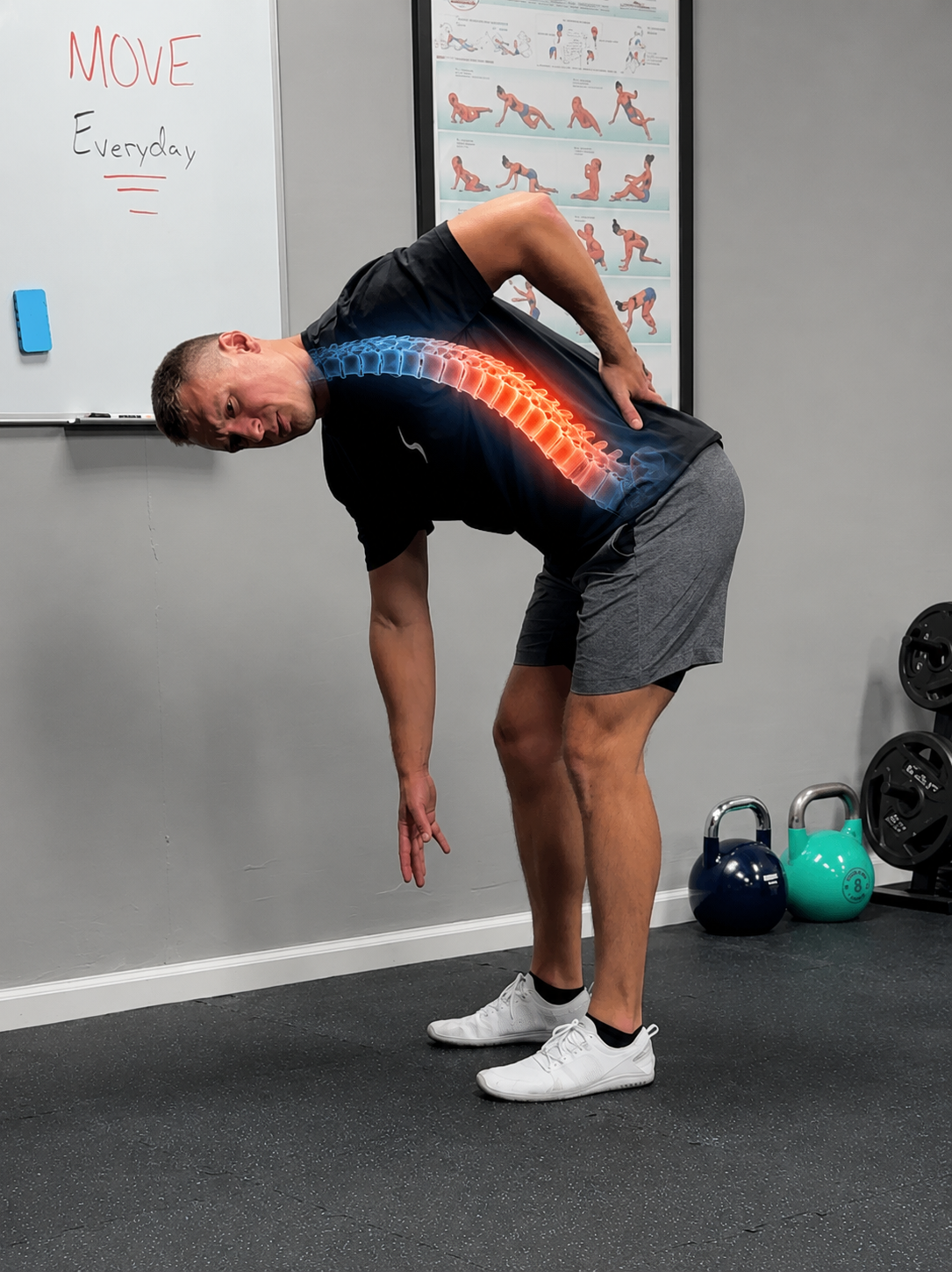
Person bending with lower back pain

Why Back Pain Keeps Returning

Back pain often returns when the body keeps moving around the same unresolved limitation. The painful area gets blamed, but the deeper issue may be how your hips, trunk, upper back, and core control are working together.

That is why SYMYO connects lower back pain treatment to Movement Age™ and full-body assessment instead of only chasing the spot that hurts.

If bridges or hip thrusts trigger your symptoms, start with these two glute bridge form fixes for lower back pain.
Common Contributors

  • Hip mobility limitations
  • Core weakness
  • Thoracic stiffness
  • Poor movement patterns
  • Ways your body works around a limitation

How We Assess Lower Back Pain

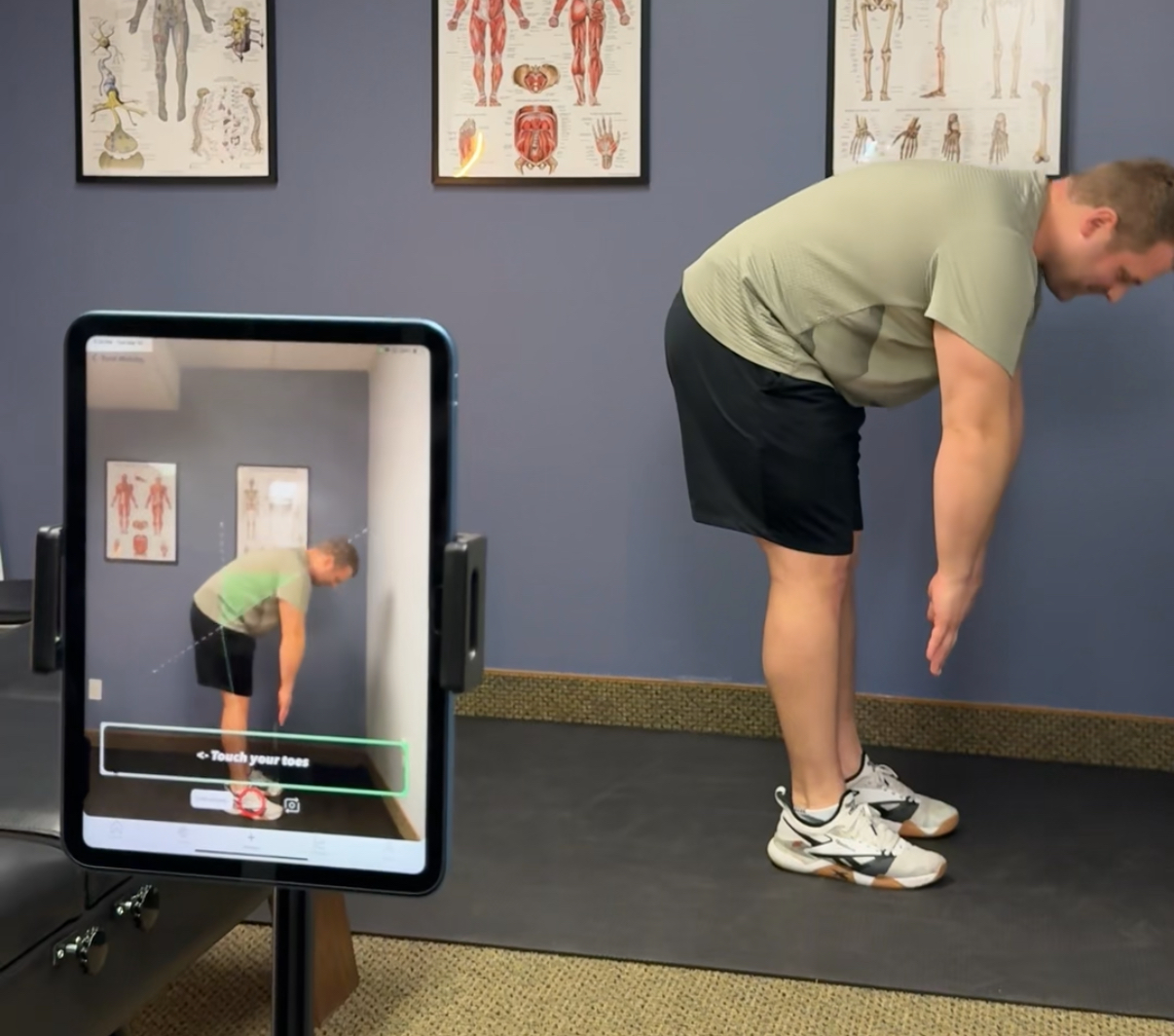
AI Movement Assessment helps identify posture, movement quality, asymmetry, and compensation patterns.

Movement Age™ gives you a simple score for how your body functions compared to your actual age.

Mobility testing shows whether restrictions in the hips, spine, or upper back may be changing how your low back moves.

Strength testing helps reveal whether your trunk, hips, and supporting muscles can handle what you ask your body to do.

What Could Be Contributing to Your Back Pain?

There isn’t one universal cause of lower back pain. Two people can point to the same spot and have very different things contributing.

Your back may not be moving well. Your hips may not be contributing as much as they could. You may need more strength or better control. Or your activity level may have changed faster than your body was ready for.

Sometimes the problem isn’t that your body is damaged. It may simply need to be better prepared for what you’re asking it to do.

Your MRI Doesn’t Tell Us Everything

An MRI can be useful when it’s needed. It can show us the structure of your spine, but it can’t show us everything about how your body functions when you move.

It doesn’t tell us how your hips move when you squat, how well you rotate, how much strength you have, how you control your trunk, or how your body responds to the activities that bother you.

That’s why we don’t look at an MRI—or any single test—in isolation. We want to understand both what your body looks like and how it actually works.

Do You Really Need More Stretching?

Feeling tight doesn’t automatically mean you need more flexibility. You may already have plenty of movement.

The tight feeling may show up because your muscles are tired, your body is irritated, you’re lacking strength, or you’re asking an area to do more work than it’s prepared to handle.

If stretching hasn’t changed the problem, it may be time to figure out what you’re actually missing.

A Different Approach to Lower Back Pain

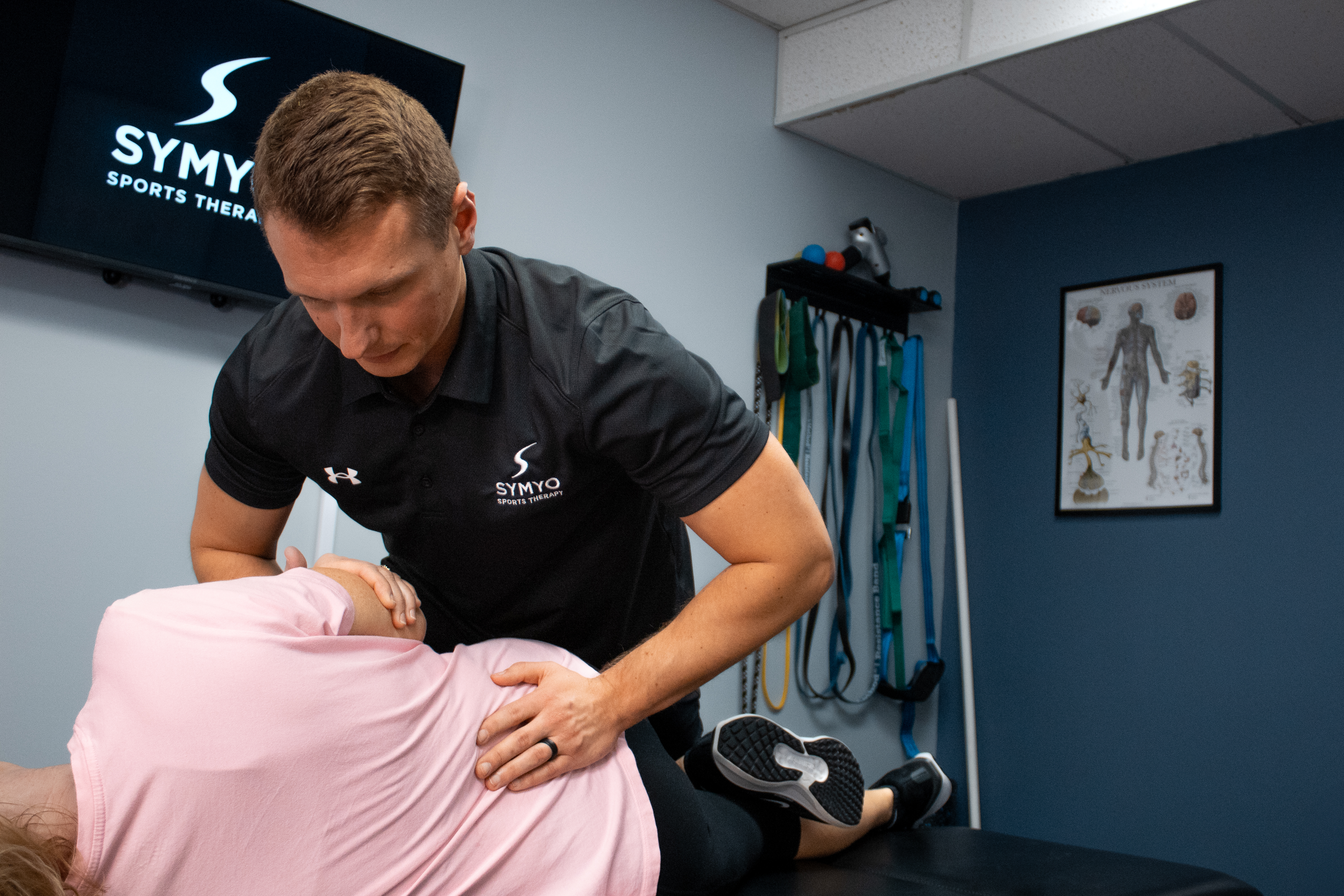
Hands-on lower back and hip assessment at SYMYO

The goal isn’t just to make your back feel better while you’re in the office. We want to help you build a body that can do more outside of it.

Depending on what we find, your plan may include chiropractic and hands-on treatment, targeted mobility work, corrective exercise, strength training, and a small number of at-home exercises.

We don’t want to give you a giant sheet of generic back exercises and hope something works. We want you to understand what you’re working on, why you’re doing it, and how it connects to what you want to get back to doing.

Why Treating Only the Back Often Misses the Pattern

Lower back pain is often where stress is felt, but the stress may be influenced by hip mobility, trunk control, upper-back stiffness, training load, or the way your body avoids another limitation.

SYMYO connects back pain care to sports therapy, movement assessment, and personalized rehabilitation instead of only focusing on temporary relief.

What the Movement Assessment Looks At

  • Hip mobility, trunk control, and upper-back movement.
  • Squat, hinge, rotation, balance, and gait patterns.
  • Core and hip strength during movements that normally provoke symptoms.
  • Compensation patterns that may explain why pain keeps returning.

Built for Active Adults in Farmington Hills and Metro Detroit

  • Your lower back pain improves for a while, then returns.
  • You feel tight through your hips, hamstrings, or upper back.
  • You want to keep lifting, training, golfing, or staying active.
  • You want to understand the cause instead of relying on short-term relief.
  • You are near Farmington Hills, Novi, Northville, Livonia, or the Metro Detroit area.
Patient Stories

What Patients Say About SYMYO

Real experiences from patients who wanted clearer answers and a better way forward.

★★★★★

“Very up to date on all the cool new technology to help find the problem and help me feel better in the long run. He really listens and understands your issues.”
CH

Candis H

★★★★★

“He seeks solutions to problems rather than temporary relief. My overall pain has gone down, and my strength and mobility have gone up.”
SP

Sam P

★★★★★

“The approach Dr. Mitch takes is much different than most. His plan of care gets you back to where you want to be so you can achieve your goals.”
KH

Kathryn H

★★★★★

“He helped subside the pain, educated me on movements I could do on my own, and helped me rebuild my weak links.”
CM

Cody M

★★★★★

“He takes the time to understand the root cause instead of simply treating the symptoms. You can tell he wants long-term results, not temporary relief.”
CM

Callie M

★★★★★

“It was the most thorough appointment I have ever experienced, and I left feeling confident that I am in the right hands for my recovery, strengthening, and overall well-being.”
TS

Tracey S

★★★★★

“It is not just popping some joints and sending you on your way. Dr. Mitch creates a plan to help prevent the issue from coming back in the future.”
JL

Jacob L

★★★★★

“It is a team effort. The adjustments complement the program and are not just the quick fixes I have had in the past.”
LC

Lisa C

★★★★★

“He explained his thought process and what was going on, which gave me confidence in the approach and helped me stop worrying about a serious injury.”
JN

Justin N

★★★★★

“I was looking for someone to help me understand what was physically wrong. The full-circle explanations and visual aids make the process approachable and inviting.”
JS

Jay S

★★★★★

“As a collegiate runner, Dr. Mitch helped me strengthen my knees and hips in just a few weeks.”
JL

Jack L

★★★★★

“The mobility assessment was very detailed and revealed useful information. I love that I can use the assessment bundle to track my progress over the next year.”
PT

Patti T

Lower Back Pain FAQ

Why does my lower back pain keep coming back?+

Lower back pain often returns when limited mobility, weakness, or the way your body moves around the problem has not been addressed.

Is recurring back pain always a back problem?+

No. Lower back pain can be influenced by your hips, core, upper back, movement habits, and how your body handles stress.

How does SYMYO assess lower back pain?+

SYMYO uses AI Movement Assessment, Movement Age™, mobility testing, strength testing, and a full-body movement assessment to understand what may be driving the problem.

Can hip stiffness contribute to lower back pain?+

Yes. When the hips cannot rotate, extend, or load well, the low back may absorb more motion and stress during lifting, walking, running, golf, or daily movement.

How does Movement Age™ relate to back pain?+

Movement Age™ helps summarize how your body functions across mobility, balance, posture, and movement quality. Back pain is often influenced by limitations elsewhere, so measuring the whole body helps guide the plan.

What does lower back pain rehab look like at SYMYO?+

A plan may include mobility work, trunk and hip strength, movement retraining, hands-on care, and gradual return to lifting, golf, training, or the daily activities that matter to you.

Should I start by booking an evaluation?+

Start with the Movement Assessment page to learn how the SYMYO process works and whether the Movement & Performance Evaluation is the right next step.

Do you treat patients from outside Farmington Hills?+

Yes. SYMYO Sports Therapy is located in Farmington Hills and works with patients from throughout Metro Detroit, including Farmington, Novi, Northville, West Bloomfield, Commerce Township, Birmingham, Bloomfield Hills, Livonia, Southfield, and surrounding communities.

Find Out What's Actually Holding Your Body Back