This guide to strength after 50 explains how to assess mobility, build capacity, and train with confidence when pain or stiffness gets in the way again.
Strength After 50 Is About Capacity, Not Caution
Strength training remains one of the most practical ways to maintain independence, confidence, and an active lifestyle as the years pass. But strength after 50 is not simply about lifting heavier weights. It includes the ability to produce force, control your body through a full range of motion, stay balanced, and recover well enough to train again.
That distinction matters. Someone may be able to leg press a significant amount of weight but struggle to step down from a curb with control. Another person may walk several miles comfortably but lack the pulling strength and shoulder control needed for tennis, golf, or lifting a grandchild. Physical health is specific. The right plan should match the activities you want to keep doing.
Age can change recovery time, tissue tolerance, and how quickly inactivity affects strength. It does not mean your body is too fragile to train. It means random workouts and aggressive progressions often become less useful. A more deliberate approach tends to produce better results.
Start With a Whole-Body Baseline
Pain is real, but the painful area is not always the only area worth assessing. A recurring knee problem, for example, may also be associated with limited ankle motion, reduced hip strength, poor single-leg control, training volume changes, or movement habits that overload the knee. None of those factors automatically explains pain, but they can help shape a more complete plan.
Before choosing exercises, get clear measurements. A useful starting point looks at posture, mobility, balance, strength, core stability, and the way you move during common patterns such as squatting, hinging, pushing, pulling, stepping, and rotating. This creates a baseline rather than relying on guesswork.
At SYMYO, the Movement & Performance Assessment combines AI-assisted movement analysis with physical testing to identify priorities and provide a clear Physical Health Report. The goal is not to find every imperfection in your body. It is to identify the limitations most likely to affect your current goals and determine what should improve first.
For some people, the priority is restoring hip motion before loading a squat pattern. For others, it is improving trunk control, shoulder stability, or confidence with single-leg work. The assessment should lead directly to practical decisions, not a long list of exercises with no explanation.
Notice the difference between discomfort and warning signs
Training involves effort. Muscles may feel tired, and a new movement may feel unfamiliar. That is different from sharp pain, pain that steadily worsens during a session, new numbness or weakness, significant swelling, or symptoms that alter the way you walk or use an arm. Those signs deserve an individualized evaluation rather than an attempt to push through.
It is also worth paying attention to the 24-hour response. Mild soreness that settles and does not interfere with normal activity can be a manageable training response. Symptoms that consistently flare later that day or the next morning may mean the exercise selection, range of motion, load, volume, or recovery plan needs to change.
Build Strength in the Right Order
The most productive programs tend to follow a progression: reduce the factors that are keeping you from moving comfortably, restore useful mobility and control, then reinforce those gains with progressively challenging strength work. This is the logic behind SYMYO's Reduce, Restore, Reinforce method.
Reducing does not mean relying on passive care alone. Hands-on treatment, when appropriate, may help someone move with less restriction or irritation so they can begin exercising more effectively. The next step matters just as much: use that improved window to practice better movement and build capacity.
Restoring focuses on the qualities that make training feel more stable and available. That may include ankle mobility for a deeper squat, hip control for stairs and running, thoracic motion for comfortable overhead movement, or trunk stability during lifting. The goal is not extreme flexibility. It is enough motion and control for the task in front of you.
Reinforcing is where strength becomes durable. You gradually load the movement patterns that support daily life and recreation: squatting or sitting to standing, hinging, pushing, pulling, carrying, stepping, and rotating. These do not need to be performed with a barbell. Dumbbells, cables, resistance bands, machines, body weight, and kettlebells can all be effective tools when used with purpose.
Use Progressive Overload Without Outrunning Your Recovery
Your body adapts when it receives a training challenge it can recover from. Progressive overload simply means asking slightly more over time. That might mean a little more weight, another repetition, an added set, better control, or a larger pain-free range of motion.
The common mistake is changing everything at once. If you increase load, add sets, train more days, and return to weekend sports in the same week, it becomes difficult to know what your body is responding to. Small, measurable progressions are easier to tolerate and easier to adjust.
For many adults over 50, two or three full-body strength sessions per week provide a strong foundation. The ideal frequency depends on your experience, schedule, current symptoms, sleep, stress, and other activity. A runner preparing for an event may need a different plan than a golfer returning after shoulder pain or a busy professional who has not trained consistently in years.
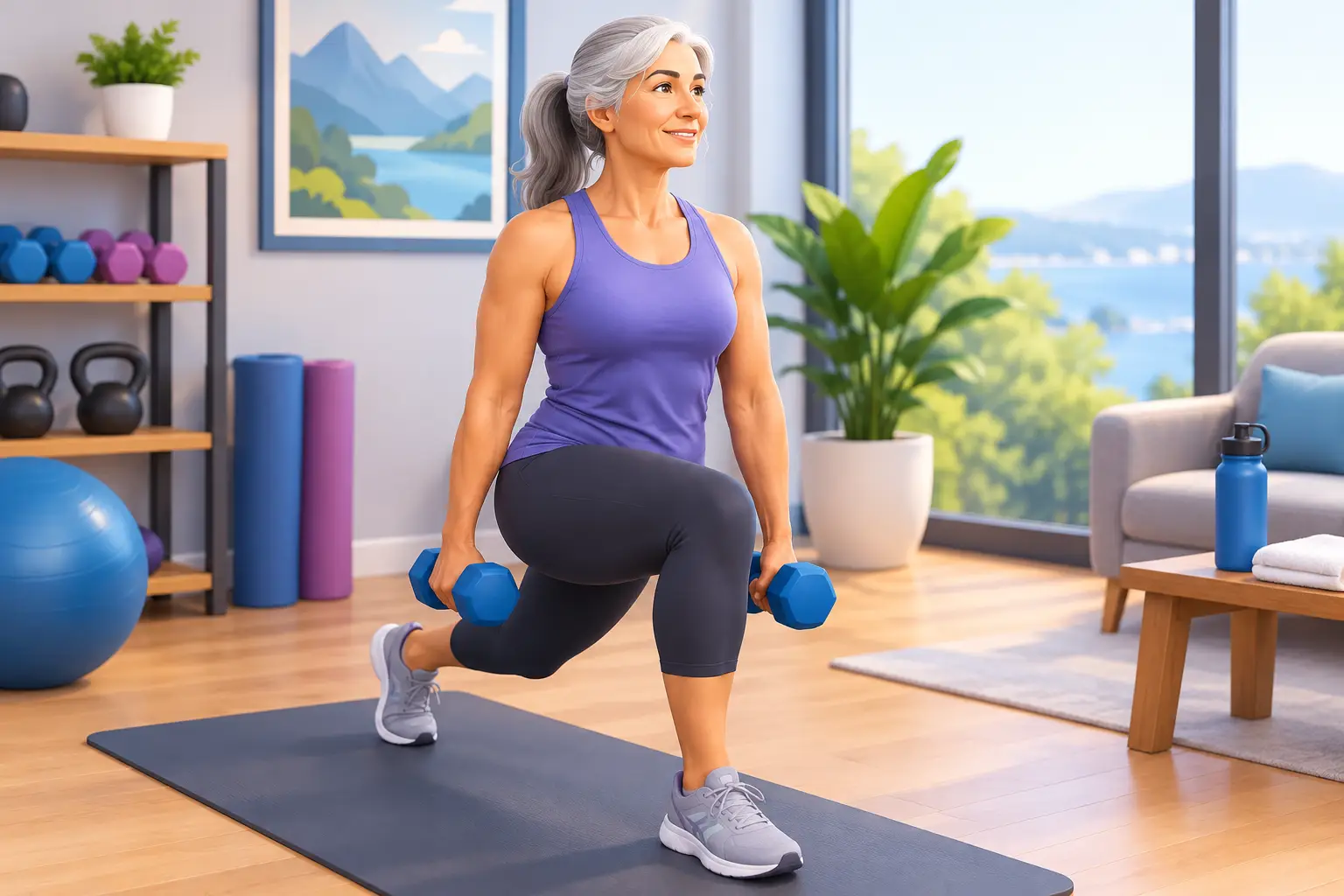
Start with movements you can control. A box squat may be the right entry point before a deeper squat. A supported split squat may come before a walking lunge. An incline push-up or machine press may be more appropriate than floor push-ups if shoulder motion is limited. These are not lesser exercises. They are tools that allow you to train the pattern now while building toward the version you want later.
Train the Movements That Keep Life Active
A well-rounded plan should not be built entirely around isolated muscle groups. Muscle-specific work has a place, especially when rebuilding an area that has lost strength. But daily life asks your body to coordinate.
Think about the movements that show up outside the gym. Hinging helps with picking up a bag of mulch or luggage. Carrying develops grip, trunk strength, and confidence with awkward loads. Step-ups and split squats support stairs, hiking, and getting up from the ground. Pulling and pressing help with household tasks, fitness classes, and recreational sports. Rotation and anti-rotation work can support more controlled golf, tennis, and everyday reaching.
Balance belongs in this conversation too. It is not separate from strength. Improving single-leg strength, foot and ankle control, and the ability to shift your weight with control can be more useful than standing on an unstable surface for its own sake.
Track More Than the Weight on the Bar
Strength is motivating when you can see it changing. Still, the number you lift is only one measure. Useful signs of progress may include less stiffness after activity, improved range of motion, better control on one leg, fewer symptom flare-ups, easier stairs, longer walks, or greater confidence returning to the gym.
Tracking these measures also keeps the plan honest. If weights are increasing but pain, fatigue, or movement quality are consistently getting worse, more is not necessarily better. The program may need a different exercise variation, a slower progression, or more attention to recovery.
A 12-week plan is often long enough to establish meaningful patterns: learn movements, improve mobility and stability where needed, and begin building strength that carries over to real life. It is not a finish line. It is a structured period to gather evidence about what your body responds to and create a sustainable next phase.
Make Strength Training Fit Your Real Life
The best program is not the most complicated one. It is the one you can repeat consistently. If three gym sessions are unrealistic, two focused sessions done every week can create more progress than an ambitious five-day plan that disappears after a month.
Choose a starting point that respects your current capacity, especially after a long break, a flare-up, or an injury. Keep sessions focused, practice good technique, and leave room to recover. As your strength and confidence improve, your plan can become more demanding.
Getting stronger after 50 is not about proving that age does not matter. It is about giving your body the specific inputs it needs to keep up with the life you want to live. Start by measuring where you are, train what needs attention, and let each well-earned improvement make the next activity feel more possible.