Injury prevention screening uses movement and strength data to identify limitations, prioritize training, and help active adults stay active longer and stronger.
What Is Injury Prevention Screening?
Injury prevention screening is a structured evaluation of movement quality and physical capacity. It looks beyond the location where you occasionally feel pain. A sore knee, for example, may deserve attention at the knee, but the assessment should also consider hip strength, ankle mobility, balance, trunk control, training volume, and how you move during tasks that matter to you.
This whole-body approach is especially valuable when the same issue keeps returning. Many people feel better after resting, reducing workouts, or receiving short-term treatment, then run into the same limitation when they resume running, lifting, tennis, or weekend projects. The missing piece is often not effort. It is a clear understanding of what their body can currently tolerate and what it needs to build next.
A useful screening process combines observation with objective testing. It should produce more than a list of things that look imperfect. Almost everyone has some degree of asymmetry or restriction. What matters is which findings are relevant to your goals, your history, and your current ability to manage load.
What a Quality Screening Measures
A thorough injury prevention screening typically starts with a conversation. Your activity history, previous injuries, current symptoms, exercise routine, work demands, and goals all provide context. Someone preparing for a half marathon needs a different lens than someone who wants to squat, play with grandchildren, and stay consistent at the gym.
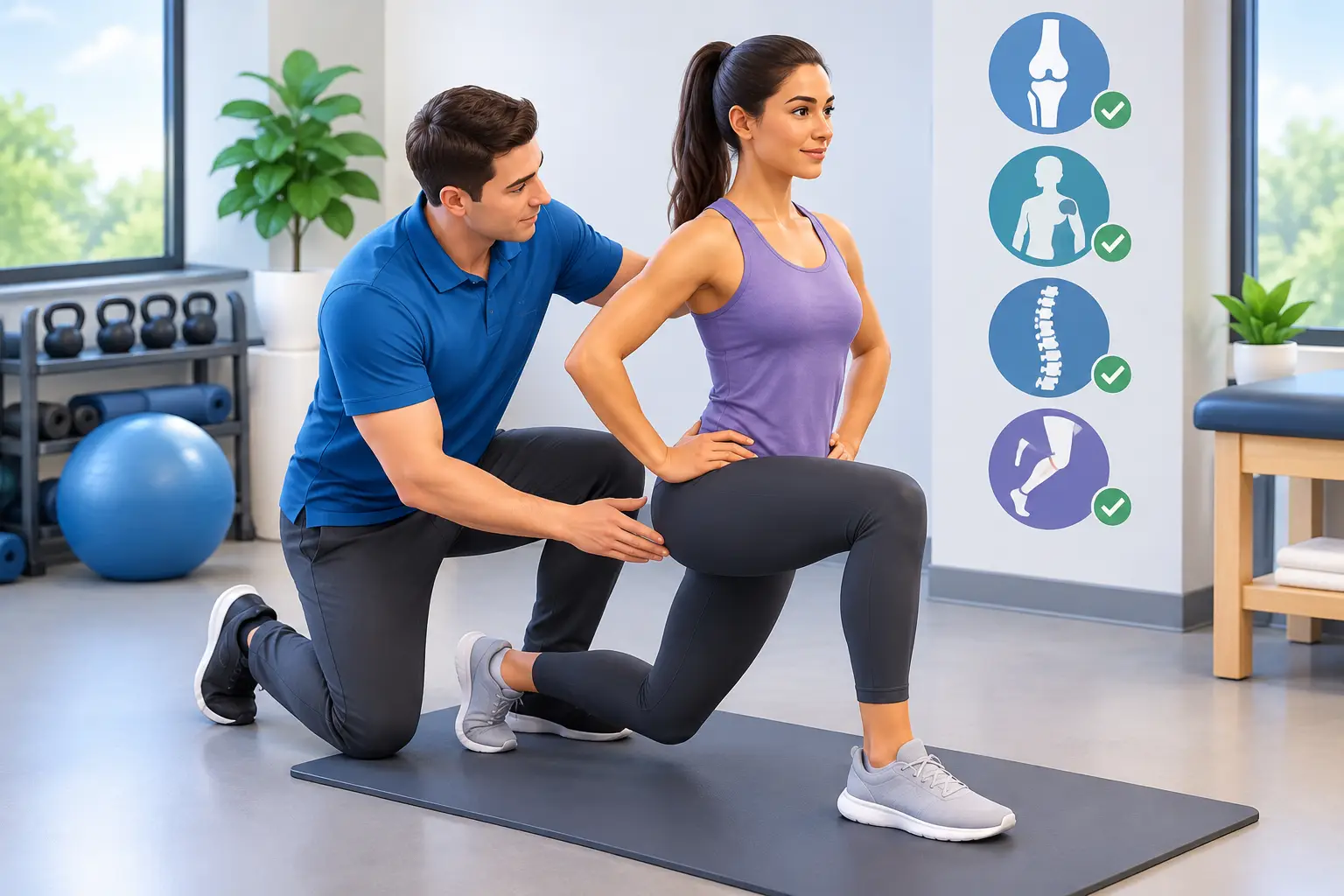
From there, the evaluation may measure posture, joint mobility, balance, strength, core stability, and movement patterns. A clinician may watch you squat, hinge, lunge, step, reach, rotate, or balance on one leg. These simple tasks can reveal how well different parts of the body work together under control.
At SYMYO Sports Therapy, the Movement & Performance Assessment pairs physical testing with AI-assisted movement analysis. That allows movement to be reviewed with more detail than a quick visual check alone. Clients receive a Physical Health Report, a Movement Age™ score, prioritized findings, and a personalized plan built around the areas likely to offer the most meaningful improvement.
The priority is not to chase perfect movement. It is to find the clearest opportunities to move better, get stronger, and build more confidence in the activities you enjoy.
Mobility Is Only One Part of the Picture
Mobility testing can show whether a joint has enough usable range for a task. Limited ankle motion, for instance, may change how someone squats, climbs stairs, or lands from a small jump. Restricted hip rotation may be relevant for golfers, tennis players, or adults who feel stiff getting in and out of a car.
But more mobility is not automatically better. Some people already have plenty of motion and need better strength and control within that range. Others may need a combination of mobility work and gradual loading. A screening helps distinguish between these possibilities instead of treating every tight feeling with more stretching.
Strength and Stability Show Capacity
Strength is the ability to produce force. Stability is the ability to control position and movement while force is being produced. Both matter when you are carrying groceries, getting up from the floor, skiing, lifting weights, or changing direction on a court.
A person may have adequate strength in a single exercise but struggle with single-leg control, trunk positioning, or endurance as a workout goes on. Those findings do not mean something is broken. They simply point to a capacity gap that may be worth training before increasing weight, mileage, intensity, or frequency.
Movement Patterns Provide Context
Movement screens are most useful when they are connected to real life. A shallow squat does not automatically explain knee pain. A difference between the right and left side does not automatically require treatment. Screening results must be interpreted alongside symptoms, training habits, injury history, and the demands of your sport or exercise routine.
That context prevents a common mistake: treating the test instead of the person. The best plan is not the one with the longest corrective exercise list. It is the one you can follow consistently and that supports the activities you actually want to do.
Who Can Benefit From an Injury Prevention Screening?
Screening can make sense if you have recurring back, neck, shoulder, hip, or knee discomfort that keeps interrupting exercise. It can also help if you are returning to activity after an injury, increasing your running or lifting, preparing for a recreational sport season, or noticing that your body feels less capable than it did a few years ago.
It is also useful when you are not in significant pain. Many active adults in Farmington Hills and the surrounding Metro Detroit area want a baseline before they push harder in the gym, train for an event, or get back into golf or tennis. A baseline creates a starting point. When progress is measured over time, you can see whether mobility, balance, strength, and movement control are actually improving.
Screening is not a substitute for medical evaluation after a significant trauma or when symptoms are severe or unusual. New numbness, progressive weakness, loss of coordination, unexplained swelling, fever, or other concerning symptoms should be evaluated promptly by the appropriate medical provider.
Turning Results Into a Plan That Works
An assessment has limited value if it ends with a report. The next step is deciding what to address first and how it fits into your schedule. For some people, that may mean temporarily adjusting training volume while improving hip strength and single-leg control. For others, it may mean restoring shoulder mobility, then progressively rebuilding pressing and pulling strength.
SYMYO follows a Reduce, Restore, Reinforce approach. First, reduce the aggravating factors that keep a problem irritated. Next, restore the mobility, control, or strength that is currently limited. Then reinforce those gains through progressive exercise and strength training so your body is better prepared for the demands you place on it.
The trade-off is that progress often requires patience. It can be tempting to jump straight back to your previous weights, mileage, or game schedule once pain settles down. But pain reduction and physical readiness are not always the same thing. Building capacity gradually gives the body time to adapt and helps make a return to activity more durable.
A good plan should be specific but not fragile. You do not need an hour of corrective work before every workout. In many cases, a few well-chosen mobility drills, targeted strength exercises, and smart adjustments to training volume are more useful than an overly complicated routine.
When to Reassess
Your body and goals change, so screening should not be treated as a one-time verdict. Reassessment is helpful after a focused training phase, when you are returning from a setback, or when your usual routine begins to feel harder than it should. It can also be valuable before a new challenge, such as a race, a ski trip, or a more demanding strength program.
The point is not to search for flaws. It is to use clear measurements to make better decisions. When you understand your current starting point, you can spend less time guessing, avoid repeatedly training around the same limitation, and put more energy into the activities that make you feel like yourself.
Staying active for the long term is less about finding a perfect body and more about paying attention early, training with purpose, and giving your body the support it needs to keep showing up.