From SYMYO Sports Therapy
Flexibility Versus Mobility for Athletes
Learn how flexibility versus mobility for athletes affects strength, joint control, and return to activity, plus what to train first for better movement.
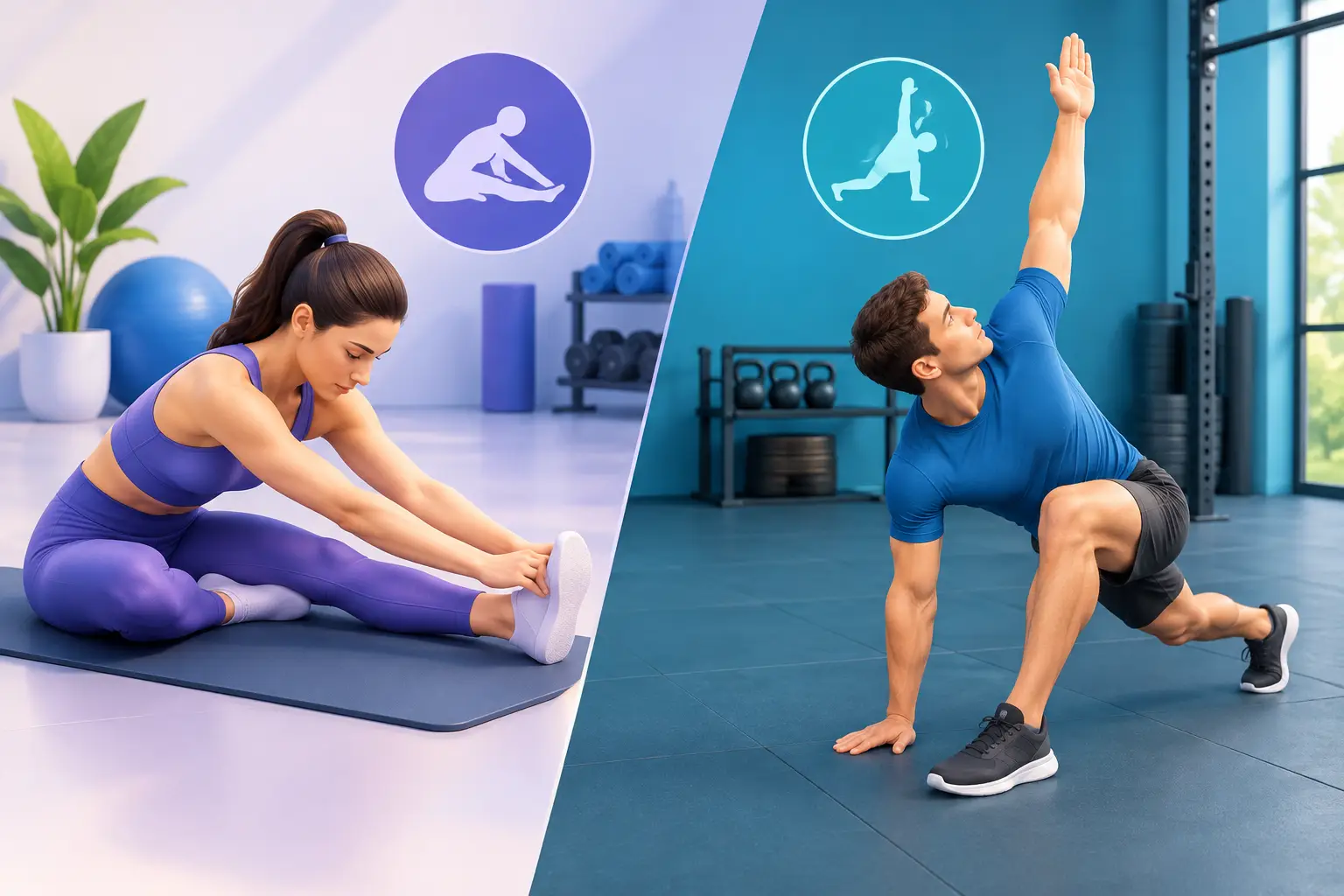
A deep squat, a smooth golf swing, and a pain-free run all ask for more than loose muscles. That is where flexibility versus mobility for athletes becomes a useful distinction. You may be able to stretch your hips farther than before and still feel limited when you try to squat, change direction, or get up from the floor. The missing piece is often control.
For active adults, this matters because the goal is rarely to achieve an impressive stretch. The goal is to keep training, playing, lifting, running, and moving confidently without feeling held back by stiffness, recurring aches, or a body that no longer responds the way it used to.
Flexibility and mobility are not the same thing
Flexibility is the passive range of motion available at a joint or through a muscle group. In plain language, it is how far you can move when something else helps create the movement. If you pull your knee toward your chest with your hands, or use a strap to raise your leg, you are testing flexibility.
Mobility is the ability to actively move through a useful range of motion with strength, balance, coordination, and joint control. If you can pull that knee to your chest without using your hands, hold your pelvis steady, and stay balanced, that is mobility.
The difference may sound small, but it changes how you train. A person may have enough hamstring flexibility to touch their toes yet still struggle to hinge during a deadlift without rounding their back. Another person may have plenty of shoulder range when lying down but lack the control to press overhead comfortably. Flexibility gives your body options. Mobility helps you use those options during real movement.
Why flexibility versus mobility for athletes matters
Athletes and active adults often label every restriction as tightness. Sometimes that description is accurate. But stiffness can also reflect limited joint motion, poor control at the edge of a range, a strength deficit, fatigue, or a movement strategy your body has adopted after an old injury.
Consider a recreational golfer whose backswing feels restricted. More stretching may help if the surrounding tissues are genuinely limiting motion. But if the golfer cannot control trunk rotation while maintaining hip and pelvic stability, stretching alone may not improve the swing or reduce the feeling of strain. The body needs access to range and the capacity to control it.
The same principle applies to runners, tennis players, lifters, and adults returning to exercise after time away. A runner may need ankle mobility to absorb force and move through each stride. But they also need calf, foot, hip, and trunk strength to control that motion repeatedly. A lifter may need hip mobility to reach squat depth, but also enough strength and coordination to own that depth under load.
This is why chasing more range is not always the answer. If you repeatedly stretch into positions you cannot control, you may simply gain motion your body does not yet trust or use well.
When flexibility is the limiting factor
Flexibility work can be valuable when a muscle group is genuinely restricting a movement you need. Common examples include a calf that limits ankle motion during a squat, hip flexors that feel shortened after long periods of sitting, or chest and shoulder tissues that limit comfortable overhead reaching.
The key is to connect the stretch to a specific goal. Instead of stretching because you feel generally tight, ask: What movement is limited? Where does it break down? Does added range improve the movement afterward?
Static stretching, slower sustained holds, can be useful after activity or as part of a separate mobility session. Dynamic stretching, which moves a joint through a controlled range, often fits well before exercise. Neither is automatically better. The right choice depends on what you need to do next and what your assessment shows.
Flexibility also varies naturally from person to person. Not everyone needs the same squat depth, hip rotation, or shoulder range to stay active. The goal is sufficient range for your sport, training, daily life, and body structure, not forcing yourself into someone else’s position.
When mobility is the bigger need
Mobility becomes the priority when you have range passively but cannot access it actively, smoothly, or under even light load. You might be able to sit in a deep squat while holding onto a doorframe, for example, but lose balance, shift to one side, or feel pinching when you squat without support.
That pattern may call for controlled movement, stability work, and progressive strength rather than more passive stretching. Exercises such as supported split squats, controlled hip rotations, heel-elevated squats, single-leg balance variations, and light carries can build usable range when they are selected for the person and progressed appropriately.
Mobility training should not look like random drills collected from social media. A drill that helps one person’s shoulder may irritate another person’s shoulder or simply fail to address the actual limitation. Useful mobility work has a purpose: improve a measured restriction, reinforce a better movement pattern, and transfer to the activity that matters to you.
Range without strength has limits
A common mistake is treating mobility as a warm-up category and strength as a separate category. In reality, strength is one of the most practical ways to build and keep mobility.
Training a movement through an appropriate range teaches your body to produce and absorb force there. A controlled split squat can improve hip motion while strengthening the legs. A row performed with good shoulder-blade control can build upper-back strength while reinforcing shoulder mechanics. A deadlift variation can improve confidence in hip hinging while building the posterior chain.
This does not mean every limitation should be loaded immediately. Pain, recent injury, poor balance, and significant movement compensations may require a more gradual approach. But once a movement is tolerated, progressive loading often helps turn temporary range gains into physical capacity.
For adults in their 40s, 50s, and beyond, this matters even more. Staying active long term requires more than being able to reach a position once. It requires enough strength, balance, and endurance to use that position repeatedly - on the court, in the gym, on a trail, or while carrying groceries and getting up from the floor.
A better way to decide what to train first
If you feel stiff or restricted, avoid assuming the answer is a longer stretching routine. Start by looking at the whole movement.
First, identify the activity that exposes the problem. Is it squatting, reaching overhead, rotating during golf, running downhill, or getting out of the car after a long drive? Then notice whether the limitation is range, control, strength, balance, or symptoms. Those are different problems and they may need different solutions.
Next, compare passive and active motion. If someone can be placed into a position but cannot get there independently, control is likely part of the picture. If the range is limited both passively and actively, flexibility, joint mobility, or other factors may be contributing. If range looks adequate but pain appears during load or repetition, strength, technique, recovery, and tissue tolerance may deserve closer attention.
Finally, retest the movement after a targeted intervention. A few controlled ankle mobilizations followed by a squat may tell you more than 20 minutes of generalized stretching. Clear measurements and retesting help identify what needs to improve first rather than relying on guesswork.
Build mobility into the training plan
The most effective approach is usually not an hour of stretching once a week. It is a consistent plan that pairs the right mobility work with stability and strength training.
A runner with limited ankle motion may benefit from ankle-focused movement drills, calf strengthening, single-leg control, and a gradual return to hills or speed work. A golfer with restricted rotation may need hip and thoracic mobility alongside trunk and lower-body strength. A gym-goer with recurring shoulder discomfort may need to assess shoulder motion, upper-back control, pressing volume, and exercise technique together.
At SYMYO, a Movement & Performance Assessment is designed to look beyond the painful area. It measures mobility, balance, strength, core stability, and movement patterns to help determine which limitations may be contributing and where to begin. The goal is not to label every imperfection as a problem. It is to create a practical plan to move better, get stronger, and return to the activities you value.
Your body does not need endless stretching to stay active. It needs enough range for your goals, the control to use that range, and the strength to rely on it when life and sport demand more.
Want to Understand How Your Body Is Actually Moving?
If you have tried to fix your posture, loosen tight muscles, or follow random exercises and still do not know what your body needs, an assessment can help.
The SYMYO Movement & Performance Assessment measures your mobility, strength, balance, posture, and overall movement. You will understand what is working well, where there is room to improve, and what deserves attention.
Learn About the AssessmentAbout Dr. Mitch Israel
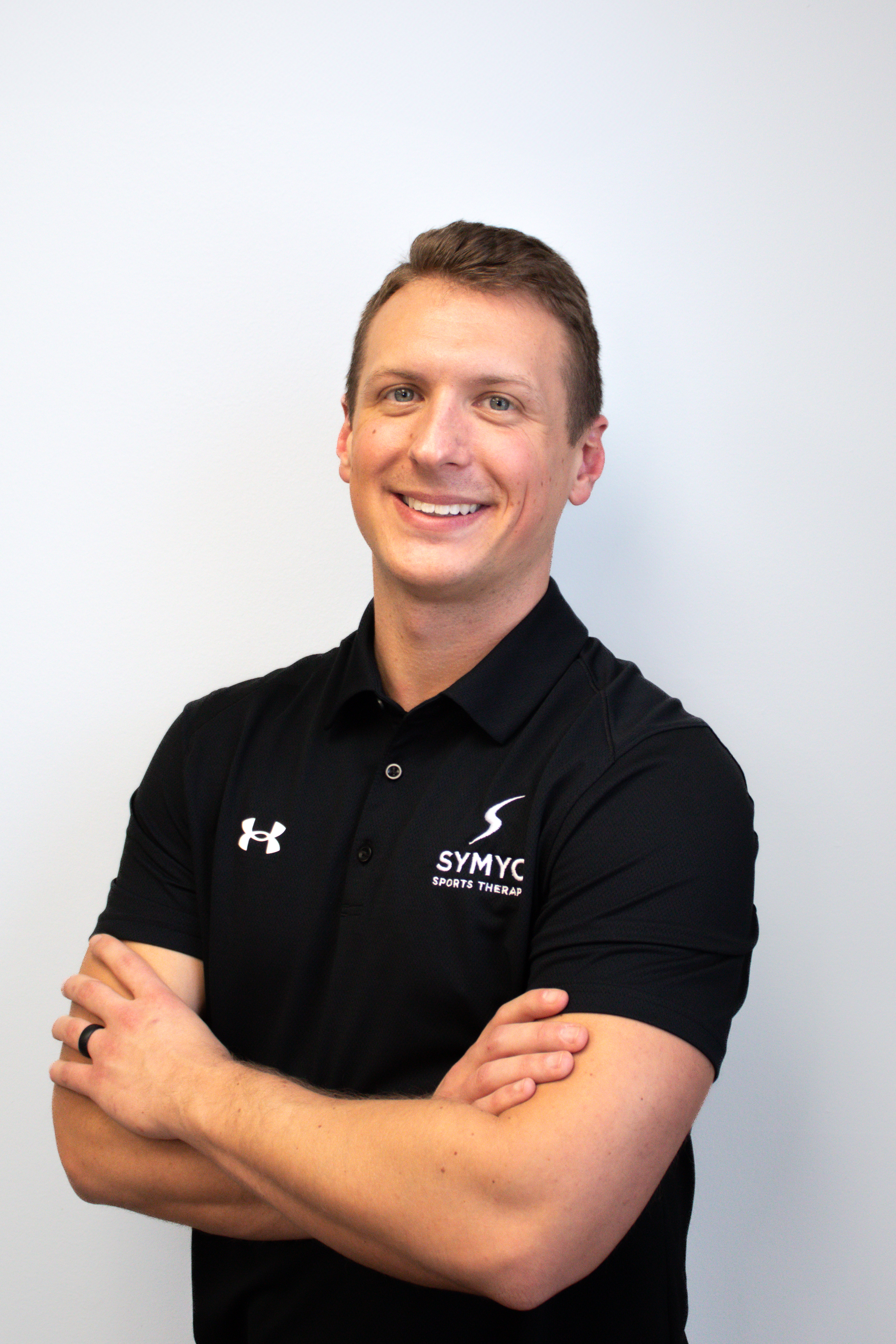
I'm Dr. Mitch Israel, a sports chiropractor and rehab specialist and the owner of SYMYO Sports Therapy in Farmington Hills, Michigan.
I created SYMYO to help people do more than temporarily feel better.
My goal is to help you understand your body, improve what actually needs improving, and build the strength and confidence to keep doing the things you enjoy.
When general advice is not enough, a personalized assessment and plan can make the difference.
SYMYO Sports Therapy
33930 West 8 Mile Road, Suite 2AFarmington Hills, MI 48335
Serving Farmington Hills, Novi, Northville, Livonia, Plymouth, West Bloomfield, Farmington, and surrounding Metro Detroit.