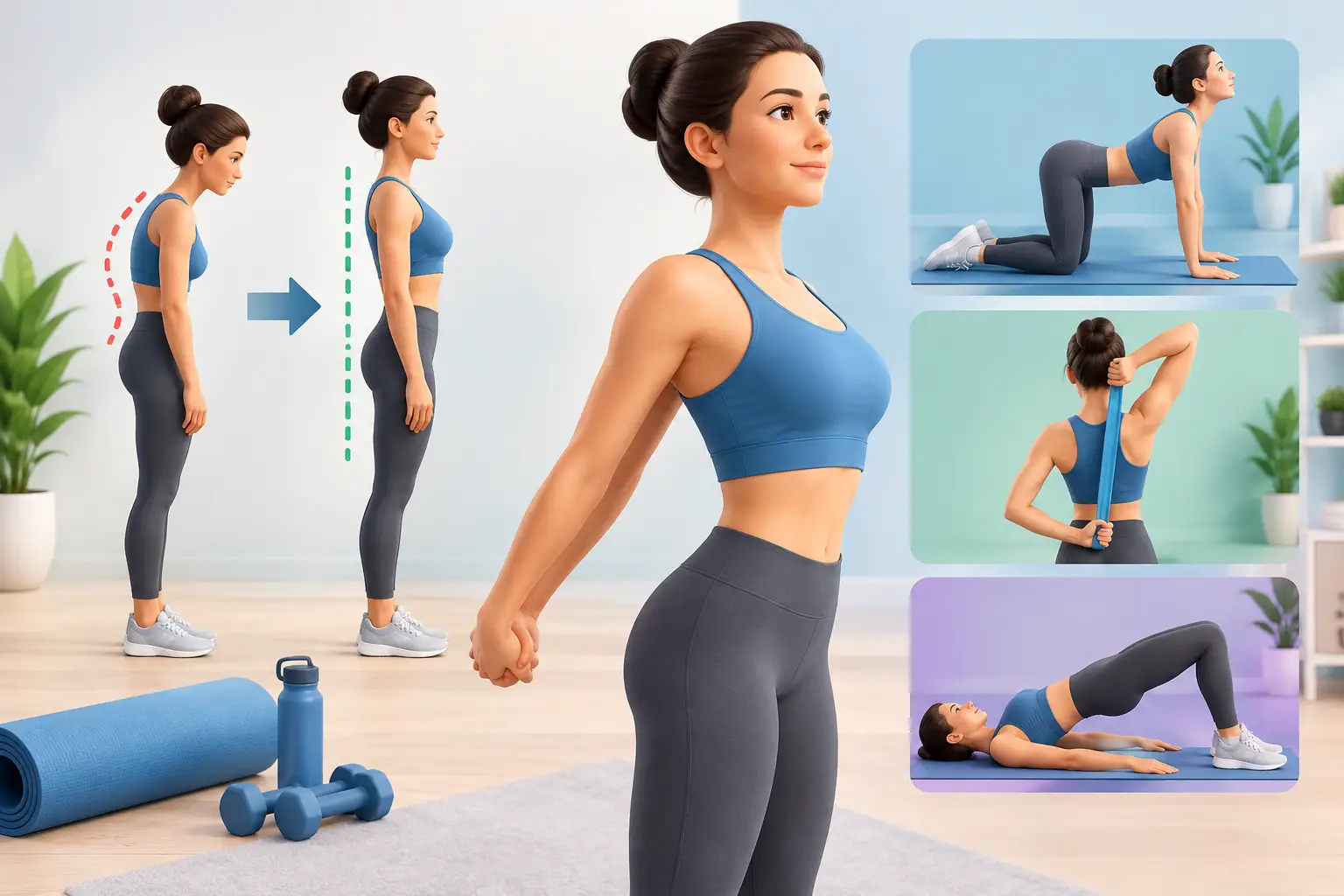
Posture correction exercises can build mobility, strength, and control. Learn a practical approach for active adults who want to move better every day.
A posture check in the mirror can tell you very little about how your body performs when you are lifting, running, golfing, sitting through a long meeting, or carrying groceries. The most useful posture correction exercises are not about forcing yourself to sit perfectly straight. They are about building the mobility, strength, and body control to move through daily life without feeling stuck in one position.
For active adults, posture concerns often show up as recurring neck tension, a stiff upper back, shoulders that feel restricted overhead, or low back discomfort after sitting. Those symptoms deserve attention, but posture alone is rarely the complete explanation. Your movement history, training habits, work setup, mobility, strength, recovery, and how much time you spend in the same position can all be part of the picture.
Why “Perfect Posture” Is the Wrong Goal
There is no single posture that every body needs to maintain all day. A position that feels comfortable for one person may feel stiff or fatiguing for another. Even a generally good-looking seated posture becomes less helpful if you hold it for three hours without moving.
A better goal is movement variability. Your body should be able to get into useful positions, control them, and comfortably change positions when needed. That means having enough upper back motion to reach overhead, enough hip motion to squat or hinge, and enough trunk and shoulder strength to support the activities you enjoy.
This is why simply pulling your shoulders back all day often fails. It may create more tension in your neck or upper back if your body does not have the mobility and strength to sustain that cue. Posture is better viewed as an output of your available movement options, not a problem to force into place.
Start With What May Be Limiting You
The right exercise plan depends on what you need to improve first. Someone who rounds forward at a desk may need more upper-back mobility and pulling strength. Someone who stands with an exaggerated low-back arch may benefit from better ribcage, pelvis, and trunk control. A runner with recurring hip tightness may need hip strength and single-leg stability more than another stretching routine.
Pain also changes the equation. If neck, shoulder, back, hip, or arm symptoms are persistent, worsening, associated with numbness or weakness, or making exercise difficult, it is worth getting evaluated rather than guessing. An exercise that helps one person can aggravate another when the underlying movement limitation, training load, or injury history is different.
At SYMYO, a whole-body Movement & Performance Assessment looks beyond a single body part. It measures posture, mobility, balance, core stability, strength, and movement patterns to identify what may be contributing to limitation and what should improve first. That creates a clearer starting point than copying a generic posture routine online.
Posture Correction Exercises That Build Useful Capacity
The following movements are practical starting points for adults who can perform them comfortably. They are not a test of flexibility or a replacement for individualized care. Move slowly, stay out of sharp or escalating pain, and use a range of motion you can control.
1. Wall-supported breathing with reach
Stand with your back against a wall and your feet about 8 to 12 inches forward. Let your ribs settle over your pelvis rather than flaring your chest upward. Gently reach both arms forward at shoulder height, then take a slow breath in through your nose and a longer breath out.
The goal is not to flatten your entire back against the wall. It is to practice controlling your ribcage and trunk while your shoulders reach forward. Complete five slow breaths, rest, and repeat for two or three rounds. This can be useful for people who feel like they are always bracing through the neck and low back.
2. Quadruped thoracic rotations
Start on your hands and knees with your hands below your shoulders and knees below your hips. Place one hand behind your head. Slowly rotate that elbow toward the opposite arm, then open the elbow toward the ceiling as far as you can without shifting your hips excessively.
This movement targets upper-back rotation, which can be associated with how comfortably your neck and shoulders move. Perform six to eight controlled repetitions per side. If you feel this mainly in the low back, make the movement smaller and keep your hips quieter.
3. Wall slides with a controlled reach
Stand facing a wall with your forearms on the wall and elbows bent. Apply gentle pressure into the wall as you slide your arms upward. At the top of your comfortable range, reach slightly forward without shrugging your shoulders toward your ears, then return with control.
Wall slides train the shoulder blades, upper back, and trunk to work together during overhead motion. Two sets of six to 10 repetitions is plenty at first. You should feel effort around the upper back and sides of the ribcage, not pinching in the front of the shoulder.
4. Glute bridge with a full exhale
Lie on your back with knees bent and feet flat on the floor. Exhale slowly, allowing your ribs to settle, then press through your feet to lift your hips. Pause briefly at the top without overextending your low back, then lower under control.
A bridge is not about lifting as high as possible. It is about using the hips while maintaining trunk control. Start with two sets of eight to 12 repetitions. If you only feel hamstrings cramping, bring your feet a little closer to your body or reduce the range.
5. Split squat isometric hold
Take a short staggered stance with both feet pointing forward. Lower into a comfortable split-squat position and hold for 15 to 30 seconds while keeping your torso tall and weight balanced through both feet. Repeat on the other side.
This exercise challenges hip strength, balance, and control in a position that resembles walking, climbing stairs, and many athletic movements. It can be more valuable for posture and day-to-day function than repeatedly trying to hold a rigid standing position. Start with two holds per side.
6. Chest-supported row
Using a bench and dumbbells, or a cable or band setup that lets you keep your torso supported, pull your elbows toward your hips with control. Think about moving your arms while allowing your shoulder blades to rotate and settle naturally. Avoid aggressively squeezing your shoulder blades together or jutting your head forward.
Rows build the upper-back and shoulder strength that helps you tolerate reaching, carrying, lifting, and prolonged desk work. Use a load that allows eight to 15 smooth repetitions for two or three sets. Strength matters because posture is not just a position problem. It is often a capacity problem.
How to Turn Exercises Into a Plan
Doing all six exercises every day is not automatically better. Start with two mobility or control movements and one or two strength movements that match your current limitations. For example, a desk-based professional with a stiff upper back might use thoracic rotations, wall slides, and rows two to three times per week, plus brief movement breaks during the workday.
Consistency matters more than intensity early on. A 10-minute routine performed three times per week is more useful than a 45-minute session you avoid because it feels overwhelming. As the movements become easier, progress them by increasing range of motion, adding resistance, improving control, or integrating them into regular strength training.
Pay attention to trends rather than judging a routine by one workout. Are you more comfortable reaching overhead? Can you train with less stiffness afterward? Do you recover better from a round of golf, a long drive, or a day at your desk? These are practical measurements of whether your plan is helping.
Do Not Let Posture Become Another Source of Tension
Posture awareness can be useful, especially if you notice you have been in one position for too long. But constantly monitoring every shoulder, rib, and hip position can make you more guarded. Use posture cues briefly, then return your attention to moving, breathing, and building strength.
The most sustainable approach is to give your body more options. Change positions during the day. Train the movements you want to keep. Address limitations with a clear plan instead of chasing a picture-perfect stance. Better posture is often less about holding yourself still and more about having the capacity to move well when life asks you to.