Posture & Hip Mobility
How to Fix Anterior Pelvic Tilt: What Helps and What Does Not
If someone told you that your pelvis tilts too far forward, you may be wondering whether that explains your back or hip discomfort—and what to do about it.
By Dr. Mitch Israel
Originally published November 19, 2024 · Updated October 15, 2026
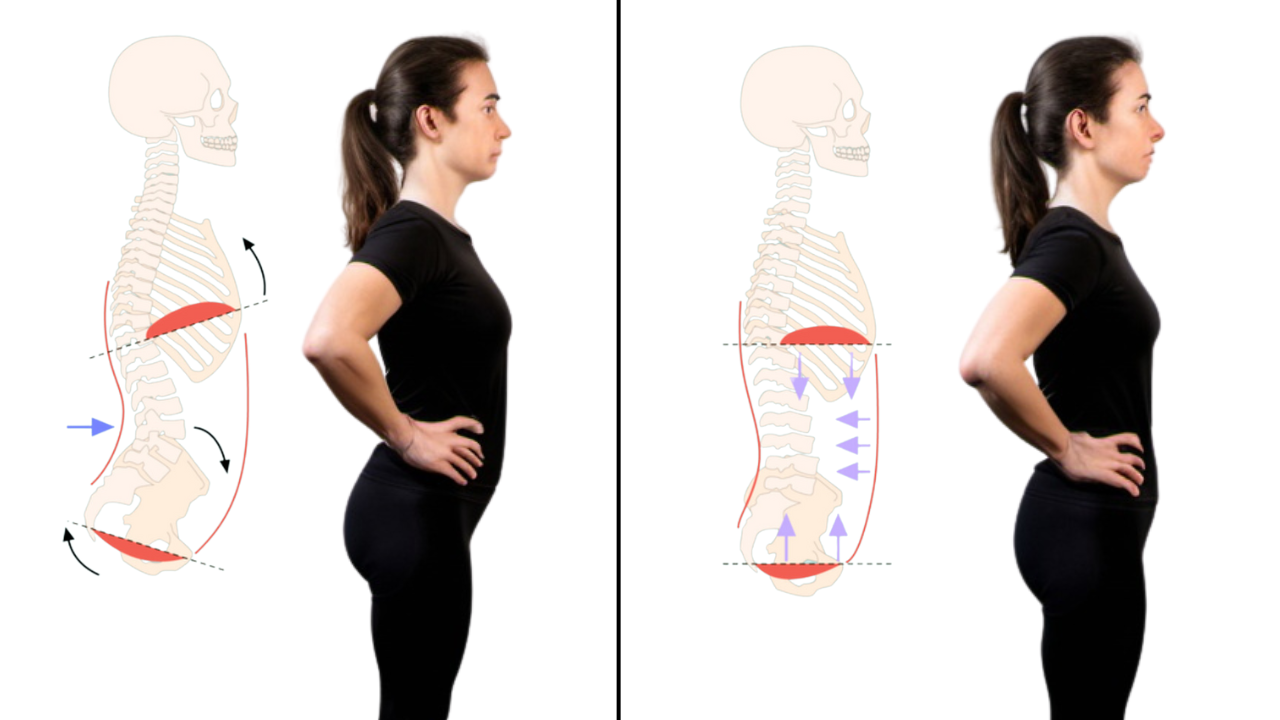
Anterior pelvic tilt describes the pelvis tipping forward in relation to the thighs. It is a way to describe position, not a diagnosis. A person’s posture varies, and seeing a forward tilt does not by itself prove that something is wrong or that it is causing pain.
I'm Dr. Mitch Israel, owner of SYMYO Sports Therapy in Farmington Hills. When someone has back or hip symptoms, I look at more than a still posture. I want to understand how they move, what activities are difficult, and what their body can comfortably handle.
Watch: Anterior Pelvic Tilt Exercises
In this original video, I demonstrate hip flexor and quadriceps stretches, glute bridges, plank variations, cat-cow movement, and hip circles. Use the options that feel comfortable; you do not need to do every exercise.
Prefer to watch on YouTube? Open the exercise video →
Does Anterior Pelvic Tilt Need to Be Fixed?
Not automatically. A research review found no clear evidence that anterior pelvic tilt on its own causes pain, limits function, or lowers quality of life. People naturally stand with different pelvic positions. There is no single angle everyone needs to achieve.
If you have back or hip pain, the position may be one piece of a broader picture—or it may not be relevant. An assessment should connect what we see to your symptoms, movement, and goals instead of labeling a posture from a picture.
What Might Be Affecting Your Movement?
Long periods in one position, training changes, hip mobility, strength, balance, recovery, and your health history can all affect how movement feels. You cannot reliably identify “tight” or “weak” muscles just by looking at your posture.
If you have discomfort, notice which activities bring it on and how it responds afterward. Walking, lifting, sitting, running, or sleeping may each give useful clues about what needs attention.
1. Restore Comfortable Hip Movement
The video includes hip flexor and quadriceps stretches. Try a gentle range if you feel limited and the position is comfortable. Keep your trunk relaxed and avoid forcing your hips forward or arching your back to create a stronger stretch.
It also shows cat-cow movement and hip circles. These are simple ways to explore how your pelvis and hips move. Move slowly and stay within a range you can control.
2. Build Strength You Can Use
Glute bridges and plank variations in the video offer starting points for hip and trunk strength.
- For a bridge, lie on your back with your knees bent and feet comfortably planted.
- Gently lift your hips while keeping your ribs and pelvis controlled. You do not need to lift as high as possible.
- Lower slowly. Start with a few comfortable repetitions.
- For a plank, choose a version you can hold without pain or losing control. A wall or bench version is easier than the floor.
Strength work should connect to what you want to do, such as walking, lifting, or returning to exercise. Add difficulty gradually when the current version feels manageable.
3. Make Movement Part of Your Day
You do not need to hold one perfect posture all day. Try changing positions when it feels useful, taking short movement breaks, and building tolerance for the activities your day requires. Comfort and capacity matter more than forcing your spine into a fixed shape.
How SYMYO Approaches Posture
At SYMYO, Reduce, Restore, Reinforce means finding ways to reduce symptoms, restore useful movement, and build strength and control for daily activity. The right plan depends on what an assessment shows—not on the idea that one posture is always wrong.
If posture or recurring back discomfort is limiting what you do, explore posture care at SYMYO or learn about our Movement & Performance Assessment.
Stop an exercise if it causes pain or leaves you feeling worse. Seek medical advice for persistent or worsening symptoms, new weakness or numbness, or back pain after a significant injury. This article is general education and does not replace individual care.
Common Questions About Anterior Pelvic Tilt
What is anterior pelvic tilt?
Anterior pelvic tilt describes the pelvis tipping forward in relation to the thighs. Some forward tilt is a normal part of how people stand and move. The position alone does not tell you whether you have a problem.
Does anterior pelvic tilt cause back pain?
Not by itself in every person. A research review found no clear evidence that anterior pelvic tilt alone causes pain or reduced function. Back or hip symptoms deserve an assessment that considers your movement, activity, strength, health history, and other possible causes.
Do I need to stretch my hip flexors and strengthen my abs?
Only if those changes address a finding that matters for you. Tightness or weakness in one area cannot be diagnosed from a photo. Mobility and strength work can be useful when it improves a movement or activity you care about.
How long does it take to change pelvic posture?
There is no single timeline or ideal pelvic angle everyone needs to reach. If you have symptoms or a specific activity goal, progress by building comfortable movement and strength over time, and track how those activities feel.
Further reading: A review of non-surgical interventions for anterior pelvic tilt.
Want to Understand How Your Body Is Actually Moving?
If you have tried to fix your posture, loosen tight muscles, or follow random exercises and still do not know what your body needs, an assessment can help.
The SYMYO Movement & Performance Assessment measures your mobility, strength, balance, posture, and overall movement. You will understand what is working well, where there is room to improve, and what deserves attention.
Learn About the AssessmentAbout Dr. Mitch Israel
I'm Dr. Mitch Israel, a sports chiropractor and rehab specialist and the owner of SYMYO Sports Therapy in Farmington Hills, Michigan.
I created SYMYO to help people do more than temporarily feel better.
My goal is to help you understand your body, improve what actually needs improving, and build the strength and confidence to keep doing the things you enjoy.
When general advice is not enough, a personalized assessment and plan can make the difference.
SYMYO Sports Therapy
33930 West 8 Mile Road, Suite 2AFarmington Hills, MI 48335
Serving Farmington Hills, Novi, Northville, Livonia, Plymouth, West Bloomfield, Farmington, and surrounding Metro Detroit.