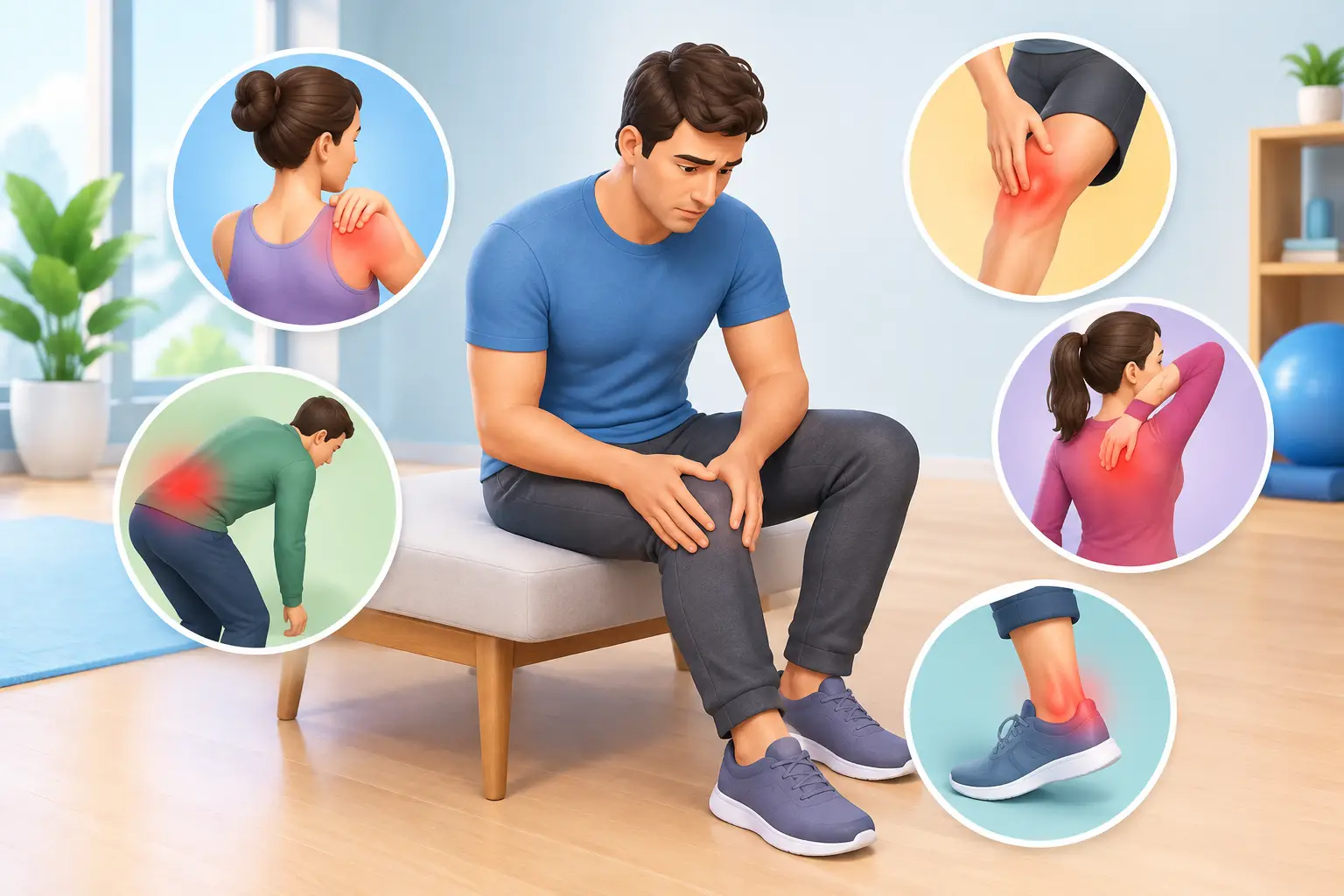
Learn the top signs of movement limitations, why they matter for active adults, and how a whole-body assessment can guide a clear plan to move better.
You may not notice movement limitations during a normal workday. They tend to show up when you squat to pick something up, rotate through a golf swing, reach overhead at the gym, or try to get back to running after a busy week. The top signs of movement limitations are often subtle at first, but they can change how confidently you exercise, play sports, and handle everyday tasks.
For active adults, the issue is not simply whether you can complete a movement. It is whether you can do it with enough mobility, control, strength, and balance to repeat it comfortably. A restriction in one area does not automatically mean something is seriously wrong, and it does not always cause pain. It may, however, be one factor that changes how your body handles the demands you place on it.
What Movement Limitations Actually Look Like
A movement limitation is more than feeling tight after a hard workout. Temporary soreness and stiffness can be a normal response to new training, long travel, poor sleep, or an unusually active weekend. The more useful question is whether the same limitation keeps appearing, affects the way you move, or causes you to avoid activities you want to do.
Movement is a whole-body job. Limited ankle motion may change a squat. Reduced hip control may show up during stairs or running. Shoulder stiffness may be connected with how your upper back moves and how well your shoulder blade is controlled. That is why looking only at the spot that feels sore can miss useful information.
1. You Avoid Certain Positions or Exercises
One of the clearest signs is quietly editing your life around a movement. Maybe you stop doing lunges because your knee feels unreliable, avoid overhead presses because one shoulder pinches, or use the handrail on stairs even though you are otherwise active.
Avoidance is not a character flaw, and it is not always the wrong choice. Sometimes modifying an activity is smart while a recent irritation calms down. But when the same workarounds become permanent, they are worth investigating. They can point to a mobility, stability, strength, or coordination gap that needs a more specific plan.
2. Your Left and Right Sides Feel Noticeably Different
Most people have a dominant side, and perfect symmetry is not the goal. Still, a meaningful difference deserves attention when one hip rotates much less, one shoulder has less reach, or one leg feels far less steady during a step-down or single-leg balance.
Side-to-side differences matter most when they affect function. If you can comfortably rotate to check traffic in one direction but not the other, or one side repeatedly feels less capable during a squat, lunge, throw, or swing, your body may be finding a workaround. A movement assessment can help determine whether the difference is relevant and what needs to improve first.
3. Your Squat, Hinge, or Lunge Has Changed
You do not need to train like an athlete to benefit from these basic patterns. Squatting helps you sit and stand, hinging helps you pick up objects, and lunging reflects how you control your body when walking, climbing stairs, or changing direction.
Common changes include heels lifting during a squat, knees collapsing inward, a rounded back when reaching toward the floor, or needing to shift strongly to one side. These patterns are not a diagnosis. They are simply clues. Limited ankle or hip mobility, reduced core control, lower-body strength, balance, previous injury, or technique may all play a role.
The key is not forcing a deeper squat or copying someone else’s form. It is understanding what your current movement capacity allows, then building from there.
4. You Feel Stiff at the Start of Activity but Never Fully Loosen Up
A few minutes of stiffness after sitting at a desk or getting out of the car is common. The more telling pattern is stiffness that continues well into a walk, round of golf, workout, or warm-up. You may feel as though you need more and more preparation just to move normally.
This can be associated with reduced mobility, but mobility alone is rarely the full answer. Repeated stretching may provide short-term relief without improving how well you control and load the available range. Many active adults need a combination of mobility work, stability training, and progressive strength rather than an endless collection of stretches.
5. Balance Feels Less Reliable Than It Used To
Balance is not just about standing on one foot with your shoes off. It is the ability to control your body when stepping off a curb, walking on uneven ground, getting out of a low car, or changing direction on a tennis court.
If you feel wobbly during single-leg exercises, need to grab onto something while putting on pants, or hesitate when stepping down from a curb, it may be time to assess more than flexibility. Balance depends on strength, foot and ankle control, hip stability, coordination, vision, and the task itself. Improving it requires practice that matches the situations you want to handle better.
6. Aches Return When You Resume the Activities You Enjoy
You take a few days off, feel better, and return to the gym, running, pickleball, or weekend projects. Then the same back, hip, knee, neck, or shoulder discomfort returns. That cycle can be frustrating because rest may calm symptoms without changing the factors that show up when you reload the area.
Recurring symptoms do not prove that a single movement limitation is the cause. Training volume, recovery, prior injuries, exercise selection, and overall strength can all contribute. Still, recurring flare-ups are a good reason to look at your whole body and your current activity demands instead of treating each episode as unrelated.
7. Everyday Tasks Take More Effort Than They Should
Movement limitations are not limited to exercise. Notice whether carrying groceries aggravates your back, turning your head while driving feels restricted, getting off the floor requires a strategy, or a long walk leaves your hips and knees feeling less dependable than expected.
These changes can develop gradually, which makes them easy to dismiss. But physical capacity is built through what you can move, control, and tolerate repeatedly. Catching a decline early gives you more options than waiting until you have stopped doing the activities that matter to you.
Why the Top Signs of Movement Limitations Deserve Context
A quick internet test can tell you that one movement looks limited. It cannot reliably tell you why, whether the finding matters, or what to do next. For example, not everyone needs the same amount of hip rotation or shoulder range. A golfer, runner, strength trainee, and person who mainly wants to hike comfortably may need different things from their body.
Context also changes the plan. Someone with adequate mobility but poor single-leg control may benefit more from progressive strength work than aggressive stretching. Someone who has plenty of range but discomfort at the end of it may need a different approach than someone whose movement is restricted before discomfort begins.
A comprehensive assessment should look beyond one painful area. At SYMYO Sports Therapy, the Movement & Performance Assessment combines posture, mobility, balance, strength, core stability, and movement patterns with physical testing and AI-assisted movement analysis. The goal is clear measurements, prioritized findings, and a practical understanding of what needs to improve first.
What to Do When You Notice a Limitation
Start by paying attention to patterns instead of chasing every isolated ache. Notice which movements feel limited, when they show up, whether one side differs from the other, and what activities bring the issue back. This information makes an assessment more useful than simply saying, “I feel tight.”
Then match your response to the problem. A recent flare-up may call for temporary exercise modifications. A long-standing limitation that affects training or daily life may benefit from a more complete evaluation and a progressive plan. The best plan is rarely all passive treatment or all exercise. It depends on what your body is doing now, what you want to return to, and how much capacity you need to build.
Seek prompt medical attention for severe pain after trauma, a sudden loss of strength, numbness that is worsening, unexplained symptoms, or changes in bowel or bladder control. Those situations need timely medical evaluation rather than a self-directed mobility routine.
Movement limitations do not have to be accepted as the price of getting older or staying active. When you measure how you move, understand the patterns that may be holding you back, and train the right priorities consistently, you give yourself a clearer path to move better, get stronger, and keep doing more of what you enjoy.