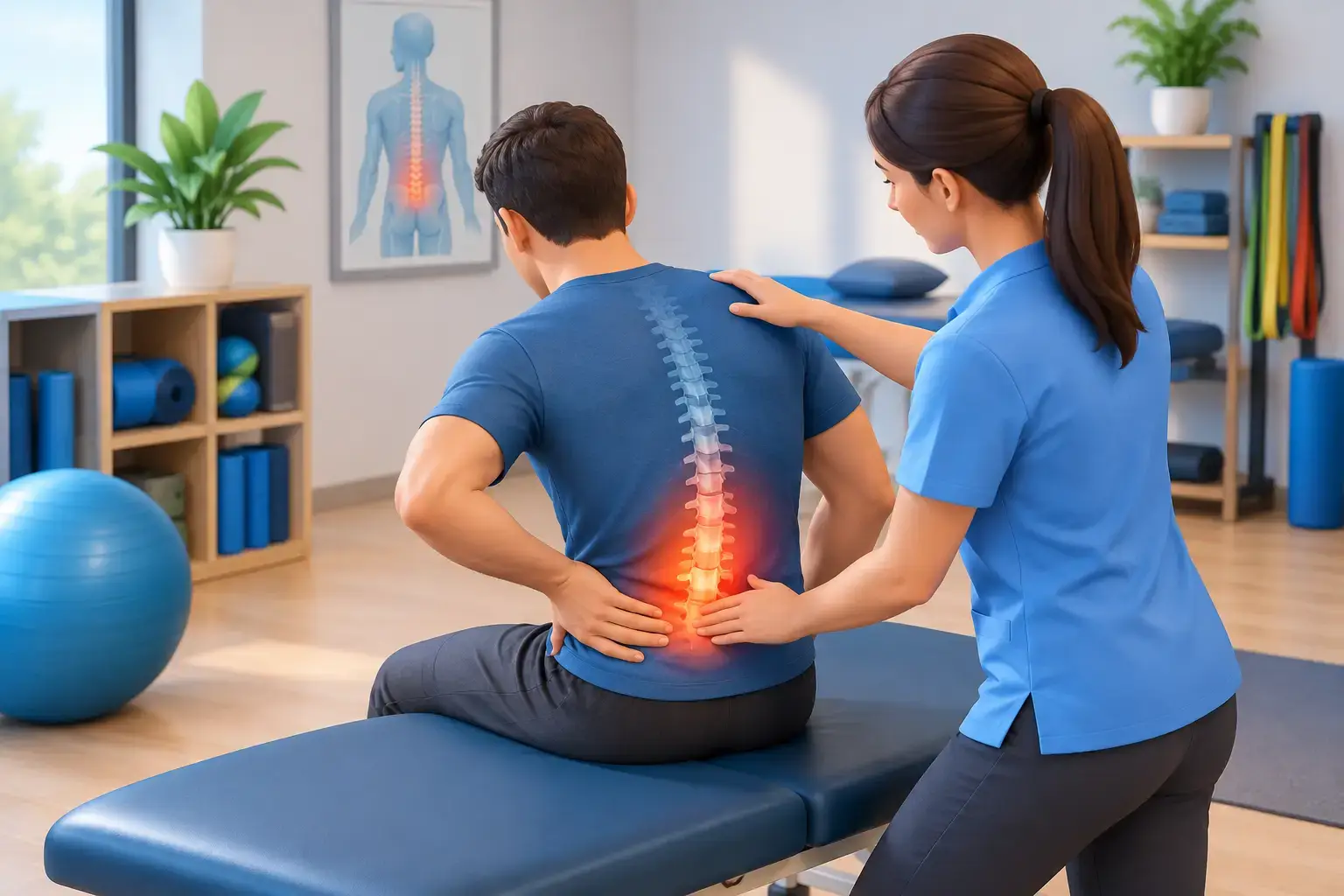
Learn when back pain needs rehab, which warning signs require medical care, and how a whole-body plan can help you return to activity with confidence.
A back flare-up after a long drive, a tough workout, or a weekend of yard work is common. But when back pain needs rehab, the question is usually not just, “How do I make this hurt less?” It is, “Why does this keep limiting what I want to do?” If pain is stopping you from training, golfing, running, sleeping comfortably, or simply moving with confidence, it may be time for a more complete plan than rest and hoping it settles down.
For active adults, back pain is often frustrating because it rarely shows up in isolation. You may feel it while deadlifting, but also notice that your hips feel tight, your balance has changed, or one side of your body feels weaker. Those findings do not automatically explain pain, but they can be useful clues when building a plan to move better and get stronger.
When back pain needs rehab instead of more rest
Rest can be useful in the first day or two after a sudden flare-up, especially if a movement is sharply painful. But prolonged rest often creates another problem: less movement, less confidence, and a lower tolerance for normal activity. The goal is not to push through significant pain. It is to find an appropriate starting point and gradually rebuild capacity.
Back pain may benefit from rehabilitation when it is recurring, slow to improve, or keeps changing how you move. If you repeatedly take time off from the gym, feel better, return to your usual routine, and flare up again, the issue may be bigger than one irritated area. Your body may need a more deliberate progression of mobility, stability, strength, and load tolerance.
Rehab can also make sense when the pain is mild but persistent. A nagging ache that has lasted several weeks may not stop you from functioning, yet it can quietly shrink your activity level. You stop carrying heavier groceries, skip your usual walks, avoid squats, or shorten your golf swing. Those workarounds can be reasonable temporarily, but they should not become your long-term plan.
Signs your back pain is affecting more than your back
Pain intensity matters, but it is not the only measure. A person with moderate pain and major movement limitations may need more support than someone with a brief, intense flare-up that is clearly improving each day.
Consider a rehabilitation assessment if any of these patterns sound familiar:
- Your back pain returns every time you resume exercise, sports, or heavier household tasks.
- You have stiffness or discomfort that has not meaningfully improved after a few weeks.
- You are avoiding movements you used to do comfortably, such as hinging, rotating, walking hills, or getting up from the floor.
- Your pain is accompanied by reduced strength, poor balance, guarded movement, or a noticeable loss of confidence.
- Symptoms travel into the buttock or leg, or you experience recurring numbness or tingling that should be evaluated by a qualified clinician.
These signs do not point to one universal diagnosis. They do suggest that simply treating the painful spot may not be enough. A useful rehab process looks at what your whole body can currently do and identifies what needs to improve first.
When to seek medical care promptly
Most back pain is not an emergency, but certain symptoms deserve prompt medical evaluation. Seek urgent care if back pain follows major trauma, or if it comes with new bowel or bladder changes, numbness in the groin or inner thighs, significant or worsening leg weakness, fever, unexplained weight loss, or severe pain that is not easing and leaves you unable to function.
The same is true if you have a history of cancer, a serious infection risk, or another medical concern that makes the pattern unusual for you. Rehabilitation is valuable for many musculoskeletal back problems, but red flags need medical attention first. A good provider knows when rehabilitation is appropriate and when another evaluation should come before exercise progression.
Why recurring pain often needs a whole-body assessment
The low back works with the hips, trunk, legs, feet, and upper body during nearly every active task. When you lift a suitcase, swing a golf club, run, or squat, your back is not working alone. Changes in hip mobility, trunk control, single-leg balance, strength, breathing strategy, training volume, or recovery can all influence how a movement feels.
That does not mean a tight hip or weak core is automatically the cause of back pain. Bodies are more complex than that. But these factors may contribute to how well you tolerate movement and load. Measuring them gives you a clearer starting point than guessing or repeating the same exercises that have not helped.
For example, a runner may assume their back pain is caused by running, when the more useful question is whether their weekly mileage increased too quickly, their hip and trunk endurance is lagging behind their training, or they are compensating after an old ankle or hip injury. A lifter may blame one deadlift rep, while the broader issue may be inconsistent training, poor recovery, or a strength gap that becomes obvious only at heavier loads.
What back pain rehabilitation should include
Effective rehab is not a generic sheet of stretches. It should match your symptoms, current ability, training history, goals, and the activities you want to return to. Someone preparing to get back to tennis needs a different progression than someone whose main goal is lifting their grandchild without hesitation.
At SYMYO, the process begins by looking beyond the painful area. A Movement & Performance Assessment can measure posture, mobility, balance, strength, core stability, and movement patterns through physical testing and AI-assisted movement analysis. The purpose is practical: understand your current physical capacity, identify priority findings, and create a plan around what needs attention first.
Care follows the Reduce, Restore, Reinforce approach. First, the goal is to reduce irritation and help you move more comfortably. Hands-on treatment, activity modifications, and carefully selected exercises may be part of this stage. The right choice depends on your presentation, and passive care should support progress rather than become the entire plan.
Next comes restoring useful mobility and control. This may involve improving a hip hinge, building tolerance for trunk motion, restoring confidence with rotation, or retraining movements that have become guarded. The work should be specific enough to matter in real life.
Finally, reinforcement means building strength and capacity. This is where rehab becomes especially valuable for active adults. You do not just want to tolerate a pain-free day. You want enough strength, stability, and conditioning to handle a busy week, a workout, a round of golf, or a trip without feeling like one wrong move will set you back.
How to keep moving without making a flare-up worse
During a back flare-up, total avoidance can be tempting. A better approach is usually to adjust rather than abandon activity. That might mean shortening a walk, reducing the weight on a lift, choosing a supported variation, or temporarily limiting the movement that clearly aggravates symptoms.
Use your response over the next 24 hours as useful feedback. Some discomfort during a new or returning activity can be acceptable, especially if it remains manageable and settles back to baseline. Pain that becomes sharper, spreads, significantly worsens later that day, or leaves you less able to move the next morning is a sign that the dose may be too high.
Progress is rarely perfectly linear. A flare-up does not always mean you caused new damage, and a good day does not necessarily mean you are ready to jump back to full intensity. Gradual loading is less dramatic than a quick fix, but it is how confidence and physical capacity are built.
Build a plan for the activity you want back
If back pain has become the reason you avoid the gym, turn down a game of pickleball, or hesitate before picking up something heavy, you do not have to settle for a cycle of flare-up, rest, and restart. Clear measurements and a personalized progression can help you understand what your body needs now and what to work on next.
The most useful next step is not guessing which stretch to try. It is finding a plan that respects your symptoms while helping you gradually return to the movement, strength, and active life you value.