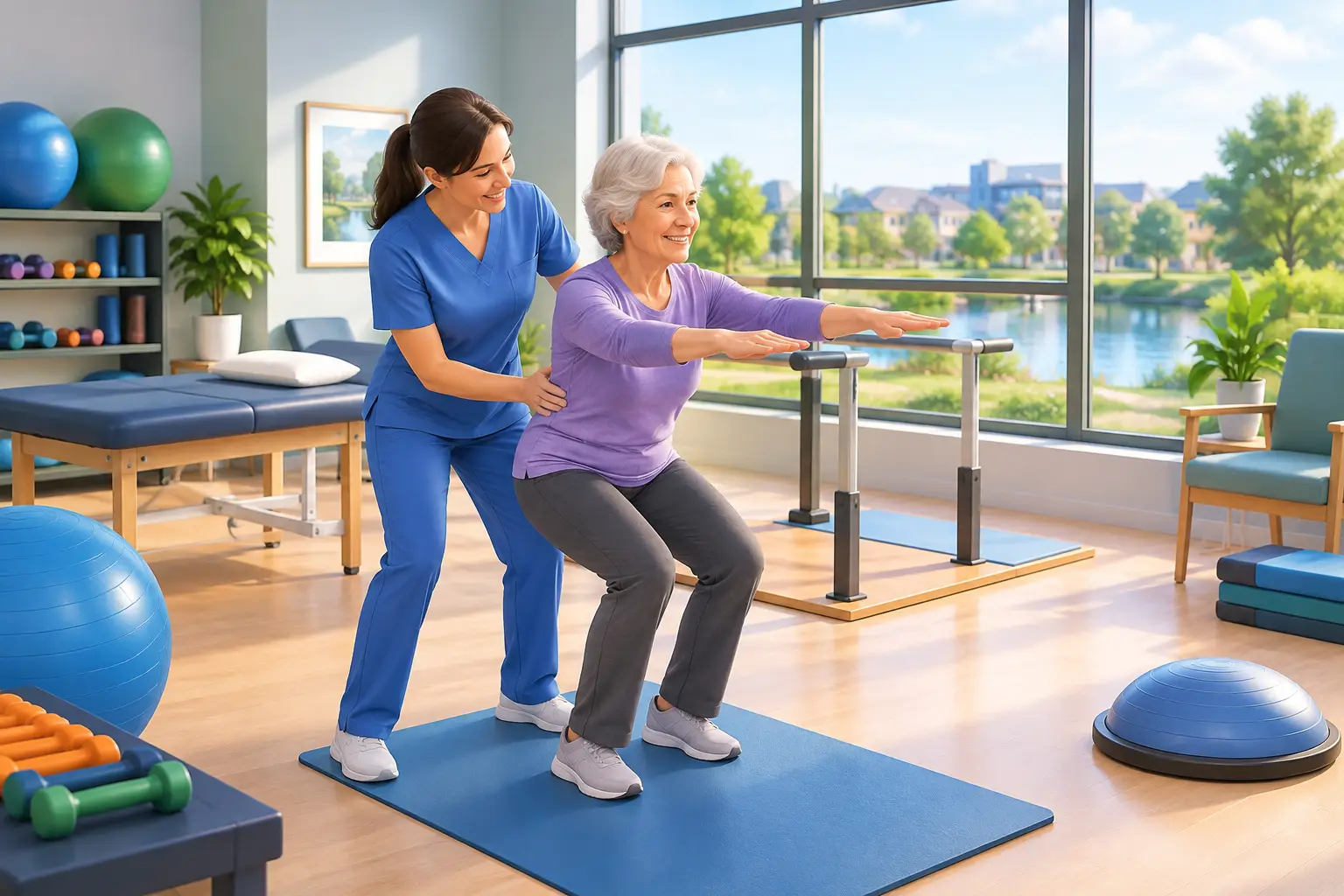
Farmington Hills active adult rehab combines movement testing, hands-on care, and strength progressions so you can return to activity with confidence.
The frustrating part of an old knee, hip, back, or shoulder problem is rarely the pain alone. It is what the pain takes off your calendar: the strength workout you skip, the golf round you modify, the run you cut short, or the hesitation you feel before picking up something heavy. Farmington Hills active adult rehab should help you do more than feel temporarily better. It should help you understand what may be holding your body back and build the capacity to stay active.
For adults in their 40s, 50s, and beyond, the goal is not to train like you are 22. The goal is to have the mobility, strength, balance, and confidence to keep doing the things that matter to you. That requires a plan built around your body, your activity level, and the demands you want to handle.
Why Active Adults Need a Different Rehab Approach
A common rehab experience starts and ends at the painful area. Your knee hurts, so everything centers on the knee. Your back feels stiff, so treatment stays focused on the low back. Local symptoms deserve attention, but the painful spot is not always the whole story.
A knee that gets irritated during squats, for example, may also be affected by limited ankle motion, reduced hip strength, poor trunk control, an abrupt increase in training, or a movement strategy that has stopped working well for you. None of those factors automatically explains pain, and not everyone needs the same solution. They are simply areas worth evaluating when an issue keeps returning or activity feels harder than it should.
That is the difference between symptom-focused care and active adult rehab. The first asks, “How do we calm this down?” The second also asks, “What does your body need to handle the activities you want to return to?”
For the active adult, passive treatment alone is usually not enough. Hands-on care may be useful for reducing discomfort and helping you move more comfortably in the short term. But lasting progress also depends on restoring mobility where it is limited, improving stability and control, and progressively building strength. You need to practice the capacities that daily life, the gym, and recreational sports demand.
Farmington Hills Active Adult Rehab Starts With Measurement
When you have been dealing with recurring aches or stiffness, guessing can become expensive. You may spend months avoiding movements that are actually appropriate, or repeatedly test a painful activity without a clear plan for progressing back to it.
A thorough assessment creates a starting point. At SYMYO Sports Therapy, the Movement & Performance Assessment looks at the whole body, not just the location that hurts. It evaluates posture, mobility, balance, strength, core stability, body composition, and how you move through practical movement patterns. AI-assisted movement analysis and physical testing add clear measurements to the conversation.
The value is not a score for its own sake. It is knowing what needs to improve first. A Physical Health Report and Movement Age™ score can help turn broad frustrations such as “I feel tight all the time” or “my back flares up when I exercise” into specific priorities. Maybe hip mobility is limited, but single-leg balance and strength are the bigger concerns. Maybe your mobility is adequate, but you have not rebuilt enough strength to tolerate the volume of activity you want.
This process also helps avoid a common mistake: treating every limitation as a problem. Some differences in mobility are normal. Some activities require more range of motion than others. The question is whether a finding may be relevant to your goals, your symptoms, or your ability to train with confidence.
A good evaluation should also include a conversation about your history. When did symptoms begin? What makes them better or worse? What have you tried? What are you trying to return to? A runner preparing for a 10K, a golfer managing 18 holes, and a professional who wants to lift without back stiffness all need different benchmarks for progress.
Reduce, Restore, Reinforce
Effective rehab is not a collection of random exercises. It is a progression. The SYMYO Method organizes that progression into three practical stages: Reduce, Restore, and Reinforce.
Reduce What Is Limiting Your Movement
The first step is to reduce the immediate barriers that make movement difficult. Depending on the person, that may include hands-on treatment, targeted mobility work, modified training, or exercises that help make a painful movement more tolerable. This stage is not about complete rest or avoiding all discomfort indefinitely. It is about creating enough room to move and train productively.
Load management matters here. If pain showed up after dramatically increasing walking, pickleball, lifting, or running, the answer may not be to stop forever. It may be to temporarily adjust volume, intensity, range of motion, or exercise selection while your body builds tolerance. The right modification keeps you engaged without repeatedly aggravating the issue.
Restore Mobility, Control, and Strength
Once movement is more manageable, rehab should address the physical qualities connected to your goals. This may include mobility training for a restricted joint, corrective exercise for movement control, core stability work, and strength-based rehab for muscles and patterns that need more capacity.
This stage should feel specific. A person with shoulder discomfort during overhead lifting may need a different combination of thoracic mobility, shoulder control, and pressing strength than someone whose shoulder only becomes irritated after long days at a desk. The exercise itself matters less than why it is included and how it progresses.
Restoring function also means relearning confidence. If you have avoided deadlifts, lunges, running, or a tennis serve for months, returning to that activity should be gradual and measurable. You may start with a simpler variation, a lighter load, or a shorter duration, then increase the challenge as your movement quality and tolerance improve.
Reinforce the Capacity to Stay Active
The final stage is where many people are left on their own too soon. Feeling better is encouraging, but it does not always mean you are prepared for the same demands that caused trouble before. Reinforcement turns short-term improvement into a stronger foundation for real life.
That can mean progressively loading a squat pattern until you can comfortably manage gym training again. It can mean building single-leg strength and balance before returning to cutting movements on a court. It may mean improving trunk and hip endurance so a long car ride, yard work, or a full weekend of golf does not leave you sidelined.
For active adults, strength training is not an optional extra after rehab. It is often the bridge between being careful and being capable. The appropriate starting point and rate of progression depend on your history, current symptoms, and goals, but the principle remains the same: build physical capacity rather than simply waiting for pain to disappear.
What Progress Should Actually Look Like
Progress is not always a straight line. A new exercise, a busy workweek, poor sleep, or an increase in activity can change how your body feels from one week to the next. That does not automatically mean the plan is failing. What matters is the overall trend and whether your plan can be adjusted based on real feedback.
Useful markers go beyond a pain rating. You may notice that you can get out of the car with less stiffness, complete a workout without modifying every exercise, walk farther, recover faster after a round of golf, or use heavier weights with better control. Objective retesting can show whether mobility, balance, strength, and movement patterns are improving alongside those day-to-day wins.
A structured 12-week program can be especially useful when recurring symptoms have made your training inconsistent. Combining sports chiropractic care, rehabilitation, and progressive strength training gives each phase of care a purpose. Instead of bouncing between temporary relief and another flare-up, you have a clear sequence for improving what needs attention first.
When It Is Time for a More Complete Plan
Consider a whole-body rehab approach if you keep returning to exercise only to trigger the same issue, have stiffness that is changing how you train, or feel less strong and stable than you used to. It can also make sense if you are not currently in major pain but want a clear picture of your physical health before limitations become more disruptive.
Not every ache requires an extensive program, and some symptoms need medical evaluation outside of musculoskeletal rehab. New severe pain, significant trauma, unexplained weakness, numbness that is worsening, or changes in bowel or bladder function warrant prompt medical attention. For the common cycle of recurring aches, reduced mobility, and difficulty building back into activity, a detailed movement assessment can offer a more useful next step than guessing.
The best rehab plan should make your next move clear. Start with honest measurements, address what may be limiting you, and build strength that carries over to the life you want to keep living. Being active does not have to mean repeatedly pushing through the same problem. It can mean moving better, getting stronger, and knowing why your training plan makes sense.