From SYMYO Sports Therapy
Can Chiropractic Help Gym Pain? A Smarter Plan
Can chiropractic help gym pain? See how movement assessment, hands-on care, and strength-based rehab can support a confident return to training safely.
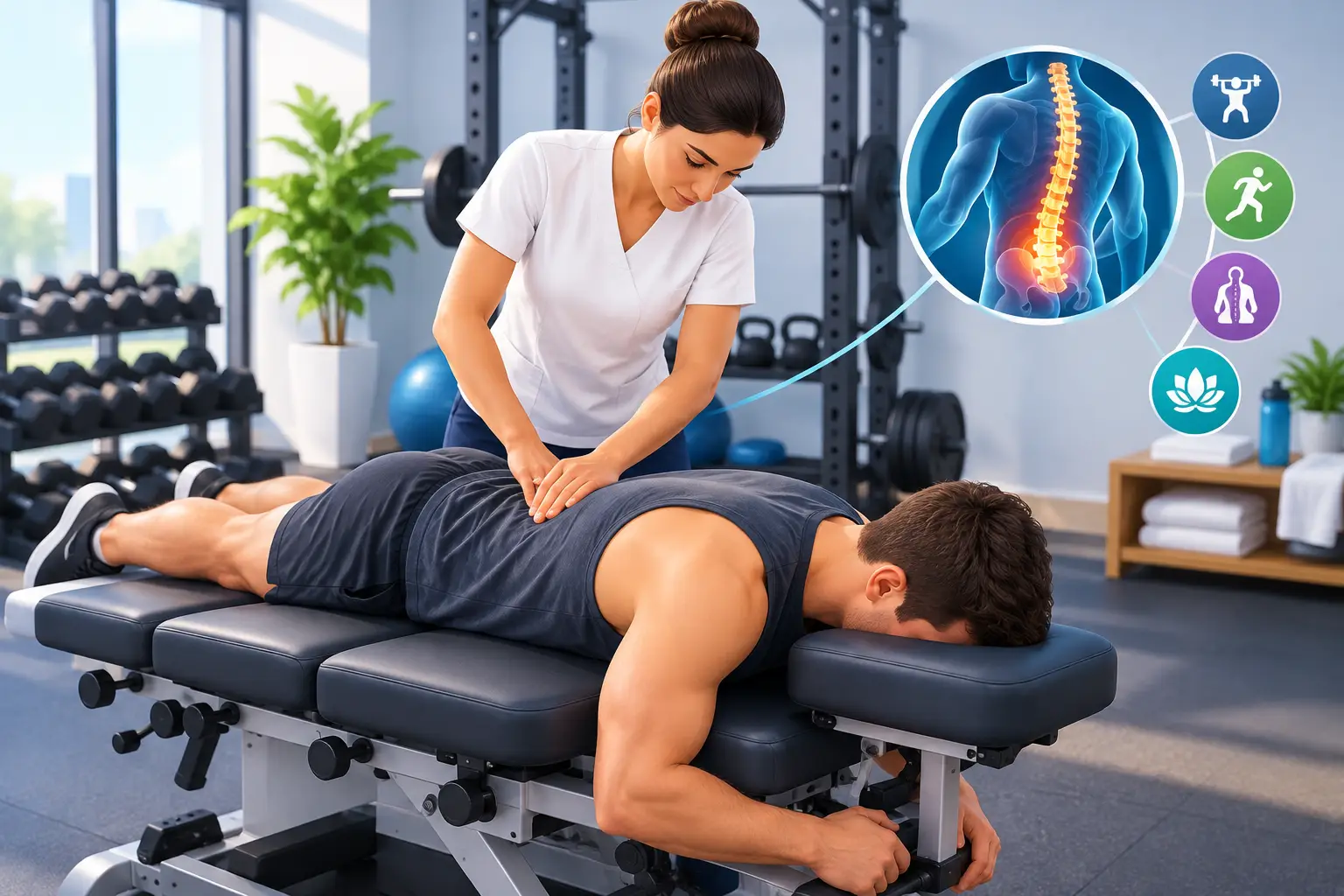
That pinch in your shoulder during overhead presses, the back stiffness that shows up after deadlifts, or the knee ache that returns every time you squat can make the gym feel unpredictable. So, can chiropractic help gym pain? It can be a useful part of the answer, particularly when care looks beyond the painful area and includes a clear plan to restore movement, build strength, and return to training progressively.
For active adults, the goal should not be to simply feel better long enough to get through the next workout. The goal is to understand what may be contributing to the problem, address the limitations that matter, and build the physical capacity to keep exercising with more confidence.
Sports Therapy is an approach to care that combines hands-on treatment, rehabilitation, and strength training to prevent injury, restore movement and function, and help you stay active for years to come.
Can Chiropractic Help Gym Pain When Exercise Keeps Flaring It Up?
Gym pain is not always a sign that you need to stop moving entirely. It is also not something to push through automatically. The right next step depends on the type of pain, how it began, whether it is worsening, and what your body can currently tolerate.
Sports chiropractic can help by evaluating the whole body rather than focusing only on the sore shoulder, knee, hip, or back. A painful squat, for example, may be associated with limited ankle motion, reduced hip control, poor trunk stability, an abrupt increase in training volume, or a combination of factors. The knee may be where you feel it, but it may not be the only area worth assessing.
Hands-on treatment may help reduce pain and stiffness enough to make movement easier. But passive treatment alone rarely prepares your body for the demands of loaded exercise. If deadlifts, lunges, pull-ups, or a weekend game of pickleball repeatedly bring symptoms back, your plan usually needs to include progressive mobility, stability, strength, and training modifications.
That is the difference between chasing a temporary reduction in symptoms and building a better return-to-training process.
Why the Same Gym Pain Can Keep Coming Back
Recurring pain often frustrates people because they feel fine during daily life, then symptoms return when they try to exercise at their usual level. This does not necessarily mean exercise is harmful or that your body is fragile. More often, it means there is a gap between what your body can currently handle and what the workout is asking it to do.
That gap may involve range of motion, coordination, strength, endurance, recovery, or load management. A person may have enough shoulder motion to reach into a cabinet but not enough control or tolerance for repeated overhead pressing. Someone may walk without pain but feel hip or low-back symptoms after heavy barbell training because the load, volume, or technique exceeds their current capacity.
Training changes matter too. A new exercise program, a jump in weight, an extra fitness class, or returning after a busy stretch at work can all change the demand on your body. Even a well-designed workout can become too much when the progression is faster than your recovery.
This is why a useful evaluation asks more than, “Where does it hurt?” It should explore when symptoms occur, which movements are limited, what your training looks like, what has changed recently, and what you need to return to.
What a Better Assessment Looks Like
At SYMYO Sports Therapy, the process begins by measuring what is actually holding your body back. That means looking at posture, mobility, balance, strength, core stability, and movement patterns instead of assuming every painful area needs the same treatment.
A comprehensive assessment can include AI-assisted movement analysis and physical testing to identify meaningful differences in how you squat, hinge, lunge, rotate, push, pull, and control your body under load. The purpose is not to chase perfect form. Bodies move differently, and there is no single ideal way to perform every exercise. The purpose is to identify limitations or compensations that may be relevant to your symptoms and your goals.
Clear measurements also give you a starting point. If hip mobility is limited, single-leg control is poor, or trunk endurance drops off quickly, you can prioritize what needs to improve first. Rather than guessing, you have a practical plan and a way to track progress.
For someone dealing with gym pain, the most useful question is often: what can I do right now without making things worse, and what do I need to build back over time?
The Reduce, Restore, Reinforce Approach
A structured plan for gym-related pain should meet you where you are, not force you into an all-or-nothing decision. SYMYO uses a Reduce, Restore, Reinforce approach to help active adults move from symptoms back toward stronger, more capable training.
Reduce irritation without abandoning movement
The first phase may involve adjusting the exercises, range of motion, load, tempo, or weekly volume that aggravate symptoms. If deep squats hurt, a temporary change to box squats, split squats within a tolerable range, or a different loading strategy may allow you to keep training while symptoms settle.
This is not about avoiding every uncomfortable sensation. Muscle fatigue from productive training differs from sharp, escalating, or lingering pain. Learning that distinction helps you make better decisions in the gym instead of either pushing through everything or stopping all activity.
Restore the movement your training requires
Next, the focus turns to the mobility, control, and stability needed for the activities you want to do. Someone returning to overhead lifting may need work on thoracic motion, shoulder control, and pressing tolerance. Someone with recurring hip or knee discomfort may benefit from improved ankle mobility, hip strength, and single-leg control.
The exercises should have a purpose. Random stretches and generic rehab drills may feel productive, but they are less helpful when they do not connect to the movement you are trying to return to.
Reinforce progress with strength
This is where many people get stuck. They feel better after a few sessions or a brief rest period, then return immediately to their old workout loads. If strength and capacity have not been rebuilt, the same problem can return.
Progressive strength training helps reinforce the improvements you have made. That may mean gradually reintroducing a hinge pattern before heavy deadlifts, building pressing tolerance before high-volume push-ups, or improving single-leg strength before returning to running. The exact plan depends on your assessment, symptoms, training history, and goals.
When You Should Not Treat It Like Ordinary Gym Pain
Most training aches improve with appropriate adjustments and a sensible progression. However, some symptoms deserve prompt medical evaluation instead of trying to work around them in the gym. Seek urgent care for severe pain after a significant fall or impact, visible deformity, inability to bear weight, progressive numbness or weakness, or changes in bowel or bladder control.
You should also get evaluated when pain is steadily worsening, repeatedly wakes you at night, or does not improve despite reducing aggravating activity. The goal is not to assume the worst. It is to make sure you have the right information before continuing to load the area.
How to Keep Training While You Build Back
In many cases, complete rest is not the best long-term answer. Training around a problem can maintain momentum and help you avoid the cycle of stopping, losing capacity, and flaring up again when you restart.
A good plan might keep you lifting while changing only the movements that are currently provocative. For example, if barbell back squats aggravate your back, you may still be able to train your legs with a supported variation, a shorter range of motion, or different loading. If pulling movements bother your shoulder, lower-body training, carries, and pain-tolerable upper-body work may remain useful.
The trade-off is patience. Building capacity takes longer than simply finding a short-term workaround. But when your plan is based on clear findings and measured progression, you are more likely to understand why you are doing each step and when it makes sense to advance.
Gym pain does not have to become the reason you stop doing the activities that make you feel strong. With the right assessment, appropriate hands-on care, and a progressive strength plan, you can give your body a clearer path back to the workouts and activities you value.
Related articles
Want to Understand How Your Body Is Actually Moving?
If you have tried to fix your posture, loosen tight muscles, or follow random exercises and still do not know what your body needs, an assessment can help.
The SYMYO Movement & Performance Assessment measures your mobility, strength, balance, posture, and overall movement. You will understand what is working well, where there is room to improve, and what deserves attention.
Learn About the AssessmentAbout Dr. Mitch Israel
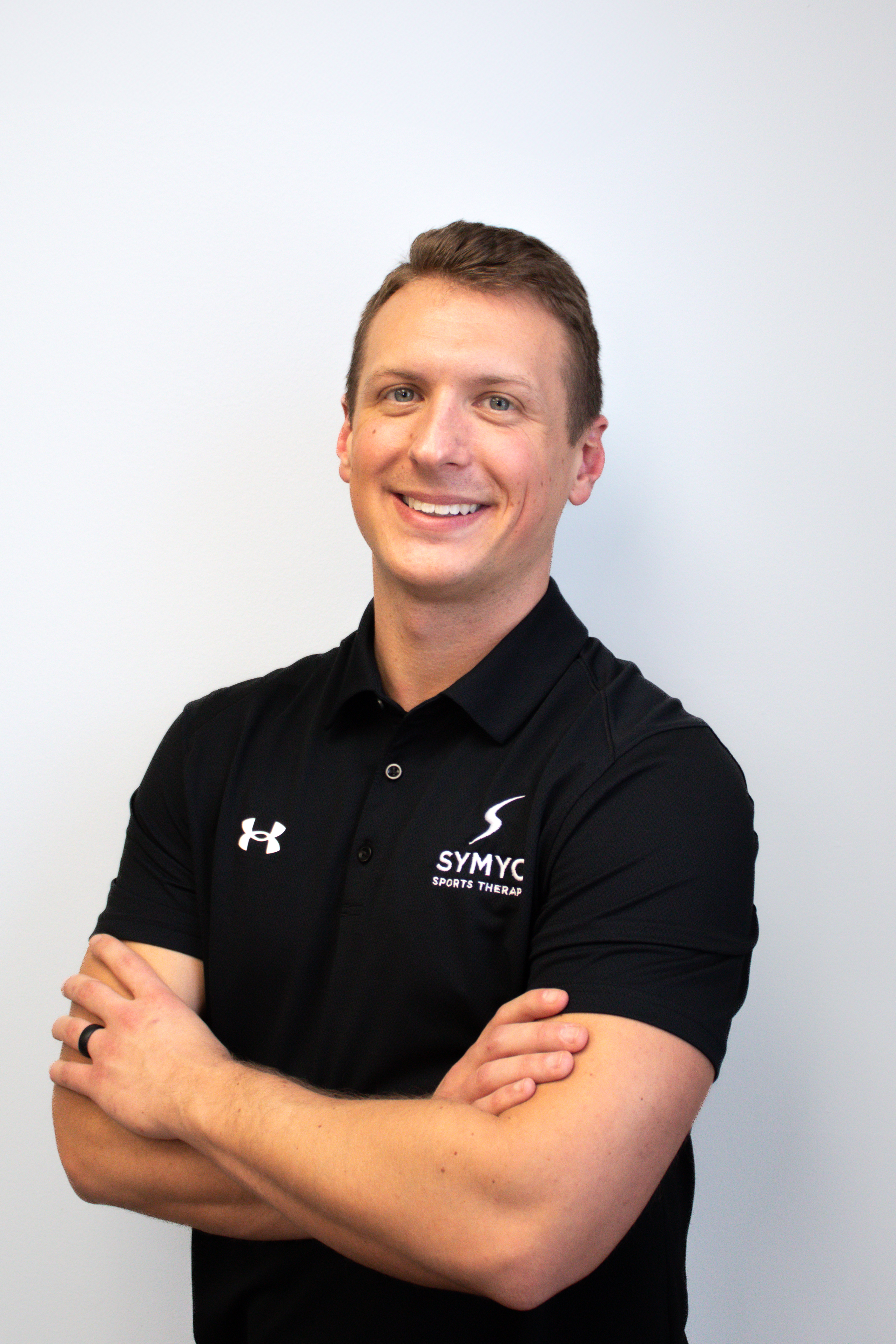
I'm Dr. Mitch Israel, a sports chiropractor and rehab specialist and the owner of SYMYO Sports Therapy in Farmington Hills, Michigan.
I created SYMYO to help people do more than temporarily feel better.
My goal is to help you understand your body, improve what actually needs improving, and build the strength and confidence to keep doing the things you enjoy.
When general advice is not enough, a personalized assessment and plan can make the difference.
SYMYO Sports Therapy
33930 West 8 Mile Road, Suite 2AFarmington Hills, MI 48335
Serving Farmington Hills, Novi, Northville, Livonia, Plymouth, West Bloomfield, Farmington, and surrounding Metro Detroit.