Sciatica

Sciatica That Won't Go Away?

The nerve may be irritated, but the reason it keeps happening is often a movement problem. At SYMYO Sports Therapy in Farmington Hills, we look at how your hips, spine, trunk, and whole body move together.

Inside SYMYO

Find the Movement Pattern Behind Recurring Irritation

Real movement data, hands-on care, and a plan built around what your body actually needs.

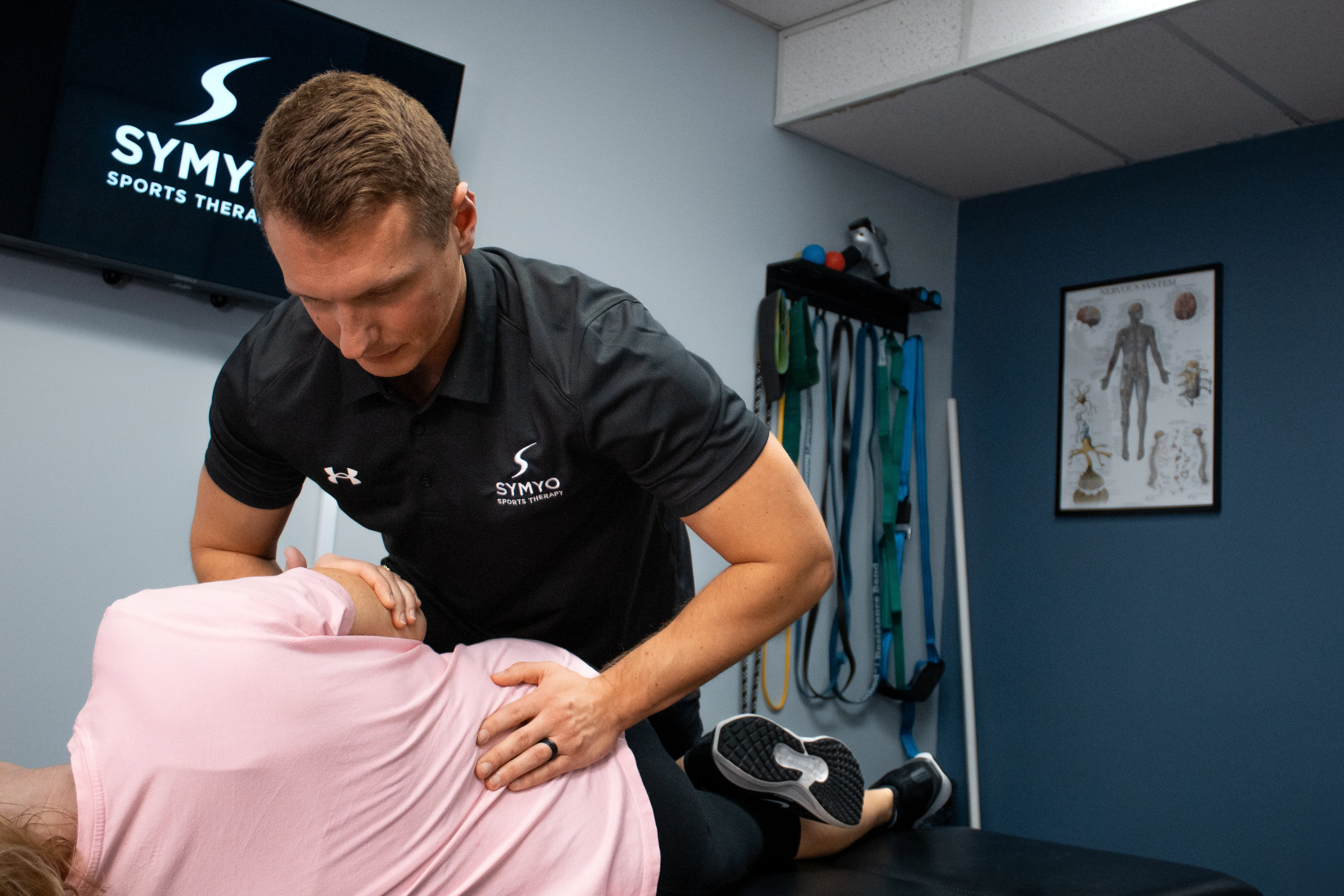
Hands-on hip and lower back assessment at SYMYO
Assessment-Led CareSYMYO

What Is Sciatica?

Sciatica is commonly used to describe nerve-related symptoms that travel from the low back or hip into the leg. Symptoms can include pain, tingling, numbness, burning, or a deep ache.

The symptom pathway matters, but so does the reason your body is irritating that area in the first place.

Why Sciatica Often Returns

Sciatica often returns when your body keeps loading the low back, hips, or nerve-sensitive tissues the same way. Rest may calm symptoms, but it does not always change the movement pattern behind them.

That is why sciatica care at SYMYO connects to Movement Age® and full-body assessment.

Common Contributors

  • Hip mobility restrictions
  • Core weakness
  • Poor movement patterns
  • Lumbar compensation
  • Limited walking or hinge mechanics
  • Strength gaps through the hips and trunk

How We Assess Sciatica

The AI Movement Assessment helps identify how posture, movement quality, asymmetry, and compensation patterns may be loading your low back and hips.

Movement Age® gives a broader baseline for how your body functions compared to your actual age.

Mobility and strength testing show whether hip restrictions, trunk control, or strength gaps may be contributing to recurring irritation.

The SYMYO System

A Measured Plan for Recurring Sciatica

01

Measure

Measure hip mobility, trunk control, posture, strength, gait, and movement patterns that may be loading irritated tissue.

02

Understand

Connect the findings to your symptoms so the plan is based on why irritation may keep returning.

03

Improve

Build mobility, control, strength, and tolerance for walking, training, lifting, and daily demands.

Why Treating Only the Symptom Path Often Is Not Enough

Sciatica symptoms can travel, but the pattern may be influenced by how the hips, low back, pelvis, and trunk share movement and load. If those limitations remain, symptoms can return when activity increases again.

SYMYO connects sciatica care to sports therapy, movement assessment, and personalized rehabilitation.

What the Movement Assessment Looks At

  • Hip mobility, pelvic control, and low-back movement.
  • Walking, hinge, squat, balance, and posture patterns.
  • Strength and control through the hips, trunk, and legs.
  • Compensation patterns that may contribute to recurring irritation.

FAQ

Sciatica FAQ

What is sciatica?+

Sciatica describes irritation of the sciatic nerve or related nerve roots that can create pain, numbness, tingling, or symptoms traveling from the low back or hip into the leg.

Why does sciatica keep coming back?+

Sciatica often returns when the movement limitations, hip restrictions, core weakness, or lumbar compensation patterns contributing to the irritation are not addressed.

How does SYMYO assess sciatica?+

SYMYO uses AI Movement Assessment, Movement Age®, mobility testing, strength testing, and full-body movement analysis to understand what may be feeding stress into the low back, hips, and nerve-sensitive areas.

Can hip mobility affect sciatica symptoms?+

Hip mobility can influence how the low back and pelvis move. When the hips are limited, the body may compensate in ways that increase stress through nerve-sensitive areas.

How does Movement Age® help with sciatica care?+

Movement Age® gives a broader view of how your body functions. For sciatica, that helps connect symptoms to mobility, balance, posture, strength, and movement control findings.

Is sciatica always caused by one structure?+

No. Sciatica-like symptoms can be influenced by several factors. SYMYO keeps the process educational and assessment-based so the plan is built from your findings.

Where should I start if sciatica keeps returning?+

Start with the discovery page to learn how SYMYO approaches recurring pain and whether the Movement & Performance Evaluation is the right next step.

Find Out What's Actually Feeding the Irritation