Neck · Shoulder · Upper Back
How to Ease Tight Rhomboids: 3 Upper-Back Exercises
A sore or tight feeling between your shoulder blades can make reaching, lifting, and desk work uncomfortable. These three options can help you explore the area without assuming one muscle is the whole problem.
By Dr. Mitch Israel
Originally published August 19, 2024 · Updated October 15, 2026
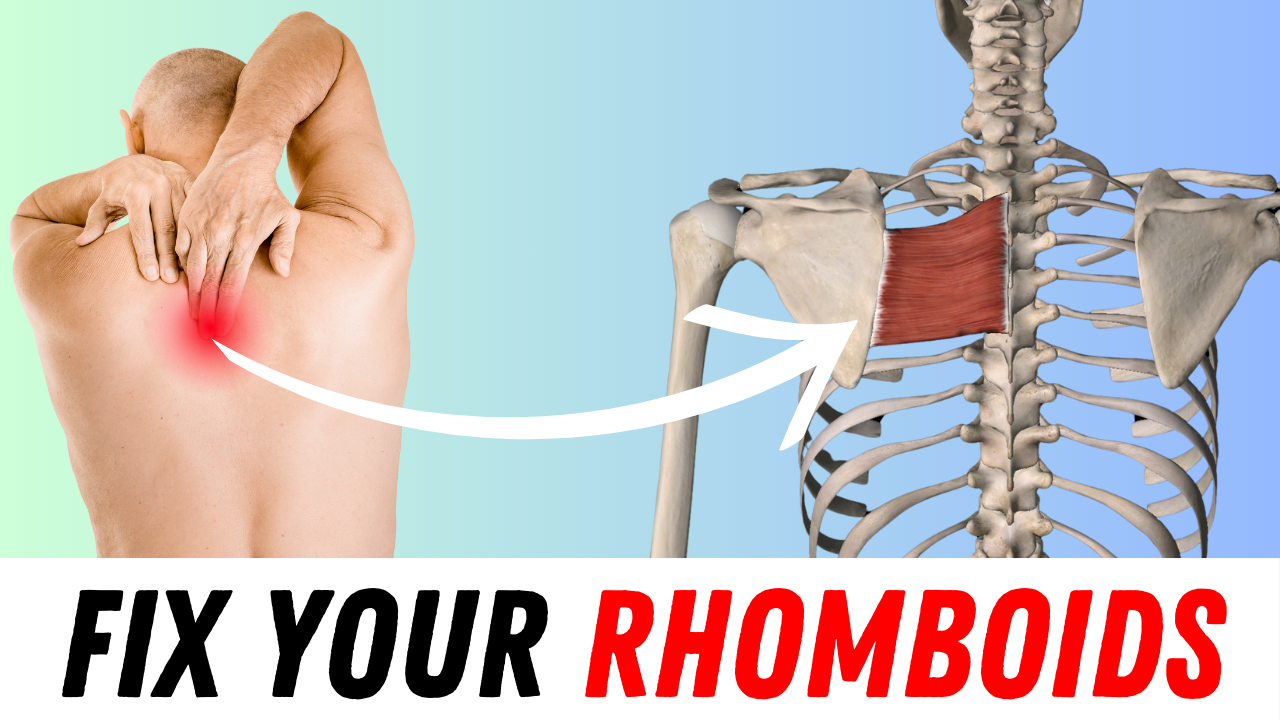
The rhomboids are muscles between your spine and shoulder blades. They help move and control the shoulder blades, along with several other muscles.
A tender spot between your shoulder blades can feel like a knot you want to stretch or press. But the location of a symptom does not prove the rhomboids are the cause. Your neck, shoulders, upper back, activity, and other factors may also matter.
I'm Dr. Mitch Israel, owner of SYMYO Sports Therapy in Farmington Hills. I look at how the areas around your shoulder blades move and work together, and how that relates to the activities you want to do.
Watch: Three Exercises for Tight Rhomboids
My original video demonstrates a ball release, an upper-back stretch, and resistance-band pulls. Try only the movements that feel comfortable and controlled.
Prefer to watch on YouTube? Open the exercise video →
1. Reduce Tension With Gentle Pressure
The video shows a ball release against the wall. This may temporarily change how the area feels, but it is optional—not a required fix.
- Place a tennis or massage ball between your shoulder blade and the wall.
- Lean in gently, keeping pressure on the muscle rather than your spine or the edge of the shoulder blade.
- If it feels comfortable, hold the pressure briefly or make small movements with your arm.
- Use light pressure and stop if you feel sharp pain, tingling, or symptoms spreading.
More pressure does not mean better results. Skip the ball if it irritates the area.
2. Restore Upper-Back Movement
The video shows a child's-pose variation to gently move your upper back and shoulder blades.
- Start on your hands and knees, then move your hips back only as far as comfortable.
- Reach your hands forward and let your shoulder blades move apart.
- Breathe normally and explore a mild stretch between the shoulder blades.
- Come back up and repeat a few times if the movement feels good.
You can also hug a yoga or exercise ball and rest your chest on it to support the reach. Keep the motion easy; you do not need to force a deep stretch.
3. Reinforce Shoulder-Blade Strength
Resistance-band pulls train the muscles around your shoulder blades to work through a controlled range.
- Hold a light resistance band in front of you with your arms at a comfortable height.
- Gently pull your hands apart, letting your shoulder blades move toward each other without shrugging hard.
- Return slowly and let your shoulder blades move forward.
- Start with a few smooth repetitions and stop before the area feels strained.
If the motion increases your symptoms, use a lighter band, reduce the range, or skip it and get individual guidance.
Why Does the Tightness Keep Returning?
Temporary relief from a stretch or ball does not always address what is keeping the area sensitive. Your neck, shoulder movement, upper-back mobility, strength, training, and daily activities may all be useful to consider.
At SYMYO, we use Reduce, Restore, Reinforce: reduce symptoms, restore useful movement, and build strength and control for what you want to do. The right plan depends on your assessment and goals.
If symptoms between your shoulder blades keep interrupting work, training, or daily life, learn about shoulder care at SYMYO or our Movement & Performance Assessment.
Stop an exercise if it causes pain or worsening symptoms. Seek medical advice for persistent symptoms, new weakness or numbness, or pain after a significant injury. This article is general education and does not replace individual care.
Common Questions About Rhomboid Pain
Where are the rhomboid muscles?
The rhomboids sit in your upper back between your spine and the inner edges of your shoulder blades. They help move and control your shoulder blades.
Does pain between my shoulder blades mean my rhomboids are tight?
Not necessarily. Pain in that area can have several causes. The location of discomfort alone cannot identify a specific muscle or explain why it hurts.
Can a ball release fix rhomboid pain?
A ball may temporarily change how the area feels for some people. Use light pressure against the muscles beside the spine and shoulder blade, avoid pressing on bones, and stop if symptoms increase. It may not address a recurring problem by itself.
How often should I do these exercises?
Start with a small amount of comfortable movement and see how you feel afterward. There is no one schedule for everyone. Reduce the range or stop if symptoms get worse.
Want to Understand How Your Body Is Actually Moving?
If you have tried to fix your posture, loosen tight muscles, or follow random exercises and still do not know what your body needs, an assessment can help.
The SYMYO Movement & Performance Assessment measures your mobility, strength, balance, posture, and overall movement. You will understand what is working well, where there is room to improve, and what deserves attention.
Learn About the AssessmentAbout Dr. Mitch Israel
I'm Dr. Mitch Israel, a sports chiropractor and rehab specialist and the owner of SYMYO Sports Therapy in Farmington Hills, Michigan.
I created SYMYO to help people do more than temporarily feel better.
My goal is to help you understand your body, improve what actually needs improving, and build the strength and confidence to keep doing the things you enjoy.
When general advice is not enough, a personalized assessment and plan can make the difference.
SYMYO Sports Therapy
33930 West 8 Mile Road, Suite 2AFarmington Hills, MI 48335
Serving Farmington Hills, Novi, Northville, Livonia, Plymouth, West Bloomfield, Farmington, and surrounding Metro Detroit.