Lower Back · Mobility
How Do You Relieve Thoracolumbar Fascia Pain?
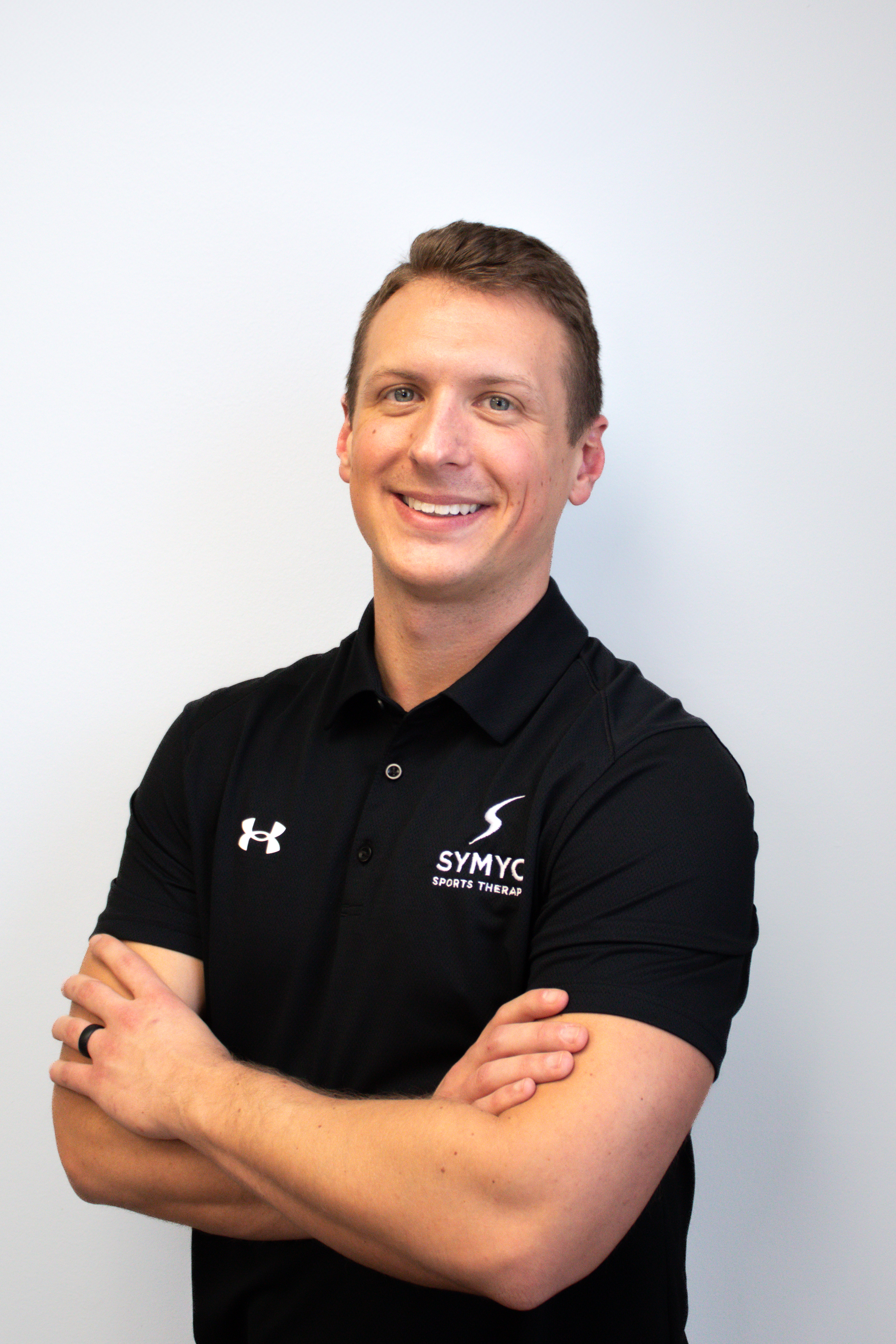
By Dr. Mitch Israel·Updated September 30, 2026

Do you ever feel tightness or discomfort across your lower back that does not seem to go away?
Maybe you notice it when you bend forward, twist, sit for a long time, or try to work out.
You stretch your back or roll it out. It feels better temporarily. Then it comes right back.
One area you may have heard about is the thoracolumbar fascia. It is a large sheet of connective tissue covering part of your lower and mid-back that connects with several muscles around your trunk and hips.
But pain or tightness in this area does not automatically mean the thoracolumbar fascia itself is the problem.
I'm Dr. Mitch Israel, and I own SYMYO Sports Therapy here in Farmington Hills. I work with active adults who have recurring lower-back tightness and discomfort.
Instead of chasing the spot that hurts, I want to know how the rest of the body is moving and working around it.
Here are three things you can try to help the area feel better, restore movement, and build more strength.
Watch: How to Relieve Thoracolumbar Fascia Pain
Does Your Lower Back Keep Tightening Up?
If your lower back keeps bothering you when you work out, golf, lift, sit for too long, or try to be more active, tell me what has been going on. I'll review it and let you know if SYMYO may be able to help.
What Is the Thoracolumbar Fascia?
The thoracolumbar fascia is a strong layer of connective tissue that spans a large part of your lower and mid-back.
It connects with muscles around your trunk, back, and hips—including your lats—and helps transfer force between your upper and lower body.
It is part of a much bigger system. That is why I do not look at a painful spot and immediately decide it is the problem.
Where you feel something gives us useful information. It does not necessarily tell us why you feel it or what your body needs.
Why Does This Area Feel So Tight?
There is not one answer.
You may have been sitting more, increased your workouts, or done more lifting. Golf, pickleball, yard work, and other activities may also have you bending and rotating more.
Your hips, spine, trunk strength, activity level, and the way you move can all influence how your lower back feels.
If stretching helps, that is useful. But if you constantly stretch the same spot for temporary relief, it is time to look deeper.
First, See What Actually Bothers You
Before doing anything, choose one or two movements that normally feel tight or uncomfortable.
Bend forward. Rotate to each side. Squat. Or simply notice how your back feels while standing or walking.
After each exercise, try the movement again. Does it feel easier? Can you move farther? Does the area feel less tight?
This gives you more information than doing an exercise and hoping it worked.
What Is the SYMYO Method?
At SYMYO, I use a simple three-step approach to help people move from pain or limitation back toward what they want to do.
Reduce: Reduce the pain, stiffness, irritation, or limitation getting in the way.
Restore: Restore the mobility, control, and movement your body needs.
Reinforce: Build strength and capacity so your body is better prepared for what you want to do.
Reduce → Restore → Reinforce.
Step 1 · Reduce
Modified Child's Pose
Watch the video above for a visual demonstration of this move.
- Start on your hands and knees.
- Shift your hips back toward your heels.
- Reach your arms forward with your palms turned up.
- Take a slow breath in and expand through your lower and mid-back.
- To emphasize one side, reach your hands diagonally away from the side you want to stretch.
- Stay there for 10–15 slow breaths.
Do not force yourself deeper. Find a comfortable position, breathe, and then retest your movement.
Step 2 · Restore
Focused Cat-Cow
Watch the video above for a visual demonstration of this move.
- Start on your hands and knees.
- Slowly tilt your pelvis forward and gently arch your lower back.
- Tuck your pelvis under you and round your lower back.
- Move slowly between the two positions.
- Stay within a comfortable, controlled range.
- Complete 10–15 repetitions.
Do not worry about making the movement huge. Focus on moving through the area instead of forcing the biggest range possible.
Step 3 · Reinforce
Modified High Plank With Reach
Watch the video above for a visual demonstration of this move.
- Start on your hands and knees or in a modified plank.
- Keep your trunk and pelvis controlled.
- Slowly reach one arm forward with your palm turned up.
- Do not let your body rotate or shift excessively.
- Return your hand and repeat on the other side.
- Complete 5–10 controlled repetitions per side.
Use a smaller reach if needed. The goal is to build strength and control—not reach as far as possible.
Why Not Just Stretch Your Lower Back?
There is nothing wrong with stretching if it feels good.
The problem is stretching, rolling, cracking, or massaging the same area every day because the tightness keeps returning.
At that point, I want to know how your hips and spine move, how strong you are, what happens when you bend or lift, and which movements trigger the problem.
The goal is not to find every tight structure and loosen it. The goal is to figure out what your body needs so you can move better and do more.
What If the Tightness Keeps Coming Back?
If these exercises help, keep using them and notice how your body responds.
If the same tightness keeps interfering with working out, golfing, lifting, traveling, yard work, or daily life, take a closer look.
An article cannot show me how your hips and spine move, how strong you are, or what happens when you bend, rotate, squat, or lift.
It also cannot tell me whether the thoracolumbar fascia is what we should focus on.
Working together lets me assess how your body moves, determine what deserves attention, and build a plan around you.
When Should You Get Lower-Back Pain Evaluated?
There is a difference between stiffness or soreness and symptoms you should not keep stretching through.
Seek appropriate medical evaluation if you have significant or worsening weakness, numbness or tingling, pain traveling down your leg, changes in bowel or bladder function, numbness around the groin or saddle area, or severe symptoms after a significant injury.
Even without those symptoms, recurring lower-back pain that stops you from doing what you want is worth evaluating.
These exercises are educational and are not a diagnosis or individualized treatment plan.
Common Questions About Thoracolumbar Fascia Pain
What does thoracolumbar fascia pain feel like?
People may describe tightness, aching, or discomfort across one or both sides of the lower or mid-back. Symptoms alone cannot tell us whether the thoracolumbar fascia is producing the pain because several tissues can contribute to discomfort in this area.
Why does my thoracolumbar fascia feel tight?
Your activity level, training, sitting, hip movement, spinal movement, strength, and other factors can all influence how the area feels. The sensation of tightness does not necessarily mean the fascia itself needs to be stretched or released.
How do you release the thoracolumbar fascia?
Gentle movement and stretching may reduce the feeling of tightness for some people. The modified child's pose in this article is one option. If you constantly need to release the same area, it is worth looking at why it keeps feeling tight.
Can tight lats affect the thoracolumbar fascia?
The latissimus dorsi has connections with the thoracolumbar fascia, so the areas do not work completely independently. That does not mean tight lats automatically cause thoracolumbar fascia pain, but it is one reason to look beyond the exact spot that hurts.
Should I exercise if my lower back feels tight?
Gentle movement can often be helpful, and every feeling of tightness does not mean you must stop exercising. Your exercise should match how you feel and should not cause significant or progressively worsening symptoms.
Where can I get help with recurring lower-back tightness near Farmington Hills?
SYMYO Sports Therapy works with active adults in Farmington Hills who have recurring back pain, stiffness, and other issues that make it harder to exercise and stay active. We start by looking at how your body moves and what you need to work on.
Does Your Lower Back Keep Tightening Up?
If you keep stretching, rolling, cracking, or massaging the same area and it keeps returning, you probably do not need another random thing to try.
The SYMYO Movement & Performance Assessment looks at how your spine and hips move, along with your strength, balance, and overall movement.
You will understand what is working well, where there is room to improve, and what deserves your attention. Then we can build a plan around you instead of guessing.
Learn About the AssessmentAbout Dr. Mitch Israel
I'm Dr. Mitch Israel, a sports chiropractor and rehab specialist and the owner of SYMYO Sports Therapy in Farmington Hills, Michigan.
I created SYMYO to help people do more than temporarily feel better.
My goal is to help you understand your body, improve what actually needs improving, and build the strength and confidence to keep doing the things you enjoy.
I share articles and videos like this because I want people to have better information about pain, movement, exercise, and physical health.
When general advice is not enough, a personalized assessment and plan can make the difference.
SYMYO Sports Therapy
33930 West 8 Mile Road, Suite 2AFarmington Hills, MI 48335
Serving Farmington Hills, Novi, Northville, Livonia, Plymouth, West Bloomfield, Farmington, and surrounding Metro Detroit.