Lower Back · Hip Mobility
How to Fix SI Joint Pain: Mobility and Strength Exercises
Pain near the base of your back can make walking, bending, and exercise harder. The sacroiliac joints may be one part of the picture, but the location alone cannot tell you what is causing the pain.
By Dr. Mitch Israel
Originally published May 30, 2024 · Updated October 15, 2026
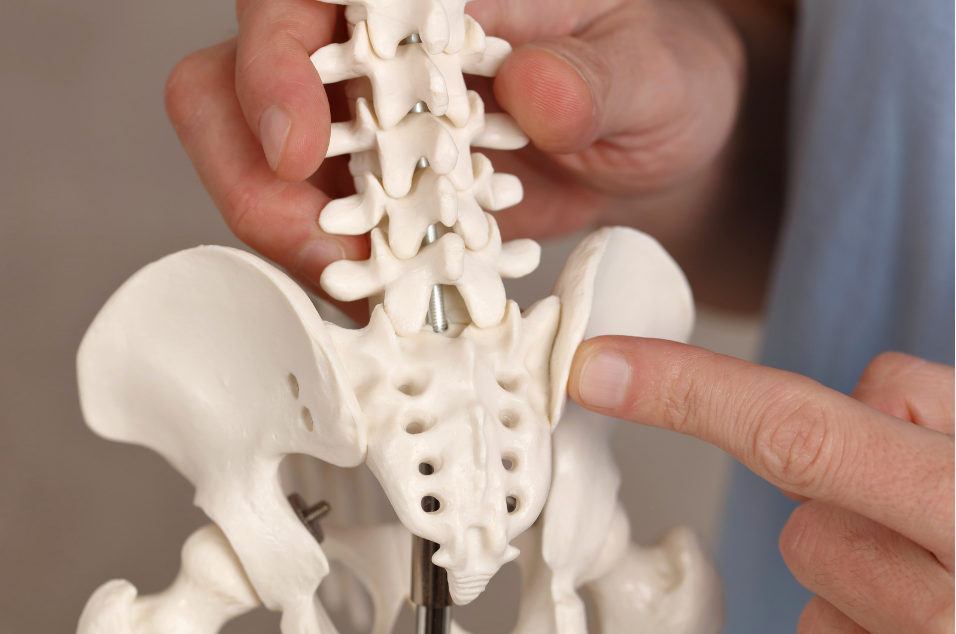
The sacroiliac (SI) joints sit where the base of your spine meets your pelvis. You have one on each side. They help transfer load between your upper body and legs and move only a small amount.
Pain around this area is sometimes called SI joint pain. But low-back and buttock pain can also come from nearby muscles, the hip, the spine, or other sources. A sore spot does not tell you which structure is involved.
I'm Dr. Mitch Israel, owner of SYMYO Sports Therapy in Farmington Hills. I look at the whole movement picture and how symptoms relate to your activities before deciding what may help.
Watch: SI Joint Mobility and Strength Exercises
My original video demonstrates hip stretches, pelvic tilts, glute bridges, bird dogs, and a plank. Use these as movement options, not a way to force or “put back” a joint.
Prefer to watch on YouTube? Open the exercise video →
Does the SI Joint Need to Be Realigned?
It is common to hear that an SI joint is stuck, out of place, or needs to be put back in. Avoid assuming this based on a posture photo or a simple home test. The joint normally allows little movement, and testing its exact position by feel is difficult.
Current clinical guidance considers a person's history and a combination of examination findings when SI joint pain is suspected. No single exercise or movement check at home can confirm the joint is the source.
1. Reduce Tension With Comfortable Hip Movement
The video includes hip flexor and piriformis stretches. Try a gentle version only if the position feels comfortable.
- For a hip flexor stretch, use a supported half-kneeling position or a standing split stance.
- Gently shift forward without arching your lower back.
- For a figure-four stretch, lie on your back and cross one ankle over the other thigh only if that position feels comfortable.
- Hold a mild stretch for a few breaths, then ease out.
You do not need to stretch harder to change the joint position. Skip a stretch that causes sharp pain, tingling, or symptoms that spread down your leg.
2. Restore Comfortable Pelvic and Trunk Movement
Pelvic tilts and gentle trunk motion can help you explore how your lower back and pelvis move together.
- Lie on your back with knees bent and feet supported.
- Slowly rock your pelvis a small amount, letting your lower back gently flatten and then return to its natural curve.
- Keep the movement smooth and easy. Do not force an end position.
- Try several repetitions, then notice how standing or walking feels.
The goal is comfortable movement through the lower back and pelvis—not isolating or unlocking the SI joint.
3. Build Strength and Control Gradually
The video also shows glute bridges, bird dogs, and planks. These exercises train the trunk and hips to work together.
- Glute bridge: Lift your hips only as high as you can while keeping the movement comfortable.
- Bird dog: From hands and knees, reach one arm or the opposite arm and leg, keeping your trunk steady.
- Plank: Start against a wall or bench if a floor plank is too demanding.
Begin with a few controlled repetitions or a short hold. Increase the challenge gradually if you feel okay during the exercise and afterward.
When Should You Get SI Joint Pain Checked?
If pain keeps returning, affects walking or exercise, or does not improve with changes you have tried, a qualified clinician can help assess possible sources. Seek medical advice sooner after a significant injury, or if you have fever, unexplained weight loss, new leg weakness, saddle numbness, or changes in bladder or bowel control.
At SYMYO, we use Reduce, Restore, Reinforce: reduce symptoms, restore useful movement, and build strength for the activities you want to return to. Learn more about lower-back pain care or our Movement & Performance Assessment.
This article is general education and is not a diagnosis or personal treatment plan. Stop an exercise that causes pain or worsening symptoms.
Common Questions About SI Joint Pain
Where is the SI joint?
The sacroiliac joints connect the sacrum at the base of your spine to the left and right sides of your pelvis. They transfer forces between your trunk and legs and allow only a small amount of movement.
How can I tell if my SI joint is causing my pain?
Pain near the back of your pelvis does not confirm the SI joint is the source. Several areas can cause similar symptoms. A clinician considers your history and a group of examination findings; simple movement or alignment checks at home cannot reliably diagnose it.
Can I put my SI joint back in place?
Most people do not need to reposition or realign the joint. Avoid forceful self-manipulation based on the idea that your pelvis is out of place. Gentle movement and gradual strength may help you stay active while you understand what is causing symptoms.
Should SI joint exercises hurt?
They should not sharply increase your pain. Start with a small comfortable range and reduce the effort if symptoms worsen. If pain keeps returning or limits daily activity, ask a qualified health professional for an assessment.
Further reading: International consensus practice guidelines on sacroiliac joint complex pain.
Want to Understand How Your Body Is Actually Moving?
If you have tried to fix your posture, loosen tight muscles, or follow random exercises and still do not know what your body needs, an assessment can help.
The SYMYO Movement & Performance Assessment measures your mobility, strength, balance, posture, and overall movement. You will understand what is working well, where there is room to improve, and what deserves attention.
Learn About the AssessmentAbout Dr. Mitch Israel
I'm Dr. Mitch Israel, a sports chiropractor and rehab specialist and the owner of SYMYO Sports Therapy in Farmington Hills, Michigan.
I created SYMYO to help people do more than temporarily feel better.
My goal is to help you understand your body, improve what actually needs improving, and build the strength and confidence to keep doing the things you enjoy.
When general advice is not enough, a personalized assessment and plan can make the difference.
SYMYO Sports Therapy
33930 West 8 Mile Road, Suite 2AFarmington Hills, MI 48335
Serving Farmington Hills, Novi, Northville, Livonia, Plymouth, West Bloomfield, Farmington, and surrounding Metro Detroit.