Hip Mobility · Groin and Adductors
How to Release Tight Groin and Adductor Muscles
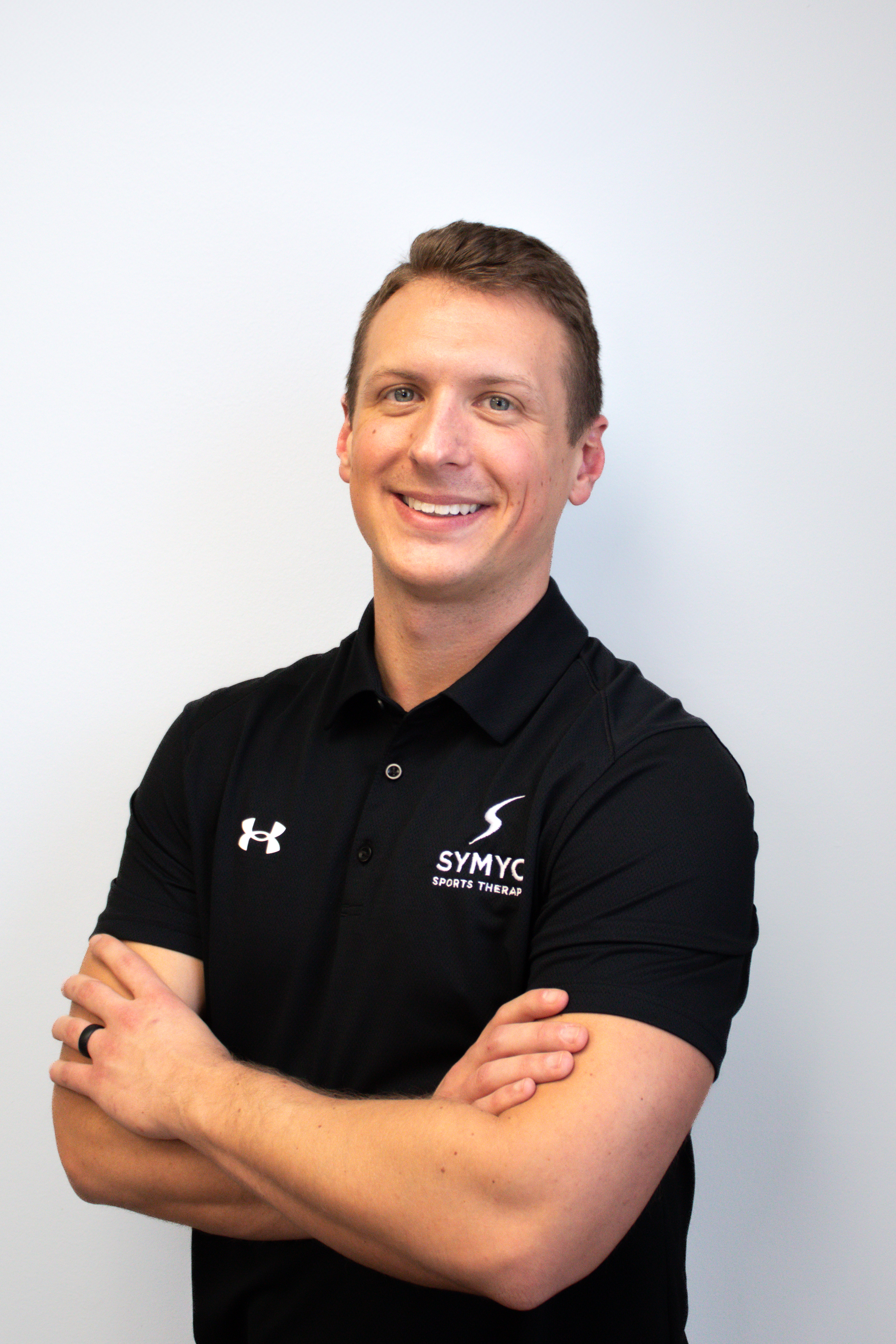
By Dr. Mitch Israel·Updated September 30, 2026
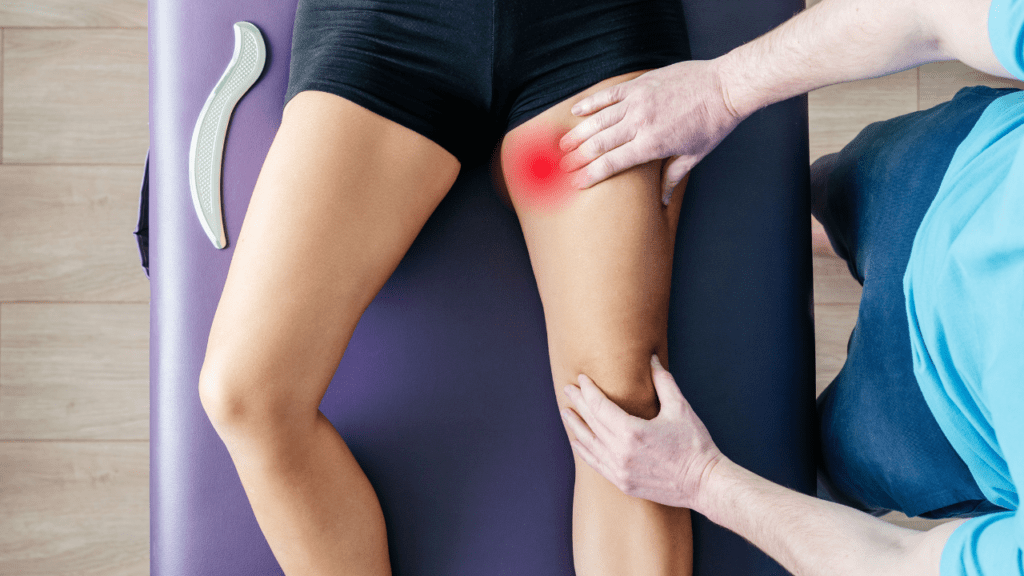
If your inner thighs always feel tight, your first instinct is probably to stretch them.
That may help—for a little while.
But if you constantly need to stretch your groin just to squat, run, work out, or move comfortably, there may be more to it than needing another stretch.
I'm Dr. Mitch Israel, and I own SYMYO Sports Therapy here in Farmington Hills.
I work with active adults who feel like certain areas of their body are always tight. One of the biggest things I teach is that feeling tight does not automatically mean you need more flexibility.
Sometimes the area needs to calm down. Sometimes you are missing mobility. Sometimes you need more strength and capacity so your body can handle what you are asking it to do.
In this article, I'll show you three things you can try for your adductors.
Prefer to watch? See the video demonstration below:
Is Tightness or Hip Pain Keeping You From Being as Active as You Want?
If your hips or groin keep bothering you when you squat, run, lift, play sports, or simply try to do more, tell me what has been going on. I'll review it and let you know if SYMYO may be able to help.
What Are Your Adductors?
Your adductors are the muscles that run along the inside of your thigh.
Most people think of them as their “groin muscles.” One of their main jobs is bringing your leg toward the middle of your body.
But they do much more than that.
Your adductors help control your hip and pelvis when you walk, run, squat, change direction, and move on one leg.
When they constantly feel tight, I do not automatically assume they need to be stretched more.
Why Do Your Groin and Adductors Feel So Tight?
There are many reasons your inner thighs can feel tight.
Maybe you have been running more, doing more lower-body training, or playing a sport with a lot of lateral movement.
Maybe you sit most of the day and notice your hips feel stiff when you finally get up and move.
Or the area may be working harder than it is currently prepared to handle.
The feeling of tightness gives us information, but it does not automatically tell us the solution.
Sometimes stretching helps. But if the same area keeps tightening back up, we probably need to think beyond making it feel looser for a few minutes.
What Is the SYMYO Method?
At SYMYO, I use a simple three-step approach to help people move from pain or limitation back toward the things they want to do.
Reduce: First, we reduce what is currently getting in the way. That may be pain, stiffness, irritation, or an area that does not feel like it is moving well.
Restore: Once things feel and move better, we restore the mobility, control, and movement your body needs.
Reinforce: Then we build strength and capacity so your body is better prepared for what you want to do.
Reduce → Restore → Reinforce.
For your adductors, here is one simple example of what that progression can look like.
Step 1 · Reduce
Adductor Rockback
Use a comfortable stretch to reduce the sense of tension before asking for more active motion.
Watch the video above for a visual demonstration of this move.
- Begin on your hands and knees with your hands beneath your shoulders.
- Extend one leg to the side with the foot supported and the knee straight but not forced.
- Keep your spine controlled and slowly rock your hips backward.
- Stop at a tolerable inner-thigh stretch and breathe there for about 30 seconds.
- Repeat two or three times per side without pushing into pain.
Step 2 · Restore
Adductor PAILs and RAILs
The next goal is to create active control near the edge of your available range—not simply stretch farther.
Watch the video above for a visual demonstration of this move.
- Use the same rockback position and hold a mild-to-moderate stretch for 60–90 seconds.
- Gradually press the extended leg and foot into the floor for 10–15 seconds.
- Relax, move only slightly deeper if comfortable, then try to lift the leg lightly away from the floor for 10–15 seconds.
- Keep the effort controlled and repeat for two rounds before changing sides.
The original demonstration uses higher contraction efforts. Start lower—especially if this is new—and never use maximal effort around an irritated or recently injured groin.
Step 3 · Reinforce
Scaled Copenhagen Plank
Finish by strengthening the adductors so the new range has support.
Watch the video above for a visual demonstration of this move.
- Lie on your side with your forearm beneath your shoulder.
- Place the top knee on a bench or sturdy chair. A bent-knee position is easier than supporting the ankle.
- Lift your hips until your trunk forms a controlled line.
- Hold for 10–20 seconds without groin pain or losing position.
- Complete two or three sets per side and progress gradually.
Why Not Just Keep Stretching?
If stretching makes your groin feel better, I am not going to tell you to stop.
The problem is when you stretch the same area every day because it constantly feels tight—and nothing really changes.
That is when I start asking more questions.
Do you actually have a mobility restriction?
Does one hip move differently from the other?
Do you have the strength to control the positions you are trying to get into?
Has your activity level increased faster than your body was prepared for?
Sometimes the answer is more mobility. Sometimes it is more strength. Sometimes it is something completely different.
What If Your Groin Still Feels Tight?
If these exercises help, great. Keep using them and gradually progress what you can do.
But if your groin constantly tightens back up—or starts interfering with squats, workouts, running, golf, pickleball, or everyday activities—we may need to look deeper.
There is a limit to what I can tell you through an article or video.
I do not know how much hip mobility you have, whether one side moves differently, how strong your adductors are, or how your body moves when you squat, rotate, run, or stand on one leg.
I also do not know whether what feels like “tight adductors” is an adductor problem in the first place.
That is where working with me directly becomes different.
Instead of giving you another generic stretch, I can assess how your body moves, determine what deserves attention, and build a plan around you.
When Should You Get Groin Pain Evaluated?
There is a big difference between an inner thigh that feels a little tight and an actual groin injury.
If you felt a sudden pop or sharp pain, have bruising or swelling, are limping, notice significant weakness, or your symptoms are getting worse, do not keep stretching it. Have it evaluated.
Persistent groin pain can also come from areas other than the adductor muscles, including the hip and nearby structures.
If something does not seem right—or you have tried to fix the same “tight” groin for weeks without much change—it is worth figuring out what is going on.
The exercises in this article are educational and are not a diagnosis or individualized treatment plan.
Still Fighting the Same Tight Groin?
If you keep stretching the same area and it tightens right back up, you probably do not need another random stretch.
You need to figure out what your body actually needs.
The SYMYO Movement & Performance Assessment looks at your mobility, strength, balance, and movement so you can understand what is working well, where there is room to improve, and what deserves your attention.
Then we can build a plan around you instead of guessing.
SYMYO Sports Therapy
33930 West 8 Mile Road, Suite 2AFarmington Hills, MI 48335
(248) 919-4422·Visits by appointment
Serving Farmington Hills, Novi, Northville, Livonia, Plymouth, West Bloomfield, Farmington, and surrounding Metro Detroit.
Common Questions About Tight Groin and Adductor Muscles
Why do my adductors always feel tight?
Your adductors may be responding to running, lifting, sports, a sudden increase in activity, or spending a lot of time in the same positions. You may need more mobility, more strength, or something else entirely. Feeling tight does not automatically tell us what your body needs.
Should I stretch a painful groin muscle?
Gentle movement may feel good for mild stiffness, but do not force a stretch into sharp or worsening pain. A recent injury, bruising, weakness, limping, or persistent pain should be evaluated before aggressive stretching or strengthening.
What’s the best stretch for tight adductors?
The adductor rockback is simple and lets you control how much stretch you feel, but there is no single best stretch for everyone. If the tightness keeps returning, it is worth asking whether stretching is actually what you are missing.
What is the best exercise for tight adductors?
It depends on what your body needs. The adductor rockback may reduce the feeling of tightness, PAILs and RAILs can help restore usable mobility, and the Copenhagen plank can build strength and capacity. These are examples, not a universal plan.
Can weak adductors feel tight?
They can. A muscle feeling tight does not automatically mean it is physically too short. Sometimes building more strength and capacity is an important part of helping the area feel and function better.
Where can I get help with hip or groin pain near Farmington Hills?
SYMYO Sports Therapy works with active adults in Farmington Hills whose hip or groin symptoms make it harder to exercise and stay active. We start by understanding what is happening, how your body moves, and what you need to work on.
About Dr. Mitch Israel
I'm Dr. Mitch Israel, a sports chiropractor and rehab specialist and the owner of SYMYO Sports Therapy in Farmington Hills, Michigan.
I created SYMYO to help people do more than temporarily feel better.
My goal is to help you understand your body, improve what actually needs improving, and build the strength and confidence to keep doing the things you enjoy.
I share articles and videos like this because I want people to have better information about pain, movement, exercise, and physical health.
When general advice is not enough, a personalized assessment and plan can make the difference.
SYMYO Sports Therapy
33930 West 8 Mile Road, Suite 2AFarmington Hills, MI 48335
Serving Farmington Hills, Novi, Northville, Livonia, Plymouth, West Bloomfield, Farmington, and surrounding Metro Detroit.