Hip Mobility & Strength
How Do You Fix Weak and Painful Gluteus Medius?
Pain, tightness, or a feeling of weakness on the outside of your hip can interrupt walking, running, lifting, and sleeping. Start by understanding what the area needs.
By Dr. Mitch Israel
Originally published February 18, 2025 · Updated October 15, 2026
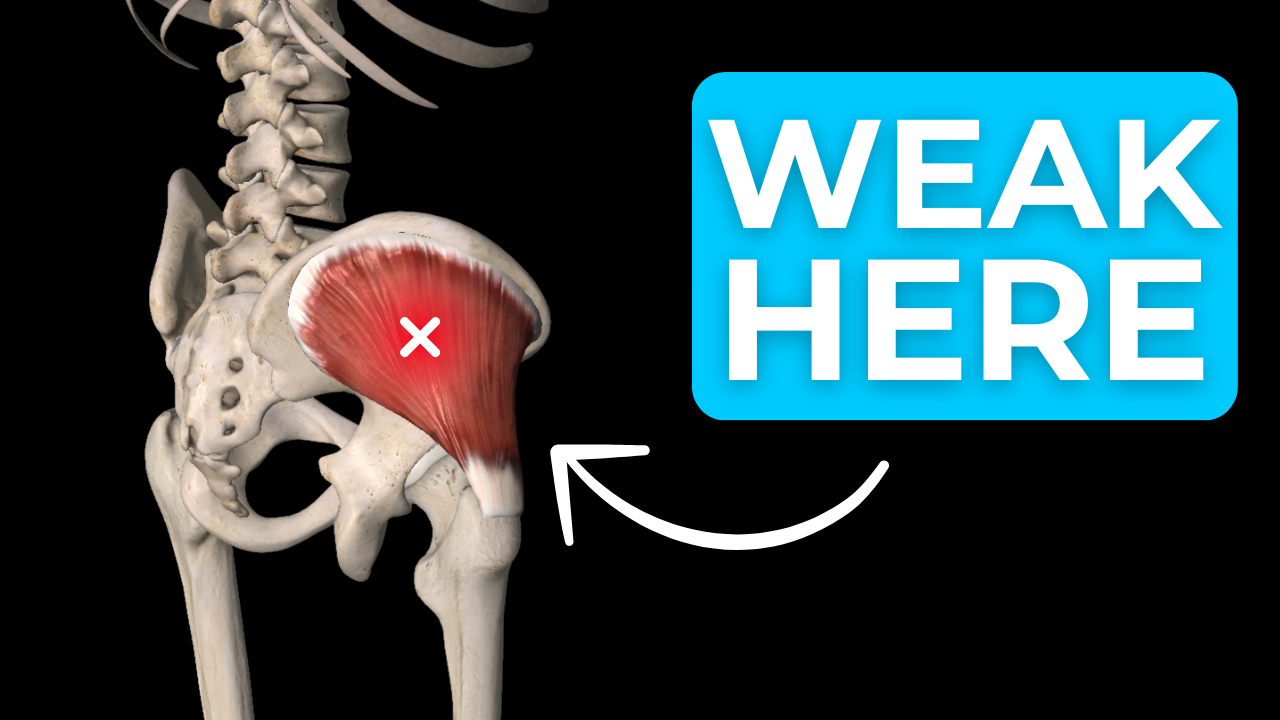
Does the outside of your hip feel sore during a walk, a workout, or when you lie on your side? You may have heard that you need to release or strengthen your glute medius. That can be part of a plan, but the location of your pain alone does not tell us what is causing it.
I'm Dr. Mitch Israel, owner of SYMYO Sports Therapy in Farmington Hills. I look at how your hips move, how well you control that movement, and how much load you can comfortably handle. The goal is to build a plan around your findings and the activities you want to get back to doing.
Watch: Glute Medius Exercises for Hip Pain
My original video demonstrates release options, an inner-thigh exercise, and a side-plank progression. Use the guidance below to decide which movements are appropriate for you.
If lying on your side or pressing on the bony outside of your hip hurts, skip the direct pressure and deep stretching shown in the video. Those techniques can irritate sensitive tendons. You do not need to complete every exercise to make progress.
Prefer to watch on YouTube? Open the exercise video →
What Does the Gluteus Medius Do?
The gluteus medius sits on the outside of your pelvis and attaches near the top of your thigh bone. It helps move your leg out to the side and control your pelvis when your weight is on one leg.
You use it when you walk, climb stairs, run, and shift your weight. It works with other hip and trunk muscles, so hip control is about more than how strongly you can squeeze one muscle.
First, Understand What Is Bothering Your Hip
Pain on the outside of the hip can involve gluteal tendons and nearby tissues. Other hip problems or symptoms from the lower back can feel similar. Feeling sore during a squat, a lunge, or a side-lying position does not confirm that your glute medius is weak or damaged.
Notice what brings symptoms on, what helps them settle, and whether a recent change in walking, running, or training increased your workload. If symptoms keep returning, an assessment can help you work out what to change.
1. Reduce Irritation Before Chasing a Release
The first part of SYMYO's approach is Reduce: help the area feel more comfortable so you can start moving and training appropriately.
The original video shows a side-lying stretch and a ball release. These are options for some people, rather than steps everyone needs. If a stretch or pressure makes the outside of your hip hurt, stop. Avoid pushing a ball directly into the bony, tender point on the side of the hip.
For sensitive gluteal tendons, reducing compression may matter more than stretching. That can mean changing a painful side-sleeping position, avoiding hanging your weight on one hip, and adjusting activities that repeatedly flare symptoms. Keep moving within what you can tolerate.
2. Restore Comfortable Hip Movement
Restore means improving the movement and control you need. In the video, I demonstrate a side-lying hip adduction liftoff. Adduction means bringing your leg toward the middle of your body; this exercise works the inner thigh.
- Lie on your side with your top leg bent and supported in front of you, as demonstrated.
- Keep your bottom leg long and gently lift it from the floor.
- Lower slowly without rolling your pelvis to create extra movement.
- Try a few controlled repetitions on each side, provided the position and movement are comfortable.
This is an inner-thigh exercise, not a direct glute medius strengthening exercise. It may be one part of a broader hip program. Skip it if lying on your side or moving the leg reproduces your hip pain.
3. Reinforce Strength and Stability
Reinforce means building the strength and control to use your movement during daily life and exercise. The video demonstrates a DNS Star Plank progression, which challenges the side of your hip and trunk.
- Start on your side with your knees bent and your forearm supported beneath your shoulder.
- Gently push through your forearm and bottom knee to lift your hips, following the video setup.
- Keep your trunk and pelvis controlled. Begin with a brief hold and lower slowly.
- Only add a band, a longer hold, or the harder variation when the basic version feels comfortable and controlled.
A side plank can be too demanding for an irritated hip. If it hurts, choose an easier exercise with individual guidance. Strength work should match your current tolerance and build gradually.
Recheck How You Feel Afterward
Compare a familiar activity, such as a comfortable walk or a shallow squat. Also notice how your hip feels later that day and the next morning. If you feel worse afterward, reduce the amount or difficulty rather than pushing through.
You do not need to chase soreness or complete every drill. The useful question is whether your plan is helping you handle more of the activities that matter to you over time.
When Your Hip Needs a More Specific Plan
If the same pain keeps interrupting walking, sleep, or training, learn about hip pain care at SYMYO. A Movement & Performance Assessment looks at your mobility, strength, balance, posture, and overall movement so we can choose a clearer next step.
For a general movement starting point, explore the Hip Reset. For our broader approach, read about Reduce, Restore, Reinforce.
These exercises are general education. Stop an exercise that causes pain or leaves symptoms worse. Get medical advice for persistent or worsening symptoms. Seek urgent care for severe hip pain after an injury, inability to bear weight, or a hot, swollen hip with fever.
Common Questions About Glute Medius Pain
What does the gluteus medius do?
The gluteus medius is a muscle on the outer side of your hip. It helps move your leg out to the side and control your pelvis when you stand on one leg, walk, or climb stairs.
Does pain on the outside of my hip mean my glute medius is weak?
No. Pain in that area may involve muscles, tendons, the hip joint, or symptoms coming from the lower back. A painful squat or difficulty balancing does not identify the cause on its own. An assessment can help determine what needs attention.
Should I stretch or foam roll a painful glute medius?
It depends on what is causing the pain. Stretching and pressure can irritate sensitive gluteal tendons near the bony side of the hip. Avoid pressing a ball directly into that painful spot or forcing a stretch. Get guidance if symptoms persist.
What if the side plank in the video hurts?
Stop that exercise and choose an easier movement that does not reproduce your pain. You may need less load, a different position, or an assessment before progressing. An exercise should not leave your symptoms worse later that day or the next morning.
Further reading: Cambridge University Hospitals: gluteal tendinopathy and NHS: hip pain in adults.
Want to Understand How Your Body Is Actually Moving?
If you have tried to fix your posture, loosen tight muscles, or follow random exercises and still do not know what your body needs, an assessment can help.
The SYMYO Movement & Performance Assessment measures your mobility, strength, balance, posture, and overall movement. You will understand what is working well, where there is room to improve, and what deserves attention.
Learn About the AssessmentAbout Dr. Mitch Israel
I'm Dr. Mitch Israel, a sports chiropractor and rehab specialist and the owner of SYMYO Sports Therapy in Farmington Hills, Michigan.
I created SYMYO to help people do more than temporarily feel better.
My goal is to help you understand your body, improve what actually needs improving, and build the strength and confidence to keep doing the things you enjoy.
When general advice is not enough, a personalized assessment and plan can make the difference.
SYMYO Sports Therapy
33930 West 8 Mile Road, Suite 2AFarmington Hills, MI 48335
Serving Farmington Hills, Novi, Northville, Livonia, Plymouth, West Bloomfield, Farmington, and surrounding Metro Detroit.