Sports Therapy · Movement · Strength
What Is Sports Therapy? A Better Approach for Pain, Injuries & Recovery
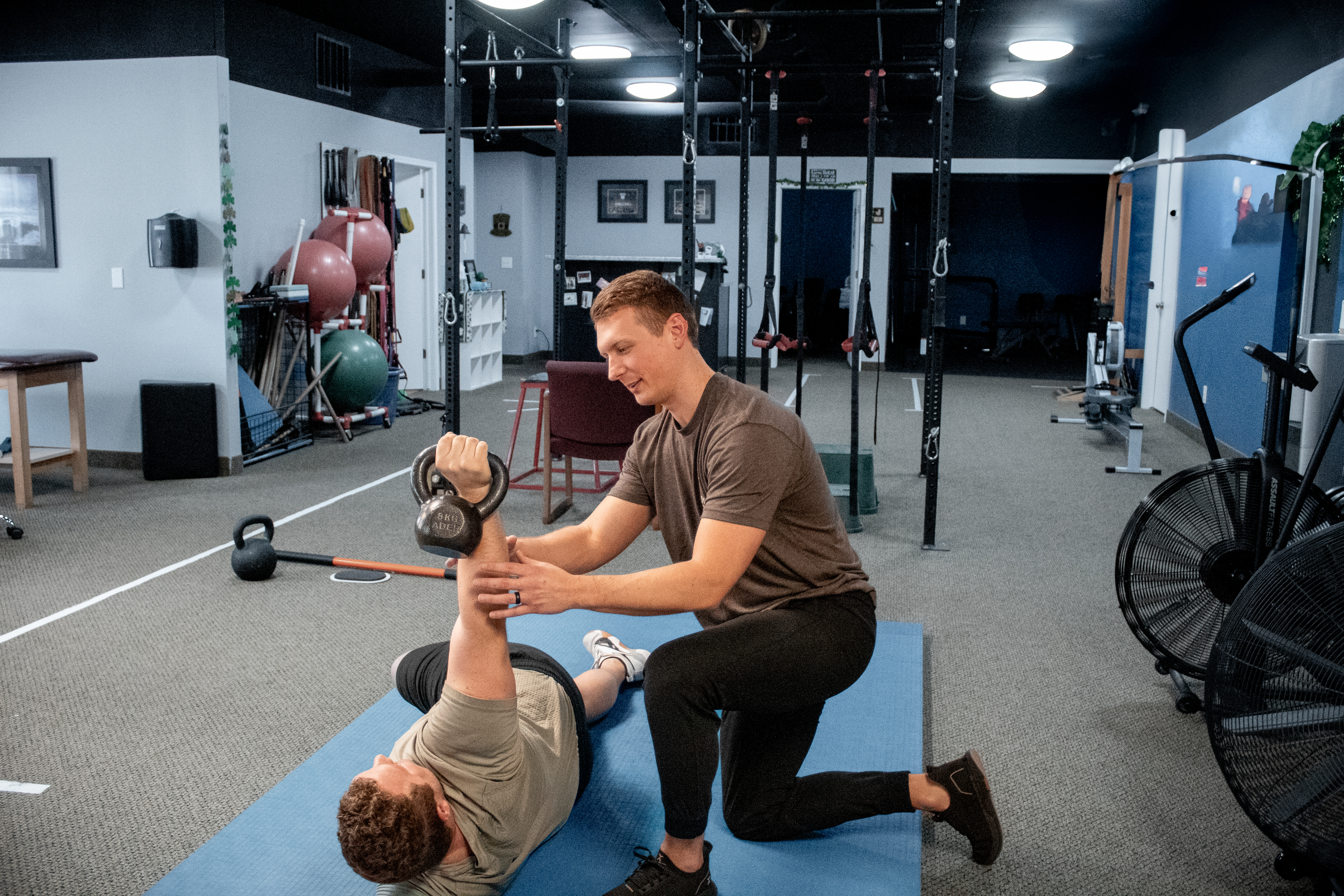
If you’ve come across SYMYO Sports Therapy and wondered what exactly “Sports Therapy” means, you’re probably not alone.
Sports Therapy isn’t nearly as common of a term in the United States as chiropractic, physical therapy, or personal training.
And no, it’s not sports psychology. We’re not going to talk through why you missed that free throw in high school.
What Is Sports Therapy?
Sports Therapy is actually an approach to physical healthcare focused on preventing injuries, restoring movement and function, and helping people return to the activities they want to do.
At SYMYO, we take that one step further.
Sports Therapy is an approach to care that combines hands-on treatment, rehabilitation, and strength training to prevent injury, restore movement and function, and help you stay active for years to come.
The big difference is that these things don’t have to happen separately.
You don’t necessarily need one place for treatment, another for rehab, and then a completely different plan when you’re ready to start getting stronger again.
Sports Therapy can bring those pieces together.
Sports Therapy is a much more established profession in other parts of the world, particularly the United Kingdom.
The Society of Sports Therapists describes Sports Therapy as an aspect of healthcare concerned with preventing injury and rehabilitating people back to optimal levels of functional, occupational, and sports-specific fitness, regardless of age or ability.
That last part is important.
Sports Therapy isn’t just for competitive athletes.
Your “sport” might be running marathons.
But it could also be lifting weights three days a week, golfing on the weekend, playing pickleball, hiking on vacation, working in your yard, or simply being able to stay active without your back, hip, shoulder, or knee constantly getting in the way.
The goal is getting your body capable of doing the things you want it to do.
What Does Sports Therapy Include?
Sports Therapy isn’t one treatment or technique.
At SYMYO, we think of it as three major pieces working together:
Hands-on treatment. Rehabilitation. Strength training.
Depending on what you’re dealing with, you may need more of one and less of another.
And that can change as you improve.
Hands-On Treatment
When something hurts or isn’t moving well, hands-on treatment may be part of where we start.
This can include chiropractic care, joint mobilization, soft-tissue treatment, and other manual techniques based on what we find during your assessment.
The goal is to reduce symptoms and improve movement so you can start working on the bigger picture.
But treatment isn’t where the process has to end.
It’s often just one piece of it.
Rehabilitation
The next piece is figuring out what your body actually needs to improve.
That might mean improving mobility in one area while building more stability or strength somewhere else.
For example, someone with recurring lower back pain might have plenty of movement through their lower back but lack hip mobility, core stability, or hip strength.
Treating the back may help it feel better.
Rehabilitation starts addressing the other things that may need to improve so the person can get back to doing more.
And your rehab shouldn’t come from a generic list of exercises.
It should be built around what your body needs.
Strength Training
This is the piece that often gets separated from treatment and rehabilitation.
But why?
You don’t just want your shoulder, knee, hip, or back to feel better.
You want it to be able to handle life again.
That’s where strength training comes in.
The American College of Sports Medicine recognizes muscle-strengthening activity as an important part of regular physical activity for adults.
At SYMYO, strength training isn’t something that suddenly starts after your rehabilitation is “finished.”
It becomes part of the rehabilitation process.
If we find that you need better hip stability and leg strength, for example, your program might combine targeted stability exercises with split squats, step-ups, deadlifts, or other strength exercises that reinforce the same goal.
Everything in your program should have a reason for being there.
Why Connect Treatment, Rehabilitation, and Strength Training?
This is really the reason SYMYO Sports Therapy exists.
Most people are used to these things being separated.
Something hurts, so you go somewhere for treatment.
You need rehab, so you go somewhere else and work through exercises a few times a week.
Then you’re told you’re ready to exercise again, so you join a gym, hire a personal trainer, or jump back into whatever workout you were doing before.
Each of those things can be valuable.
But your body doesn’t suddenly stop needing rehabilitation the moment you start strength training.
And your strength training shouldn’t ignore everything you learned during rehabilitation.
Sports Therapy connects those pieces.
You can still receive treatment while you’re rebuilding strength.
Your strength exercises can reinforce what you’re working on during rehabilitation.
Your rehabilitation can continue evolving as you return to more challenging exercise.
And the entire process can be built around the same assessment, the same goals, and the same understanding of your body.
That’s where Sports Therapy can be a better option.
When Is Sports Therapy a Better Fit?
Sports Therapy isn’t automatically better than chiropractic, physical therapy, personal training, or other forms of care.
It comes down to what you need.
If you’re simply looking for an adjustment, chiropractic care may be all you’re looking for.
If you need rehabilitation following surgery, a traditional physical therapy setting may be a great fit.
If you’re healthy and simply want someone to help you exercise, personal training may be exactly what you need.
Sports Therapy can be a better fit when you don’t want to choose between treatment, rehabilitation, and strength training.
Maybe your pain improves with treatment but keeps coming back when you try to exercise.
Maybe you’ve already finished rehab but don’t feel ready to return to the gym.
Maybe you’ve tried personal training, but your workouts don’t account for an old injury that keeps getting irritated.
Or maybe you’re trying to become more active, but your body keeps making you start over.
Those are the gaps Sports Therapy is designed to bridge.
Do You Need to Play a Sport?
This is probably the biggest misconception created by the name.
You don’t need to be a high school, college, or professional athlete to benefit from Sports Therapy.
In fact, many of the people we work with at SYMYO are simply active adults who want their bodies to keep up with them.
Maybe you want to get back into shape after years away from the gym.
Maybe every time you start working out consistently, an old injury flares up.
Maybe you want to keep golfing, running, lifting, playing pickleball, skiing, hiking, or traveling as you get older.
Or maybe your goal is simply to feel strong and capable for as long as possible.
You don’t need to play a sport. You just need something you want your body to be able to do.
Sports Therapy vs. Sports Medicine
Sports Therapy can fit within the broader world of sports medicine.
Sports medicine isn’t one specific treatment or profession. It’s a broad area of healthcare focused on physical activity, exercise, injury prevention, treatment, and recovery.
Organizations such as the American College of Sports Medicine bring together professionals from healthcare, exercise science, rehabilitation, and other disciplines.
At SYMYO, our Sports Therapy approach brings several of those areas together.
That includes sports chiropractic and hands-on treatment when appropriate, rehabilitation to restore movement and function, and progressive strength training to help your body handle more again.
So you don’t necessarily need to think of it as Sports Therapy versus sports medicine.
Sports Therapy is the way we bring treatment, rehabilitation, and training together into one process.
Sports Therapy vs. Chiropractic Care
There can be a lot of overlap.
Chiropractic care is one of the tools we use at SYMYO, particularly when hands-on treatment can help reduce pain or improve movement.
But Sports Therapy doesn’t have to stop at the treatment table.
If chiropractic care helps your hip move better, the next question is whether you have the stability and strength to use that movement.
If treatment helps your back feel better, we still need to make sure your body is prepared for squatting, lifting, running, golfing, or whatever else you’re trying to get back to.
That’s why chiropractic care can be part of Sports Therapy rather than the entire plan.
Sports Therapy vs. Physical Therapy
There can be a lot of overlap here, too.
Physical therapy is a licensed healthcare profession with a broad scope that includes orthopedic injuries, post-surgical rehabilitation, neurological conditions, and many other medical needs. You can learn more about the profession through the American Physical Therapy Association.
Sports Therapy isn’t another name for physical therapy.
The difference in our approach is what happens as you progress.
We don’t want there to be a hard line where “rehab” ends and “training” begins.
As your movement and function improve, your program can progressively look more like strength training.
You aren’t starting over.
You’re building on what you’ve already accomplished.
Sports Therapy vs. Personal Training
Personal training generally focuses on exercise and fitness.
That can be exactly what someone needs if they’re healthy and simply want guidance with their workouts.
But what if you’re trying to get stronger while also dealing with recurring back pain?
What if you have an old knee injury that changes how you squat?
What if your shoulder feels fine during everyday life but starts hurting every time you try to lift again?
That’s where the Sports Therapy approach can be useful.
At SYMYO, we start by assessing your mobility, stability, strength, balance, posture, movement, injury history, symptoms, and goals.
Then your rehabilitation and strength program is built around what we actually find.
One person may need more hip mobility.
Another may already have plenty of mobility but need much more hip stability and strength.
Two people can have the same fitness goal and need very different programs to get there.
The SYMYO Method: Reduce, Restore, Reinforce
At SYMYO, our approach is built around three steps:
Reduce what is keeping you from moving or exercising comfortably.
Restore the mobility, stability, and function your body is missing.
Reinforce those improvements through progressive strength training.
These aren’t necessarily three completely separate phases.
Someone dealing with significant pain may need more treatment initially.
As they improve, rehabilitation and strength training can become a bigger part of the plan.
Someone who already feels pretty good but keeps getting hurt every time they exercise may need very little hands-on treatment and much more stability and strength work.
That’s the point.
The program changes based on what you need.
Sports Therapy in Farmington Hills and Metro Detroit
If you’ve been looking for Sports Therapy in Farmington Hills or Metro Detroit, SYMYO was built specifically to bring treatment, rehabilitation, and strength training together.
We work with active adults from Farmington Hills, Farmington, Novi, Northville, West Bloomfield, Livonia, Commerce Township, Birmingham, Bloomfield Hills, Southfield, and surrounding Metro Detroit communities.
Every new patient starts with a comprehensive Movement & Performance Assessment.
We assess your mobility, stability, strength, balance, posture, and movement while also looking at your injury history, current symptoms, activities, and goals.
That gives us a much clearer picture of what your body needs and what should improve first.
From there, your treatment, rehabilitation, and strength program can all work toward the same goal.
That’s Sports Therapy at SYMYO: bringing treatment, rehab, and strength training together to help you overcome pain and injuries, get back to the activities you enjoy, and build a body that can stay active for years to come.
About Dr. Mitch Israel
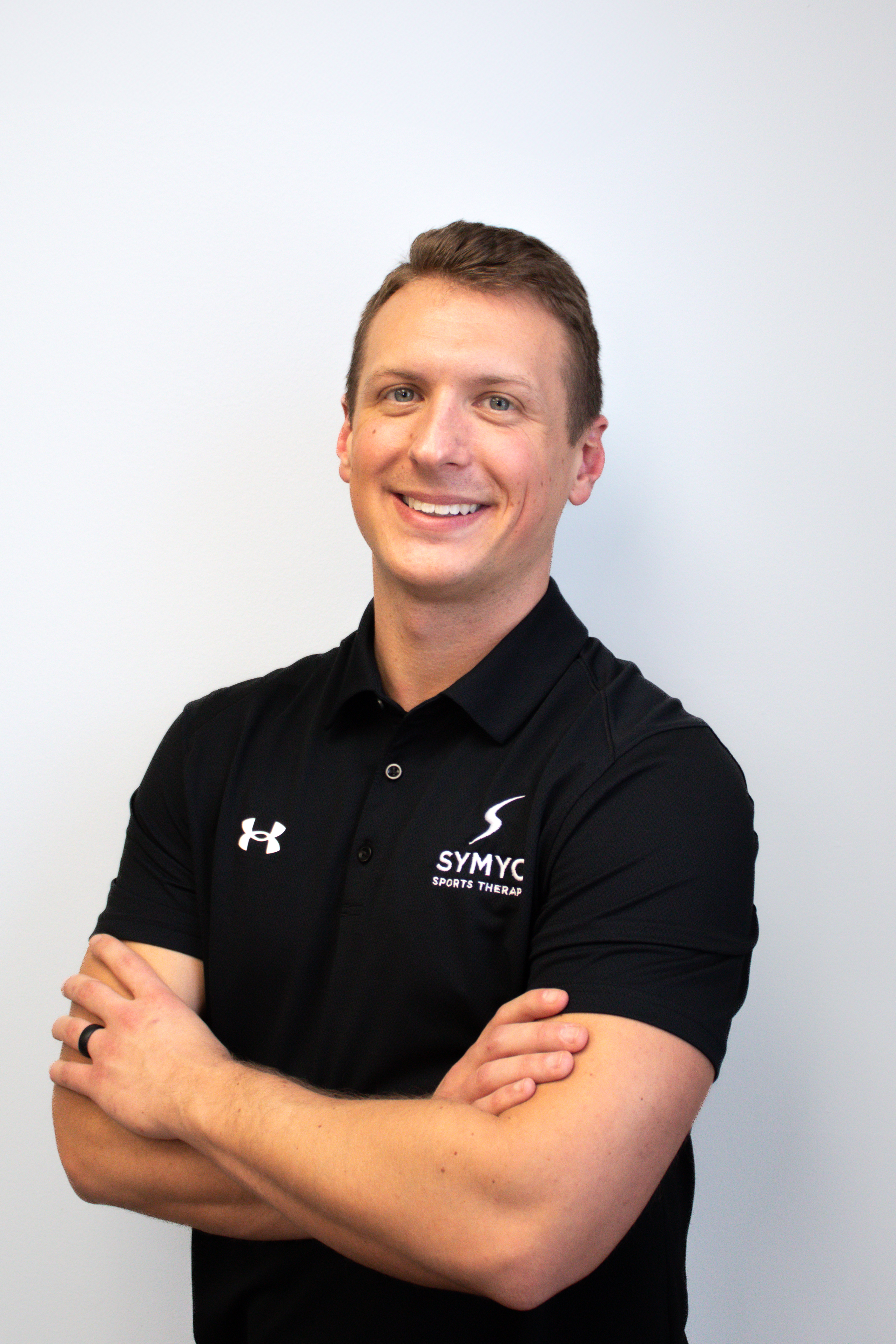
I'm Dr. Mitch Israel, a sports chiropractor and rehab specialist and the owner of SYMYO Sports Therapy in Farmington Hills, Michigan.
I created SYMYO to help people do more than temporarily feel better.
My goal is to help you understand your body, improve what actually needs improving, and build the strength and confidence to keep doing the things you enjoy.
When general advice is not enough, a personalized assessment and plan can make the difference.
SYMYO Sports Therapy
33930 West 8 Mile Road, Suite 2AFarmington Hills, MI 48335
Serving Farmington Hills, Novi, Northville, Livonia, Plymouth, West Bloomfield, Farmington, and surrounding Metro Detroit.