From SYMYO Sports Therapy
Whole Body Movement Assessment Farmington Hills
Get a whole body movement assessment in Farmington Hills to measure mobility, strength, balance, and movement patterns, then know what to work on first.

Your knee may hurt when you run, but the reason may start at your foot, hip, trunk, or even the way you shift your weight when you stand. A whole body movement assessment in Farmington Hills is designed to look beyond the painful area and identify the movement habits that may be keeping you stiff, limited, or stuck in a cycle of recurring pain.
For active adults, symptoms are rarely the entire story. You may be able to push through a workout, finish a round of golf, or get through a workday, yet notice that your body no longer moves the way it used to. A detailed assessment gives you clear measurements, an explanation of what those measurements mean, and a practical answer to a more useful question: what should you work on first?
Why pain-site treatment can miss the bigger problem
Pain deserves attention, but treating only the site of pain can leave the pattern behind it unchanged. Consider a runner with recurring knee discomfort. The knee may be absorbing more force because the ankle is stiff, the hip is not controlling single-leg movement well, or the core is not providing enough stability as the runner lands. Focusing only on the knee may offer short-term relief without changing the workload that keeps irritating it.
The same principle applies to many common complaints. Neck tension can be connected to limited upper-back movement and shoulder control. Low-back stiffness can be influenced by hip mobility, balance, breathing mechanics, or poor trunk endurance. Shoulder pain may reflect how the shoulder blade, rib cage, and thoracic spine work together.
This does not mean every ache has one simple root cause. Bodies are more individual than that. Training volume, past injuries, sleep, stress, work setup, and recovery all matter. But a whole-body view creates a better starting point than guessing or repeatedly chasing the place that hurts most.
What a whole body movement assessment measures
A useful assessment combines objective data with an experienced clinical eye. It is not a quick screening or a generic flexibility test. It is a structured look at how your body is built to move, how it actually moves today, and where it may be compensating.
At SYMYO Sports Therapy, the process uses AI-assisted measurement alongside direct movement evaluation. The goal is not to generate numbers for their own sake. Each measurement should help explain a limitation, establish a baseline, and guide the next phase of care or training.
Posture and alignment
Posture is not about forcing yourself into one perfect position all day. It is one piece of information about how your body distributes load. Measurements may reveal asymmetries, shifts, or positional habits that can affect how you move under stress.
For example, a consistent weight shift to one side may help explain why one hip, knee, or foot seems to work harder than the other. It does not automatically mean something is damaged. It gives the assessment a clue to investigate through movement.
Mobility and flexibility
Mobility is your ability to control movement through a range of motion. Flexibility is one part of that picture, but not the whole picture. You may be able to passively reach a position and still lack the strength or control to use it during a squat, lunge, sprint, or overhead lift.
A quality assessment looks at key areas such as the ankles, hips, thoracic spine, shoulders, and neck. Restrictions are considered in context. A recreational golfer may need a different mobility profile than a strength athlete, and a person returning from an injury needs a different approach than someone preparing for a race.
Balance, strength, and core control
Balance is not only for older adults. It is a window into how well you can control your body when the base of support is reduced, as it is when walking, running, climbing stairs, or changing direction. Strength testing and single-leg movement can show whether one side is doing more than its share of the work.
Core control is also more than an exercise category. Your trunk needs to transfer force between your lower and upper body while you move. When that transfer is inefficient, other areas may compensate. The assessment helps distinguish between a mobility limitation, a strength gap, a control issue, or a combination of all three.
Compensatory movement patterns
Compensation is your body finding a way to complete a task with the options it currently has. That is not always bad. Compensation can help you stay active after an old injury or during a temporary limitation. The concern is when the same workaround repeatedly overloads an area and begins to restrict what you can do.
During movements such as squatting, hinging, lunging, reaching, stepping, or rotating, an evaluator can observe how your body responds. Do your knees collapse inward? Does one hip rise first? Do your feet turn out to avoid ankle restriction? Does your low back extend when your shoulders run out of motion? These details connect a symptom to a real movement strategy.
What happens during a movement assessment in Farmington Hills
A comprehensive assessment should leave you with more than a list of deficits. It should give you a clear explanation and an organized path forward.
The process typically begins with a conversation about your history, current symptoms, activities, previous injuries, and goals. Someone training for a half marathon has different priorities than someone who wants to pick up grandchildren, play tennis without fear, or stop feeling stiff after long days at a desk. Your goals determine which findings matter most.
Next comes the physical evaluation. AI-assisted technology can capture measurable data on posture, mobility, balance, strength, body composition, and movement quality. Those results are paired with hands-on clinical observation rather than treated as a stand-alone diagnosis.
After the assessment, the findings should be reviewed in plain language. A Physical Health Report can show where your movement is efficient, where it is limited, and which patterns may be contributing to your symptoms or performance ceiling. SYMYO also uses a Movement Age™ score to compare aspects of your functional movement capacity with your chronological age.
Movement Age™ is not a label or a verdict on your health. It is a useful benchmark. If your movement age is older than you expected, that can be a motivating signal to improve strength, mobility, balance, and control before limitations become more disruptive. If it is younger, the information can help you protect what is working well and make smarter training decisions.
Turning findings into an actionable plan
Data becomes valuable only when it changes what you do next. The best plan is not necessarily the longest one or the most complicated one. It is the one that addresses the highest-priority limitation while fitting your schedule, activity level, and goals.
A structured approach may begin by reducing the irritation or overload that is keeping a painful area sensitive. From there, the focus shifts to restoring the mobility and movement options your body needs. Finally, those improvements must be reinforced with strength, control, and progressive training so they hold up in real life.
This is why rest alone often falls short. Rest can calm symptoms, especially after a flare-up, but it does not automatically improve ankle range, hip control, trunk endurance, or the strength required for your sport. On the other hand, jumping straight into aggressive exercise can be counterproductive if pain, mobility restrictions, or poor movement control have not been addressed. The right pace depends on your current capacity.
Your roadmap may include sports therapy, rehabilitation, mobility work, chiropractic care, strength training, or targeted home exercises. Some people want ongoing guidance and accountability. Others prefer to use their findings and a three-step plan independently. Either path should be based on clear priorities rather than a one-size-fits-all routine.
Who benefits most from this approach
A whole-body assessment can be especially useful if pain keeps returning after treatment that focused only on the sore spot. It is also valuable when you are not in significant pain but can tell your performance or confidence has changed.
You may be a runner whose pace has plateaued because one hip tightens every few miles. You may be a former athlete who feels strong but notices your knees and back complain after recreational sports. You may be active at the gym yet avoid squats, overhead presses, or long walks because your body feels unpredictable. In each case, the question is not simply whether you can tolerate activity today. It is whether your movement capacity supports the life and activities you want to keep doing.
A whole body movement assessment gives you a baseline before that gap gets wider. You do not need to wait for a major injury to understand how your body is moving.
The most useful next step is simple: get a clear picture of where your body is compensating, identify what matters most for your goals, and start improving one measurable piece at a time. That is how temporary relief becomes a more durable return to the activities you enjoy.
Want to Understand How Your Body Is Actually Moving?
If you have tried to fix your posture, loosen tight muscles, or follow random exercises and still do not know what your body needs, an assessment can help.
The SYMYO Movement & Performance Assessment measures your mobility, strength, balance, posture, and overall movement. You will understand what is working well, where there is room to improve, and what deserves attention.
Learn About the AssessmentAbout Dr. Mitch Israel
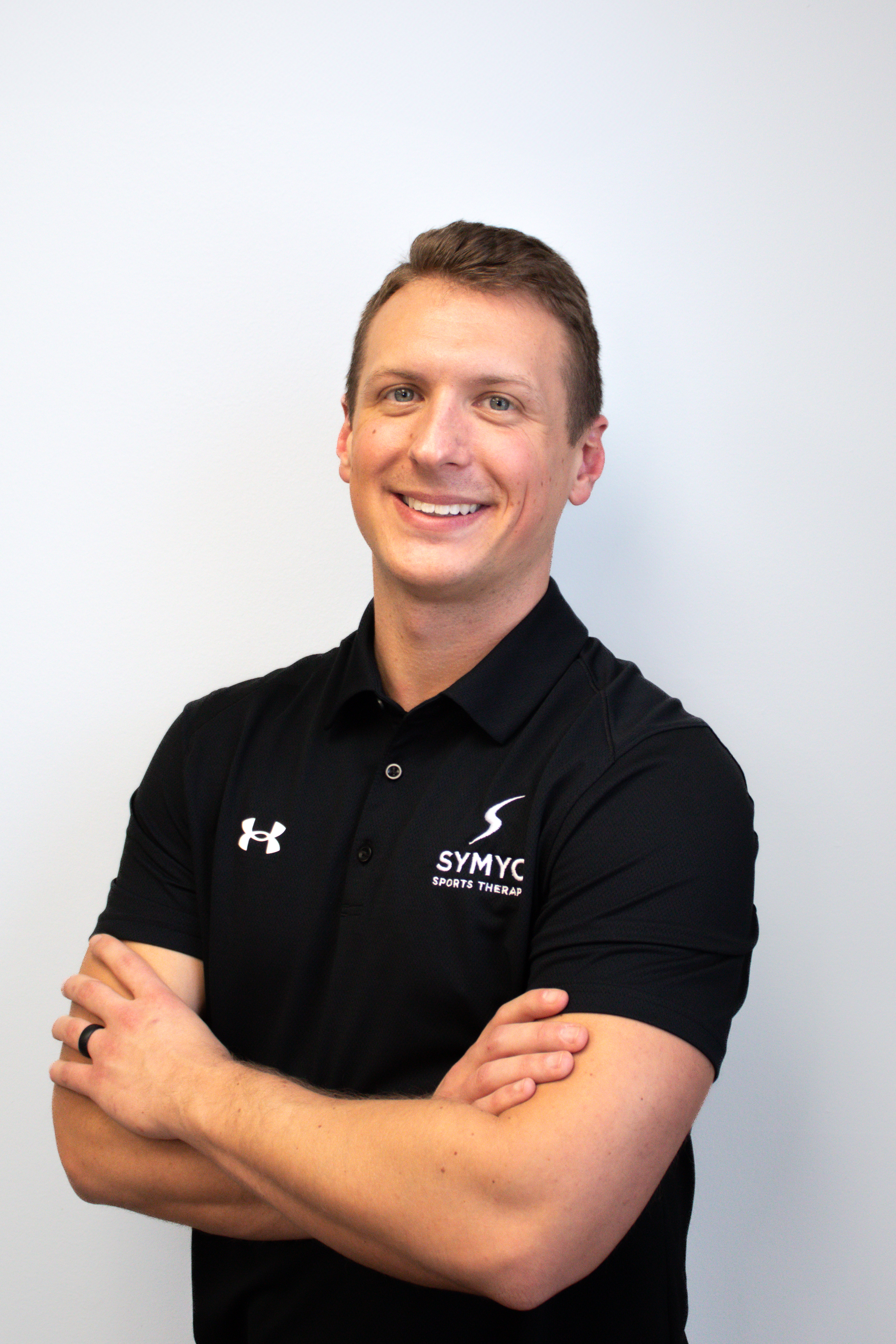
I'm Dr. Mitch Israel, a sports chiropractor and rehab specialist and the owner of SYMYO Sports Therapy in Farmington Hills, Michigan.
I created SYMYO to help people do more than temporarily feel better.
My goal is to help you understand your body, improve what actually needs improving, and build the strength and confidence to keep doing the things you enjoy.
When general advice is not enough, a personalized assessment and plan can make the difference.
SYMYO Sports Therapy
33930 West 8 Mile Road, Suite 2AFarmington Hills, MI 48335
Serving Farmington Hills, Novi, Northville, Livonia, Plymouth, West Bloomfield, Farmington, and surrounding Metro Detroit.