From SYMYO Sports Therapy
What a Posture Balance Mobility Assessment Shows
A posture balance mobility assessment measures how you move, where capacity is limited, and what to improve first to stay active with confidence over time.
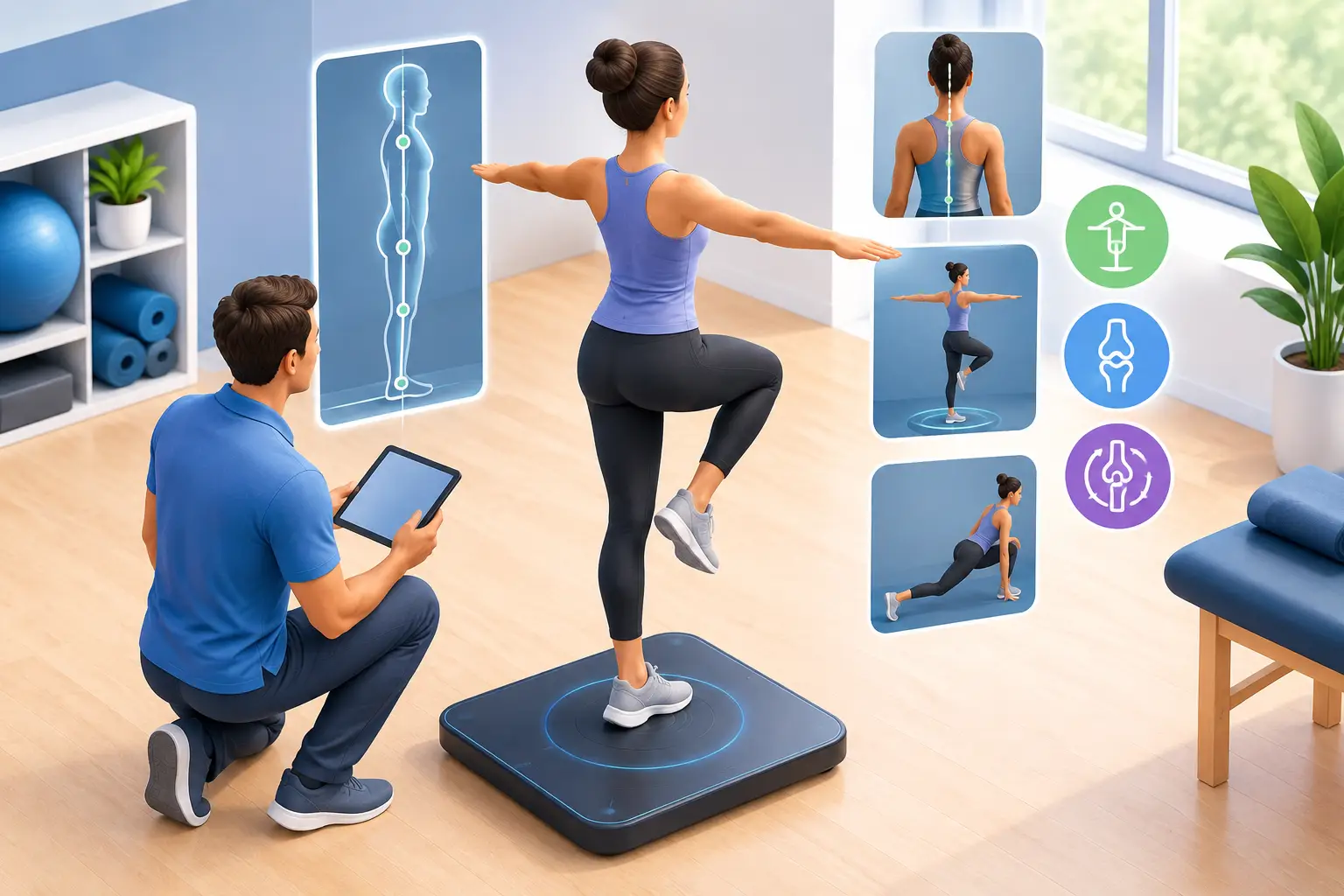
You may be able to power through a workout, finish 18 holes, or keep up on a weekend run, yet still notice that getting down to the floor feels harder than it used to. Maybe one hip always feels tight, your knees ache after squats, or an old back issue returns whenever you try to train consistently. A posture balance mobility assessment looks beyond the painful area to measure how your whole body is moving and where your physical capacity may need attention.
That distinction matters. Pain can be frustrating, but it is not always a complete explanation of what is holding you back. A limited ankle, reduced hip control, poor single-leg balance, or a strength gap may not be the only factor involved, but it can affect how you move during exercise, sport, and daily life. Clear measurements help turn vague concerns like “I feel stiff” or “my body just doesn’t feel right” into a practical plan.
What a posture balance mobility assessment measures
A useful assessment does more than observe whether you stand tall or touch your toes. Posture is one piece of the picture, but it does not tell the whole story. People can have visible postural differences and feel completely capable. Others may look fine standing still but struggle when they squat, rotate, step down, reach overhead, or balance on one leg.
A whole-body assessment considers how your body performs in both still and moving positions. At SYMYO Sports Therapy, this process combines AI-assisted movement analysis with physical testing to evaluate posture, mobility, balance, strength, core stability, body composition, and movement patterns. The goal is not to find a single “perfect” posture. It is to identify what may be limiting your ability to move well, train consistently, and stay active.
Posture provides context, not a verdict
Posture can offer useful clues. For example, an assessment may note how your shoulders, rib cage, pelvis, and head are positioned at rest. These observations can help guide a closer look at how you control those areas during movement.
But posture alone should not be treated as a diagnosis. There is no one ideal standing position that guarantees someone will be pain-free or athletic. What matters more is whether you have enough movement options, control, and strength for the activities you want to do.
Mobility shows available movement
Mobility testing measures how well specific joints and regions move. This can include ankle motion, hip rotation, thoracic spine rotation, shoulder range of motion, and the ability to move through a squat or lunge pattern.
A mobility restriction does not automatically explain pain. However, when a joint lacks usable range, your body may compensate somewhere else. If your ankles do not bend well enough for a squat, for instance, you may shift your feet, knees, hips, or trunk to find a way down. That strategy may work for a while, but it may also make certain exercises feel awkward or limit the load you can handle comfortably.
Balance reveals control under real-world demands
Balance is not just about standing on one foot with your eyes closed. It reflects how well you can control your center of mass when your body is challenged. Single-leg balance and step-down testing can reveal differences between sides, reduced hip control, foot and ankle instability, or difficulty maintaining position when fatigue starts to matter.
For active adults, this has practical relevance. Balance and control show up when you walk on uneven ground, change direction on a tennis court, step off a curb, climb stairs, or stabilize during a golf swing. The goal is not to chase a score for its own sake. It is to understand whether your current control matches the demands you place on your body.
Why movement patterns matter more than isolated flexibility
Many people respond to stiffness by stretching the area that feels tight. Sometimes that helps. Sometimes it does very little because the limitation is not simply a lack of flexibility.
Consider a person whose hamstrings always feel tight. More hamstring stretching may be appropriate, but an assessment might also show limited hip motion, reduced trunk control, or a movement pattern that repeatedly puts tension through the back of the legs. The right starting point depends on what the testing shows.
This is why movement screening often includes squatting, hinging, lunging, pushing, pulling, reaching, walking, and single-leg tasks. These movements require multiple joints and muscles to work together. They can show whether you have the mobility to get into a position, the stability to control it, and the strength to own it.
A strong assessment separates “can do” from “can do well enough for your goals.” Someone may be able to perform a bodyweight squat but lose control as depth increases. Another person may have good range of motion but insufficient leg strength to return to running without symptoms. Both situations call for a different plan than a generic stretch routine.
What the results can help you understand
A posture balance mobility assessment is most valuable when it gives you priorities. A long list of findings is not helpful if you do not know what needs to improve first.
Your results may identify asymmetries, mobility restrictions, balance deficits, reduced strength, or movement compensations that could be worth addressing. They may also confirm areas where you are doing well. That matters because a plan should build on your current capabilities, not treat your entire body as broken.
At SYMYO, clients receive a Physical Health Report and a Movement Age™ score, along with prioritized findings and a personalized plan. The score is not a label or a prediction of your future. It is a way to put measurable aspects of your physical health into context and track change over time.
For someone dealing with recurring knee discomfort, the first priority might be improving hip and ankle mobility while building single-leg strength. For a golfer with stiffness through the mid-back, the plan may focus on thoracic rotation, hip control, and strength through the positions used during a swing. For a generally active person with no major pain, the focus may be maintaining mobility and building more strength reserve for the years ahead.
When an assessment makes sense
You do not need to wait until pain forces you to stop exercising. A movement assessment can be useful when you are returning to training after an injury, dealing with recurring aches, preparing for a sport or event, or noticing that everyday movement is becoming harder.
It is also useful when you have tried random mobility videos, massage, rest, or basic exercise and are still unsure what to work on. More effort is not always the answer. Better direction often is.
For adults in Farmington Hills and nearby Metro Detroit communities, this can be especially relevant during the transition back to golf, running, cycling, pickleball, or strength training after a less active winter. Starting with measurements can help you progress with more confidence rather than guessing which limitation deserves your attention.
What happens after the assessment
Assessment without follow-through is only information. The next step is to apply the findings through a plan that fits your starting point, goals, schedule, and tolerance.
That may begin with hands-on treatment when appropriate, targeted mobility work, and exercises that improve control in specific positions. From there, the focus should progress toward stability, strength, and the movements that matter in your life. SYMYO calls this process Reduce, Restore, Reinforce: reduce the barriers affecting movement, restore useful mobility and control, then reinforce those gains through progressive strength training.
The sequence is not rigid. A person with significant pain may need a slower entry point than someone who is simply trying to improve performance. Likewise, a runner and a desk-based professional who lifts twice a week may need different exercise progressions even if they share a similar mobility finding. The plan should reflect the person, not just the test result.
Better data should lead to better decisions
A posture balance mobility assessment is not about searching for flaws. It is about understanding your current baseline and making better decisions about what comes next. The most useful outcome is clarity: what your body does well, what may be limiting you, and which improvement will make the biggest difference first.
You do not need perfect posture, unlimited flexibility, or flawless movement to remain active. You need a body with enough mobility, balance, strength, and capacity for the life you want to keep living. Start by measuring where you are, then give your body a clear reason and a practical path to get stronger.
Want to Understand How Your Body Is Actually Moving?
If you have tried to fix your posture, loosen tight muscles, or follow random exercises and still do not know what your body needs, an assessment can help.
The SYMYO Movement & Performance Assessment measures your mobility, strength, balance, posture, and overall movement. You will understand what is working well, where there is room to improve, and what deserves attention.
Learn About the AssessmentAbout Dr. Mitch Israel
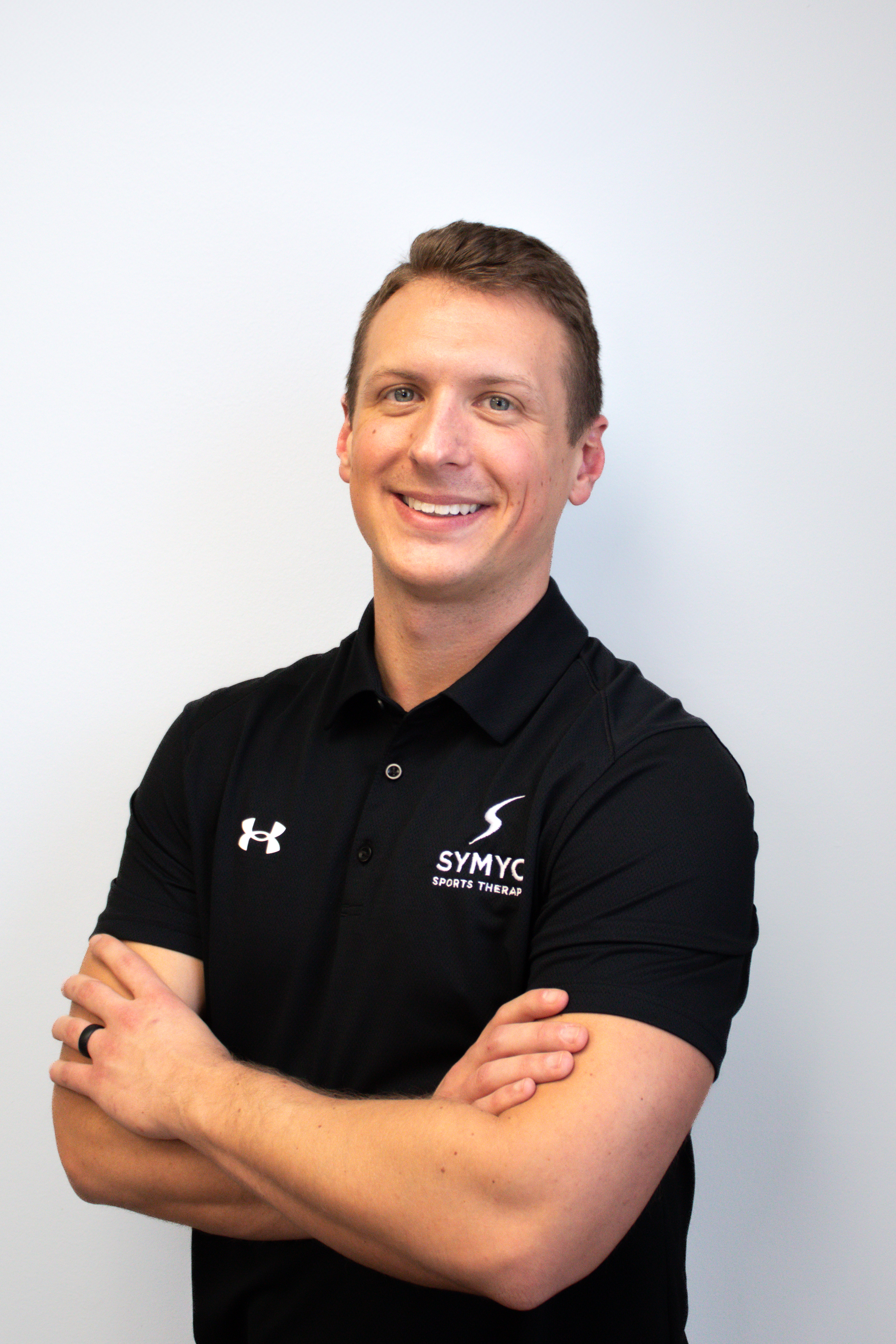
I'm Dr. Mitch Israel, a sports chiropractor and rehab specialist and the owner of SYMYO Sports Therapy in Farmington Hills, Michigan.
I created SYMYO to help people do more than temporarily feel better.
My goal is to help you understand your body, improve what actually needs improving, and build the strength and confidence to keep doing the things you enjoy.
When general advice is not enough, a personalized assessment and plan can make the difference.
SYMYO Sports Therapy
33930 West 8 Mile Road, Suite 2AFarmington Hills, MI 48335
Serving Farmington Hills, Novi, Northville, Livonia, Plymouth, West Bloomfield, Farmington, and surrounding Metro Detroit.